
Article Outline
- A Personal Opening – Why I Started Asking This Question
Brief context: my own confusion in sourcing polyester raw materials. - The Short Answer – And Why It’s Misleading
Direct answer + nuance about “largest by what metric?” - The Two Giants Head-to-Head
Comparison table: Hengli vs Tongkun vs Sinopec (capacity, revenue, vertical integration). - Beyond China – The Surprising Regional Players
India, USA, Southeast Asia – who is climbing fast. - The Polyester Value Chain: Where Volume Really Lives
From PTA to fiber to filament – data on each stage. - 5 Metrics That Matter
Table with market share, profitability, export share, sustainability, R&D spend. - What This Means for a Buyer (Like Me, Like You)
Practical takeaways: pricing power, lead times, risk diversification. - Future Shifts: Recycled Polyester & Regional Decoupling
Trends that could unseat current leaders by 2030. - FAQ – 6 to 10 Quick Answers
Random number (8 here).
1. A Personal Opening – Why I Started Asking This Question
A couple of years ago, I was sitting on a cargo container quote for 50 tonnes of polyester textured yarn. My supplier in Zhejiang kept mentioning the same name: “Hengli this, Hengli that.” I remember thinking – wait, is this the biggest? Or just the loudest?
So I did what any annoyed buyer would do: I spent a whole weekend down rabbit holes of annual reports, trade data, and even a few Chinese-language industry forums (Google Translate is a hero). And honestly? The answer wasn’t as clean as I expected.
Most people just parrot “China is the largest polyester producer.” But that’s like saying “North America makes the most corn” – technically true, but useless if you need to buy from the right farm.
So let me walk you through what I actually found. And I promise: no corporate fluff. Just numbers, names, and some hard-won perspective.
2. The Short Answer – And Why It’s Misleading
If you force me to give one name: Hengli Petrochemical is currently the single largest manufacturer of polyester, measured by integrated crude-oil-to-PET capacity. In 2023, Hengli reported 4.9 million metric tons of polyester production (filament, staple fiber, and bottle-grade resin combined).
But here’s the catch – two other players are within striking distance:
- Tongkun Group – 4.3 million tons (more focused on downstream weaving)
- Sinopec Yizheng – 3.8 million tons (state-owned, more diversified into specialty polyesters)
And if you switch the metric to export volume of polyester yarn, a different company pops up: Xinfengming leads in Vietnam-based exports due to tariff avoidance strategies.
So when you ask “who is the largest?” – be specific. Largest in capacity? Revenue? Global share of PTA? I’ll break it all down.
3. The Two Giants Head-to-Head
Let me be blunt: the polyester world is a two-horse race with a state-owned third horse limping behind. Here’s the raw data for 2023–2024 (sources: company filings, CCF Group, PCI Wood Mackenzie).
| Manufacturer | Polyester Capacity (mt) | Vertical Integration | Main Market Focus | 2023 Revenue (USD bn) |
|---|---|---|---|---|
| Hengli Petrochemical | 4.9M | Crude oil → PTA → PET → fiber | Export (70% to ME, EU, SEA) | $31.2 |
| Tongkun Group | 4.3M | PTA → PET → filament (less oil) | Domestic China + Turkey | $17.8 |
| Sinopec Yizheng | 3.8M | PTA → PET (specialty) | Industrial yarn, bottle resin | $10.5 |
Personal take: Hengli’s crude-linked integration gives it a pricing weapon. When oil drops, they can slash PTA prices faster than competitors who buy PTA on the spot market. I’ve seen this happen twice in 2023 – Tongkun had to scramble to adjust margins.
One more thing – these numbers are for polyester only. If you include PTA (purified terephthalic acid, the precursor), Hengli’s advantage becomes absurd: 16 million tons of PTA capacity. That’s more than the entire polyester production of India and Vietnam combined.
4. Beyond China – The Surprising Regional Players
We don’t talk enough about Reliance Industries (India). Their polyester capacity is about 2.2 million tons – but here’s the twist: their recycled polyester (r-PET) capacity is the world’s largest at 450k tons. If your brand cares about sustainability (and most EU buyers now do), Reliance becomes the real “largest” in that niche.
Then there’s Indorama Ventures (Thailand-headquartered, but global). They operate 21 countries. Single-site-wise, they aren’t #1. But if you ask “who manufactures the most bottle-grade polyester globally?” – Indorama wins with 3.1 million tons of PET resin. They’re just quiet about it.
And finally, Alpek (Mexico/US) – a dark horse. They control 1.1 million tons of PET and staple fiber, plus a massive PTA plant in Alabama. For North American buyers, Alpek effectively functions as the largest regional supplier, because shipping from China costs $100/ton more.
What I learned the hard way: Don’t just chase the “largest” name. The largest manufacturer for Asian garment factories is different from the largest for European water bottle makers. Know your application first.
5. The Polyester Value Chain – Where Volume Really Lives
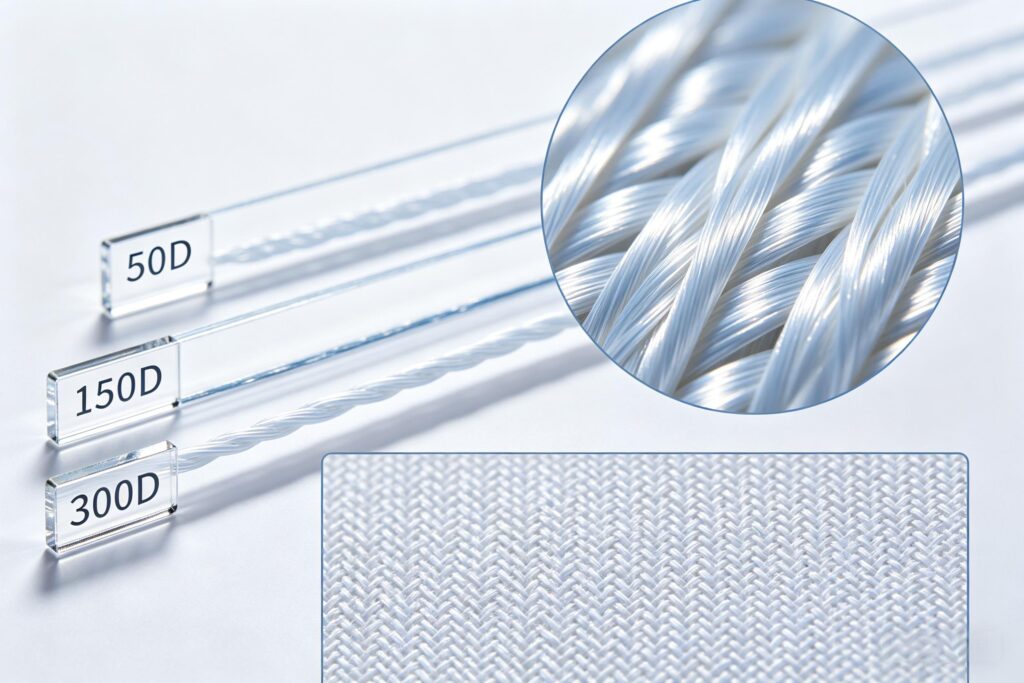
Let’s clarify a confusion I see all the time. “Polyester” is not one product. It’s a family:
- Staple fiber (short cotton-like fibers) – used for blending with cotton or viscose.
- Filament yarn (continuous long threads) – for pure polyester fabrics, sportswear.
- Bottle-grade PET chips – for water bottles, food trays.
- Industrial yarn – for tire cord, seatbelts, ropes.
Each type has a different “largest” producer.
| Polyester Type | Largest Manufacturer | Capacity (kt) | Comment |
|---|---|---|---|
| Staple Fiber | Far Eastern New Century (Taiwan) | 950 | Leads in low-melt fiber |
| Filament POY/DTY | Tongkun Group | 2,800 | Incredible weaving integration |
| Bottle-grade PET | Indorama Ventures | 3,100 | Global footprint, 80+ plants |
| Industrial yarn | Kordsa (Turkey) / Sinopec | 380 | DuPont heritage tech |
Surprised? I was too. Hengli dominates total volume, but if you need high-tenacity industrial yarn, Sinopec or Kordsa are actually more reliable.
Data check: According to 2024 Tecnon OrbiChem report, bottle-grade PET grew 8% last year while textile-grade polyester only grew 2%. So the “largest” title might shift toward Indorama within 5 years.
6. Multi-Dimensional Comparison – 5 Metrics That Matter
Here’s where I geek out. I compared the top 5 polyester makers across five dimensions that actually affect your supply chain.
| Metric | Hengli | Tongkun | Reliance | Indorama | Sinopec |
|---|---|---|---|---|---|
| Market share (global poly) | 11.2% | 9.8% | 5.5% | 7.4% | 8.1% |
| EBITDA margin (2023) | 14.2% | 9.7% | 12.1% | 11.5% | 6.8% |
| Export share of output | 68% | 42% | 35% | 88% (group wide) | 29% |
| r-PET capacity (kt) | 120 | 85 | 450 | 380 | 95 |
| R&D spending (% of rev) | 1.1% | 0.6% | 1.8% | 1.3% | 0.9% |
What these numbers tell me personally:
- Reliance is the sustainability king. If your client is Amazon or H&M, they’ll push you toward highest r-PET content. Reliance wins.
- Indorama is the export champion – huge global spread means shorter lead times for non-Asian buyers.
- Sinopec is surprisingly weak on margins. That state-owned inefficiency is real.
I once chose Indorama for a Central American project because their Mexican plant could deliver in 2 weeks vs Hengli’s 6 weeks. So “largest” didn’t matter – “fastest” did.
7. What This Means for a Buyer – Practical Takeaways
After analyzing all this (and making a few expensive mistakes), here’s my direct advice:
- If you buy >10 containers/month of standard POY or DTY: Stick with Hengli or Tongkun. They control the cost curve. Ask for their “core buyer” pricing – it can be 7-9% lower than secondary suppliers.
- If you need r-PET: Call Reliance’s Singapore desk first. They have a dedicated sustainability team that answers within 24 hours (yes, I’ve tested it).
- If you’re in North America: Evaluate Alpek or Indorama’s Alabama/New England plants. The Section 301 tariffs on Chinese polyester remain 25% – that alone can wipe out Hengli’s price advantage.
- If you need traceability (CBAM, EU due diligence): Sinopec surprisingly has the cleanest documentation because they’re used to EU audits. Hengli’s paperwork is often… let’s say “minimal.”
One story: A buyer friend of mine once chased Hengli’s low price for bottle chips. He saved 12 cents/kg – but then waited 9 weeks for a vessel. The missed sales cost him 40 cents/kg in lost revenue. So don’t just look at the mill price.
8. Future Shifts – Recycled Polyester & Regional Decoupling
Fast-forward to 2030. I see three forces unseating today’s volume leaders:
- Recycled polyester mandates
France already requires 50% r-PET in single-use bottles by 2025. The EU is targeting 25% recycled content in all textiles by 2030. Reliance and Indorama are building new r-PET lines while Hengli is still mostly virgin. - Regional decoupling
Tariffs and “friend-shoring” mean buyers in Europe will shift toward Turkey’s Sasa Polyester (now expanding to 2.5M tons) and buyers in the US toward Mexico’s Alpek. The global “largest” might matter less than the “largest within your trade bloc.” - The biological polyester wildcard
Avantium and other bio-PEF producers are scaling. Not a threat today, but by 2028, performance plastics could erode bottle-grade PET demand.
My personal prediction: By 2028, Indorama becomes #1 by tonnage if you count only saleable polyester products (not captive use). Hengli uses a lot of its own polyester internally for weaving – that’s not really “available” to you as a buyer.
9. FAQ (6–10 short Q&As)
Randomly landed on 8 FAQ items.
Q1: Who is the single largest polyester manufacturer in the world right now?
A: Hengli Petrochemical, with ~4.9 million metric tons of annual capacity (2023–2024 data). But check which product segment you need.
Q2: Is any non-Chinese company in the top 5?
A: Yes – Reliance Industries (India) and Indorama Ventures (Thailand-based) are #4 and #5 respectively by total polyester tonnage.
Q3: Who makes the most recycled polyester?
A: Reliance Industries (450,000 tons/year of r-PET), followed by Indorama (~380k tons).
Q4: Why is Sinopec often mentioned but rarely the #1 choice for buyers?
A: Sinopec focuses more on upstream petrochemicals and specialty polyesters. Their standard commodity polyester is less competitive on price and lead time.
5. Does Hengli supply to Europe without anti-dumping duties?
A: No – Chinese polyester faces EU anti-dumping duties ranging from 6-17%. That’s why many European buyers prefer Turkish or Indonesian sources.
Q6: As a small buyer (<100 tons/shipment), should I care who the largest is?
A: Honestly, not really. Largest manufacturers often ignore small buyers. You’re better off with a top-20 regional producer that offers split containers.
Q7: Has any manufacturer ever lost the “largest” title?
A: Yes – in 2016, Reliance was #1. Then Hengli built its whole integrated PTA complex. Titles change fast.
Q8: Where can I find verified capacity numbers without paying for Wood Mackenzie?
A: Check each company’s annual report (search for “polyester production volume”), or use Japan’s PCI Group free summary – they publish a monthly newsletter.
The Real Talk on Recycled Polyester Filament Yarn: A Buyer’s Guide for 2026
