
Article Directory
- The Critical Role of Flame Retardant Yarns in Modern Safety
- The Core Science: How Flame Retardant Yarns Actually Work
- The Two Main Categories: Inherent vs. Treated FR Yarns
- 3.1 Inherently Flame Retardant Yarns
- 3.2 Treated Flame Retardant Yarns
4.Detailed Breakdown of Key Flame Retardant Yarn Types
- 4.1 Meta-Aramid (Nomex® Type)
- 4.2 Para-Aramid (Kevlar® Type)
- 4.3 Flame Retardant Polyester
- 4.4 Modacrylic & FR Acrylic
- 4.5 FR Viscose (Rayon)
- 4.6 Flame Retardant Cotton & Cotton Blends
- 4.7 Specialized Niche Yarns (PP, Nylon)
5.Multi-Dimensional Comparative Analysis
6.Market Landscape and Industry Trends (2025-2026)
7.Making the Right Choice: Application-Specific Selection Guide
8.Frequently Asked Questions (FAQs)
1. The Critical Role of Flame Retardant Yarns in Modern Safety
If you are involved in sourcing materials for protective clothing, upholstery, or industrial textiles, you’ve likely felt the weight of responsibility that comes with selecting the right yarn. It is not just about durability or cost; it is about the seconds that can save a life. The global market for these specialized textiles is not just growing—it is projected to increase at a compound annual growth rate of over 5%, reflecting a global tightening of safety regulations and a growing awareness of workplace hazards. The global flame retardant fibres market alone was valued at approximately USD 2.79 billion in 2024.
I have spent years navigating the complexities of textile specifications, and I have seen firsthand how the wrong choice can lead to catastrophic failures in the field. Conversely, the right selection provides an invisible shield, buying critical time in a fire emergency. The goal of this guide is to strip away the marketing jargon and provide a clear, data-driven comparison of the yarn types available to you today.
2. The Core Science: How Flame Retardant Yarns Actually Work
Before diving into the types, it is important to understand the “how.” A flame retardant yarn does not mean it is fireproof; that is a myth. Instead, these materials are engineered to resist ignition and significantly slow down the spread of fire. They generally work through one of two primary scientific mechanisms:
- The Charring Effect (Intumescence): When exposed to heat, some fibers—like aramids—undergo a chemical change. They form a rigid, carbonaceous “char” layer on the surface. This char acts as a physical barrier, insulating the underlying material from the intense heat and preventing the release of flammable gases.
- The Gas Dilution Effect: Other fibers release non-flammable gases (like water vapor) or interfere with the chemical chain reaction of combustion. For instance, halogenated compounds (common in modacrylics) interrupt the free-radical process that sustains a flame. The oxygen index (LOI) is a key metric here—it measures the minimum oxygen concentration needed to sustain combustion in the material. A higher LOI means better flame resistance.
3. The Two Main Categories: Inherent vs. Treated FR Yarns
In the industry, we generally divide these materials into two distinct camps: inherent and treated. This distinction is crucial because it affects durability, washability, and lifecycle cost.
3.1 Inherently Flame Retardant Yarns
These fibers are born fire-resistant. The chemical structure of the polymer chain itself contains the flame retardant properties. You cannot wash the safety out of them. They are generally the gold standard for high-risk, multi-use applications where the fabric will undergo severe wear or repeated industrial laundering.
Key Materials: Meta-Aramid (e.g., Nomex®), Para-Aramid (e.g., Kevlar®), and Modacrylics.
3.2 Treated Flame Retardant Yarns
This category involves applying a chemical finish to a base fiber like cotton, polyester, or viscose. The chemicals can be phosphorus-based (forming a glassy char) or halogen-based. While significantly cheaper than inherent fibers, the durability of the treatment can vary, potentially degrading after multiple washes or exposure to harsh chemicals. However, treatment technology has advanced significantly, offering high durability for non-industrial applications.
4. Detailed Breakdown of Key Flame Retardant Yarn Types
Let’s look under the hood at the specific materials you will encounter in the market.
4.1 Meta-Aramid (Aramid 1313)
If there is a benchmark for thermal protection, Meta-Aramid is it. It is the backbone of firefighter turnout gear and military flight suits. It is inherently flame retardant, non-melting, and non-dripping. When exposed to extreme heat, it thickens and forms a protective char, maintaining its structural integrity. It has a continuous operating temperature of up to 200°C and can withstand short-term exposures up to 370°C.
4.2 Para-Aramid (Aramid 1414)
While Meta-Aramid is known for heat, Para-Aramid is known for strength. Think bulletproof vests. It offers extremely high tensile strength and cut resistance, though it is more sensitive to UV degradation than its meta counterpart. It is often blended with other fibers to provide structural durability to heat-resistant garments.
4.3 Flame Retardant Polyester
This is the workhorse of the industry, offering a balance between cost and performance. There are generally two types: the treated variety (coated with FR chemicals) and the intrinsic type (where the FR additive is integrated during polymerization). The latter offers “permanent” performance that cannot be washed out.
Recent innovations have pushed the LOI of FR Polyester above 32%, which is excellent for a synthetic fiber. It is widely used in automotive interiors, curtains, and workwear where high abrasion resistance is required.
4.4 Modacrylic & FR Acrylic
These are copolymers consisting of acrylonitrile and halogen-containing vinyl monomers. They are often used in soft, cozy applications like plush toys, blankets, and wigs, but they play a massive role in the protective sector. Because of the halogen content, they have a very low flammability and are self-extinguishing. They are often blended with cotton to create a comfortable, safe fabric for electrical utility workers.
4.5 FR Viscose (Rayon)
This is a regenerated cellulose fiber that is inherently or chemically treated to be flame retardant. It is prized for its comfort and moisture absorption. It creates a thick char when exposed to flame, similar to aramid, but at a fraction of the cost. It is heavily used in fire-blocking layers for mattresses and upholstery.
4.6 Flame Retardant Cotton & Cotton Blends
Cotton is highly flammable, but when treated with phosphorus or nitrogen-based compounds, it becomes a reliable, breathable FR material. It is often used in “Nitrile Cotton” blends (like FR Nitrile Cotton Yarn), which are popular in oil and gas industries because they combine the comfort of cotton with chemical resistance and flame retardancy.
4.7 Specialized Niche Yarns (PP, Nylon)
Don’t overlook specialized fillers. For instance, Flame Retardant Polypropylene filler yarn is essential in the cable industry, used to fill the interstices of cables to ensure they pass stringent fire tests like IEC 60331 and BS6387.
5. Multi-Dimensional Comparative Analysis
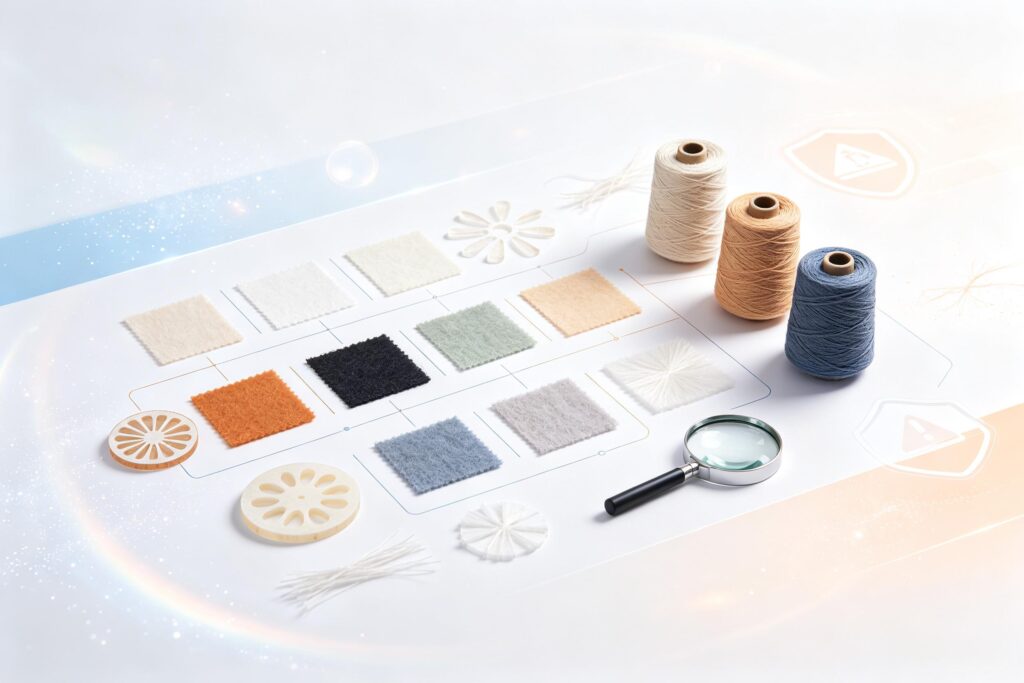
To help visualize the differences, I have compiled a detailed comparative table based on the latest specifications and market data.
| Yarn Type | Mechanism | Key Advantage | Key Disadvantage | Typical LOI (Oxygen Index) | Primary Application |
|---|---|---|---|---|---|
| Meta-Aramid | Inherent (Char) | Exceptional heat resistance (200°C continuous), permanent protection, non-melting | High cost, difficult to dye, sensitive to some chemicals | > 30% | Firefighter gear, military flight suits, race car driver suits |
| FR Polyester | Treated/Inherent (Additive) | Excellent abrasion resistance, cost-effective, good mechanical properties | Can melt if exposed to high flames (if not modified), treatment can wash out over time | > 32% (High Grade) | Automotive interiors, curtains, upholstery, protective workwear |
| Modacrylic | Inherent (Halogen) | Soft hand-feel, self-extinguishing, excellent comfort | Produces dense smoke, can release corrosive gases if burning | ~ 28-30% | Wigs, stuffed toys, blankets, fleece for military/utilities |
| FR Viscose | Treated/Inherent (Char) | Comfortable, breathable, creates a protective char layer, cost-effective | Lower strength than synthetics, can degrade over time with washing | ~ 25-29% | Mattress interlinings, home textiles, lightweight fire-blocking layers |
| Para-Aramid | Inherent (Char) | Extreme tensile strength (5x stronger than steel by weight), cut-resistant | Expensive, sensitive to UV light, rigid texture | > 30% | Ballistic vests, cut-resistant gloves, high-risk labor uniforms |
| FR Cotton (Nitrile) | Treated | Breathable, comfortable, versatile, lower cost | Shorter lifespan than synthetics, treatment can wash out | ~ 27-30% | Oil & Gas workwear, welding clothing, chemical plant uniforms |
6. Market Landscape and Industry Trends (2025-2026)
Understanding the market gives you leverage in negotiations and future planning.
- Market Size: The global market for flame retardant yarns was estimated at USD 1,001.6 million in 2024 and is expected to grow steadily.
- Dominant Players: Names like DuPont (still commanding a significant share, often associated with Nomex® and Kevlar®), Trevira, Libolon, and Teijin dominate the space. DuPont alone holds a significant percentage of the market share in the high-end aramid sector.
- Regional Dynamics: China is currently the largest consumer region, accounting for more than 25% of the total market share, driven by rapid industrialization. However, Europe and North America still hold strong at approximately 24% and 18% respectively, driven by stringent safety enforcement like EN ISO 11611 and NFPA standards.
- Trends: I am seeing a massive push toward Recycled Flame Retardant Yarn. Sustainability is no longer just a buzzword. Several key players like Indorama and Unifi are heavily investing in recycled FR yarns to meet the growing demand for eco-friendly, yet safe materials. The “Green Deal” in Europe is forcing buyers to look at the lifecycle impact of their materials.
7. Making the Right Choice: Application-Specific Selection Guide
Choosing the right yarn often feels like a minefield. Here is how I break it down:
- High-Risk, Repeated Use (Firefighters, Racers): Meta-Aramid is the only logical choice. You are paying for life insurance; the cost is justified by the permanent durability and thermal resistance.
- General Industrial Workwear (Oil, Gas, Welding): FR Cotton/Nitrile or FR Viscose blends offer breathability and comfort for long shifts. If the job requires high abrasion resistance (e.g., cable handling), then FR Polyester is my go-to.
- Public Spaces/Transportation: Safety regulations are strict regarding melt-drip. FR Polyester is ideal here because it offers high strength, good drape, and can be engineered to be anti-drip. It is less about direct flame and more about preventing flashover.
- Light Duty/Home Textiles: Modacrylic or FR Viscose are perfect for their comfort and aesthetic appeal.
8. Frequently Asked Questions (FAQs)
1. What is the difference between “Inherent” and “Treated” flame retardant yarn?
Inherent yarns have the flame retardant properties built into the molecular structure (like Aramid). They last the lifetime of the product. Treated yarns have chemicals applied to the surface, which can wear out over time or washing.
2. What does “LOI” stand for and why does it matter?
LOI stands for Limiting Oxygen Index. It is the minimum concentration of oxygen required to sustain combustion. Air has about 21% oxygen, so a yarn with an LOI > 25% will generally self-extinguish in normal air.
3. Is Flame Retardant Polyester safe to wear next to skin?
Absolutely, provided it meets skin-friendly standards. Fabrics like FR Polyester are widely used in automotive and apparel, offering a soft hand-feel and comfort alongside safety.
4. Why is Meta-Aramid so expensive?
The cost comes from the complex polymer chemistry and the high-tech extrusion processes required. However, this cost buys unparalleled, permanent thermal protection that does not wash away or degrade easily.
5. What is the market trend regarding sustainability in this industry?
There is a heavy push towards “Recycled Flame Retardant Yarn.” Major manufacturers are now producing yarns from recycled materials to meet the EU’s environmental regulations and consumer demand for sustainability.
6. What is Flame Retardant PP filler yarn used for?
It is primarily used in the cable industry to fill the gaps between multicore cables to maintain a round shape while ensuring that the cable assembly passes strict fire safety tests (such as IEC 60331).
7. How do I know if a yarn meets my regional regulations?
Always check for certifications. For Europe, look for EN ISO 11611 (welding) and EN 469 (firefighting). For the US, NFPA standards are the benchmark. Reliable suppliers will provide these test reports.
