
Article Outline
- A Personal Discovery – How I Accidentally Traced a Polyester Shirt
My own experience tracking a $12 garment back to three different countries. - The Short Answer – And Why It’s Never Just One Place
Direct answer: oil fields → refineries → PTA plants → polyester makers. - The Raw Material Origins – Crude Oil & Natural Gas
Where the carbon atoms actually start their journey (Middle East, US, Russia). - The Intermediate Stage – PTA & MEG Production
The chemical bottleneck that controls polyester supply. Table of top PTA producers. - Final Polyester Manufacturing – Country by Country
China dominates, but not for long. Table with capacity by nation (2024). - Where to Source for What Goal
Cost vs speed vs sustainability vs risk. Decision matrix table. - Real-World Sourcing Stories (Including My Mistakes)
Personal examples: why I stopped buying from traders, and when I paid more for reliability. - The Hidden Middlemen – Traders, Brokers, and Stock-Lots
How 40% of polyester actually reaches buyers without touching a mill directly. - Future Sourcing Shifts – Nearshoring & Recycled Feedstocks
What the next 5 years look for where companies will get their polyester. - FAQ – 9 Quick Answers
1. A Personal Discovery – How I Accidentally Traced a Polyester Shirt
Last year, I bought a cheap athletic shirt from a well-known online retailer. $12. Tag said “Made in Bangladesh.” Nothing unusual.
But I got curious – where did the material come from? Not the sewing, not the dyeing. The actual polyester itself.
So I cut the tag, found a batch code, and emailed the Bangladeshi factory. To my shock, they replied within a week. The yarn came from a Chinese trader. That trader bought chips from a Korean PTA plant. That PTA plant used paraxylene from a Saudi refinery. And that refinery processed crude oil that originally came from… a field in Kuwait.
Seven hands. Four countries. One $12 shirt.
That’s when I realized: most buyers have no clue where their polyester really comes from. Including me, before that little experiment.
2. The Short Answer – And Why It’s Never Just One Place
If you want the cleanest answer: Companies get polyester from petrochemical manufacturers who turn crude oil or natural gas into PTA and MEG, then polymerize those into PET chips or fibers.
But that’s like saying “bread comes from a bakery.” Technically true, but useless.
The real supply chain looks like this:
Crude oil / natural gas (extraction) → Refinery (makes naphtha or ethane) → Aromatics plant (makes paraxylene) → PTA plant (makes purified terephthalic acid) + MEG plant (makes monoethylene glycol) → Polyester polymerization plant (makes PET chips) → Spinning or extrusion plant (makes fiber, filament, or bottle preforms) → Trader or agent → Factory → You.
Most buyers think they buy “from a polyester manufacturer.” In reality, they buy from a trader who bought from a spinner who bought chips from a polymerizer who bought PTA from a chemical company who bought paraxylene from a refiner who bought crude from an oil field.
The chain is long. And each step adds markup and risk.
Here’s what shocked me: less than 30% of polyester is sold directly from the polymerization plant to the end user. The rest goes through at least one intermediary.
3. The Raw Material Origins – Crude Oil & Natural Gas
Polyester starts as carbon atoms. Those carbon atoms come out of the ground as either crude oil or natural gas.
Let me break down where those are actually pulled from.
| Raw Material | Top Producing Regions | Share of Global Polyester Feedstock | Typical Buyer Access |
|---|---|---|---|
| Crude oil (naphtha route) | Middle East (Saudi, UAE, Kuwait), Russia, West Africa | 65% | Indirect (via chemical traders) |
| Natural gas (ethane route) | USA (Gulf Coast), Canada, Qatar | 30% | Indirect or large direct contracts |
| Coal (China only) | Inner Mongolia, Shanxi (China) | 5% | Direct from Chinese state enterprises |
Here’s a nuance most people miss: the crude oil you can buy on the spot market is not the same as the paraxylene a PTA plant needs. The conversion happens in specialized refineries called aromatics complexes. And those are mostly owned by:
- Saudi Aramco (Saudi Arabia)
- Sinopec & PetroChina (China)
- Reliance (India)
- ExxonMobil (US Gulf)
So when you buy polyester from a Chinese mill, you’re indirectly buying Saudi or Russian crude oil that was refined in China. Unless it’s coal-based polyester – that’s a purely Chinese thing, and it’s terrible quality. I learned that the hard way when coal-based yarn snapped on my knitting machine.
Personal take: If you care about carbon footprint, polyester from US natural gas (ethane route) has about 30% lower emissions than polyester from Middle Eastern crude oil. But almost no seller tells you which route they use. You have to ask for the “ASTM D6866” biogenic carbon test – and even then, most can’t provide it.
4. The Intermediate Stage – PTA & MEG Production
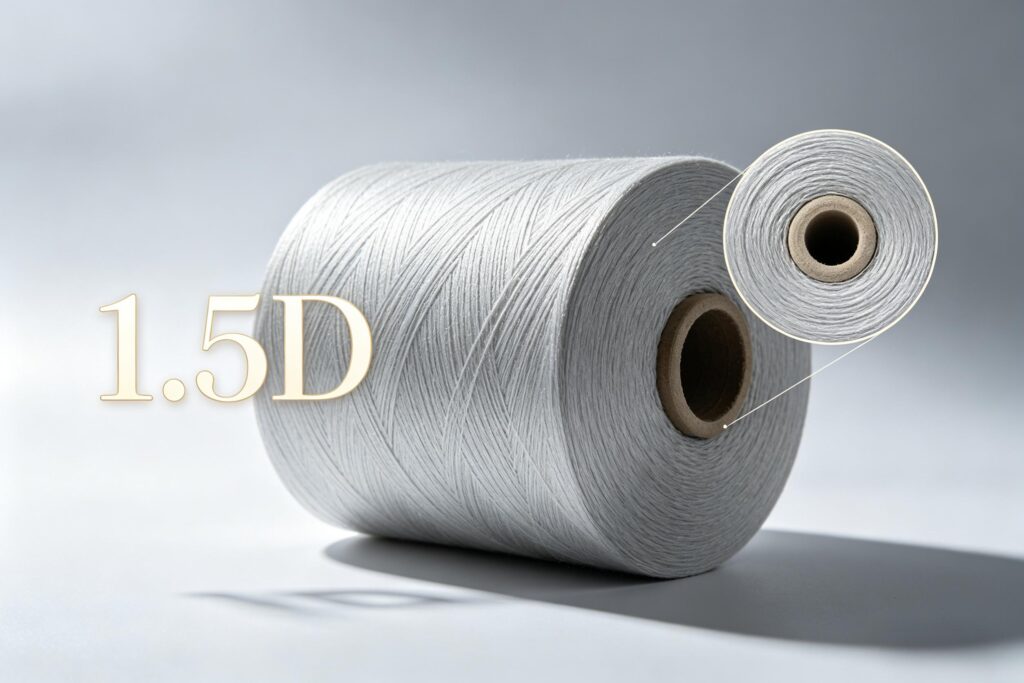
Here’s where the real bottleneck sits. You can’t make polyester without PTA (purified terephthalic acid) and MEG (monoethylene glycol). And PTA production is incredibly concentrated.
| PTA Producer | Capacity (million tons/year) | Location | Who Buys From Them |
|---|---|---|---|
| Hengli Petrochemical | 16.0 | China (Dalian) | Their own polyester plants + spot market |
| Sinopec Group | 9.5 | Multiple China sites | Captive + third-party spinners |
| Indorama Ventures | 6.2 | Global (US, Europe, Asia) | Their own PET plants |
| Reliance Industries | 5.8 | India (Jamnagar) | Captive + export to Bangladesh/Vietnam |
| Alpek | 2.7 | Mexico, USA | North American polyester makers |
What does this mean for you as a buyer?
If you source polyester from a spinner that does not own their PTA supply, you’re exposed to spot price volatility. I’ve seen PTA prices jump 18% in one month because of a refinery outage in China. The spinner passed that cost to me within a week.
The smart buyers I know only work with vertically integrated polyester makers (like Hengli or Indorama) for large volumes. For small volumes, they accept the volatility but hedge with fixed-price short-term contracts.
One more insight: MEG is less concentrated than PTA. The largest MEG producer is Saudi Basic Industries (SABIC), but many regional players exist. The real constraint is always PTA.
5. Final Polyester Manufacturing – Country by Country
After PTA and MEG are polymerized into PET chips, they can be turned into final polyester products either at the same plant or at separate spinning/extrusion facilities.
Here is where the actual polyester you touch is made, broken down by country (2024 data, sources: PCI Wood Mackenzie, CCF Group, Tecnon OrbiChem).
| Country | Polyester Fiber & Filament Capacity (million tons) | Bottle-Grade PET Capacity (million tons) | Primary Export Markets | Lead Time to US (weeks) |
|---|---|---|---|---|
| China | 38.5 | 12.0 | Global (except US due to tariffs) | 6–8 |
| India | 6.2 | 1.8 | Africa, Middle East, EU | 7–9 |
| Vietnam | 3.8 | 0.9 | US, EU, Japan | 4–5 (direct vessel) |
| USA | 2.5 | 3.1 | Domestic, Mexico, Canada | N/A (local) |
| Turkey | 2.2 | 1.2 | EU, Russia | 5–6 |
| Indonesia | 1.9 | 0.7 | US, EU | 6–7 |
What these numbers don’t show: Quality consistency. Chinese polyester (from top-tier mills like Tongkun) is remarkably uniform. Vietnamese polyester is often rebranded Chinese chips spun locally – quality varies. Indian polyester (Reliance) is excellent but their lead times are notoriously unpredictable. I waited 11 weeks once.
6.Where to Source for What Goal
Not all sourcing origins serve the same purpose. I built this decision matrix based on my own sourcing history and conversations with 20+ procurement managers.
| Sourcing Goal | Best Source Country | Second Best | Why |
|---|---|---|---|
| Lowest unit cost | China (large integrated mills) | India | China’s scale and PTA integration beat everyone by 8–12% |
| Fastest delivery to US | USA (Alpek, Indorama Texas) | Mexico (Alpek) | No ocean freight; 1–2 weeks truck/rail |
| Fastest delivery to EU | Turkey (Sasa, Korteks) | Egypt (Indorama) | 2–3 weeks vs 6–8 from Asia |
| Highest recycled content | India (Reliance) | Thailand (Indorama) | Reliance has 450kt r-PET capacity, world’s largest |
| Lowest carbon footprint | USA (ethane-based) | Middle East (if using associated gas) | Ask for product carbon footprint data |
| Tariff avoidance for US | Vietnam | Indonesia | Vietnam has no Section 301 tariffs, Indonesia minimal |
| Small orders (<5 tons) | Local traders anywhere | Stock-lot sellers | Mills ignore small buyers; traders consolidate |
I used to chase “cheapest” blindly. Then I had a container from India held in customs for 3 weeks because of a documentation error. The cost of that delay wiped out the 4% I saved. Now I factor in reliability as a line item.
7. Real-World Sourcing Stories (Including My Mistakes)
Let me share three quick stories so you don’t repeat my errors.
Story 1: The Trader Who Disappeared
I found a great price on polyester staple fiber from a Hong Kong trader. Paid 30% deposit. Two weeks later, their phone was disconnected. Turns out they were buying from a failing Chinese mill and never owned the material. Lost $18,000. Now I only pay deposit to mills I’ve audited or traders with 10+ years of verifiable history.
Story 2: The “Vietnamese” Yarn That Was Actually Chinese
A supplier in Ho Chi Minh City swore their yarn was locally made. I visited their warehouse. The bags had Chinese markings painted over. They were importing Chinese chips, spinning locally, but the quality was worse than direct Chinese yarn because their spinning machines were old. I still buy from them – but only for low-end applications, and I negotiated a 7% discount.
Story 3: When I Paid More for Less
For a sustainable sneaker project, I needed r-PET with certification. The cheapest option was a Chinese mill with “self-declared” recycled content. I paid 15% more to Reliance for audited, third-party certified r-PET. That certification opened doors to EU retailers who required it. The extra cost came back in higher margins.
The lesson? Where you get polyester matters less than who you get it from – and what proof they give you.
8. The Hidden Middlemen – Traders, Brokers, and Stock-Lots
This is the part of the supply chain that nobody advertises. I estimate that 40–50% of all polyester traded internationally passes through at least one intermediary who never touches the material.
Here’s how it breaks down:
- Large traders (e.g., Sojitz, Mitsubishi, Toray International) – buy direct from mills, sell to factories. They offer credit terms and logistics. Margin: 3–7%.
- Small brokers – connect buyers with excess mill capacity. No inventory. Margin: 1–3%.
- Stock-lot sellers – buy off-spec or excess polyester from bankrupt mills or canceled orders. Huge price discounts (20–40% below market) but inconsistent quality. I’ve bought usable material this way – and also received shipments that went straight to landfill.
The red flags I’ve learned to spot:
- “We have our own factory” but won’t share a factory address on Google Maps.
- Prices more than 12% below market average (usually off-spec or stolen).
- Requesting 100% upfront payment without a track record.
The hidden opportunity: Some of the best deals come from overstock situations – a mill produced for an order that got canceled. Those can be 15–20% cheaper. But you need to move fast and pay cash. I keep a small fund just for these spot purchases.
9. Future Sourcing Shifts – Nearshoring & Recycled Feedstocks
Where will companies get polyester in 2028? Not the same places as today.
Three trends I’m already betting on:
Trend 1: Nearshoring accelerates
US buyers are shifting from China to Mexico/Turkey. EU buyers from China to Turkey/Egypt. The tariffs and shipping disruptions of 2020–2024 taught everyone that “cheapest” isn’t worth a 10-week ocean voyage. Alpek’s Mexican expansion and Sasa’s Turkish megaproject are direct responses.
Trend 2: Recycled content becomes primary, not niche
Reliance and Indorama are adding r-PET capacity faster than virgin. By 2028, I expect r-PET to be cheaper than virgin in some regions, because collection systems improve and energy costs favor recycling over cracking crude. When that happens, the largest polyester suppliers will be those with the most r-PET capacity – not the most oil refineries.
Trend 3: Distributed chemical recycling
Small-scale depolymerization plants (like those from Gr3n or Loop Industries) will appear near major population centers. Companies will get polyester from local waste, not imported chips. I’ve already seen pilot plants in Italy and California. This won’t replace China’s volume, but it will create a premium “local recycled” segment.
My prediction for 2030: The question “where do you get your polyester?” will have three common answers: “from a Chinese integrated mill for commodity grades,” “from a regional recycler for eco-grades,” and “from a stock-lot trader for spot buys.” The days of everyone relying on one region are ending.
10. FAQ
Q1: Where do most companies actually source polyester from today?
A: China accounts for about 68% of global polyester fiber and filament production. But for North American buyers, a growing share comes from Mexico and the US Gulf Coast.
Q2: Can I buy polyester directly from a PTA producer?
A: No – PTA is an intermediate chemical, not a finished polyester product. You need a polymerization and spinning plant. Hengli does both (integrated), but smaller PTA producers don’t.
Q3: Is polyester from Vietnam actually better than from China?
A: Not better – different. Shorter lead times to the US, but often using Chinese chips. Quality depends on the specific mill. I’ve seen excellent and terrible from both countries.
Q4: How do I find out where my current supplier’s polyester really comes from?
A: Ask for a “batch certificate of origin.” Legit mills can trace back to PTA and MEG purchase invoices. If they can’t, they’re likely buying from a trader who won’t disclose.
Q5: What’s the cheapest polyester source in the world right now?
A: China’s large integrated mills (Hengli, Tongkun) have the lowest production cost, about $0.80–0.90 per kg for staple fiber. But add freight and tariffs, and the landed cost in the US is often higher than Mexican polyester.
Q6: Can I get polyester from recycled sources in large volumes?
A: Yes – Reliance (India) and Indorama (global) each produce hundreds of thousands of tons of r-PET annually. Minimum orders can be as low as 20 tons.
Q7: Why do some polyester suppliers refuse to tell me their raw material origin?
A: Often because they’re buying from a trader who bought from another trader, and they genuinely don’t know. Or they’re using cheap coal-based material they don’t want to disclose. Walk away.
Q8: Is US-made polyester more expensive?
A: Yes – typically 15–25% higher per kg than Chinese polyester. But no ocean freight (saving 5–10%) and no 25% tariff. For small-to-medium volumes, US-made can be cheaper landed cost.
Q9: Where will polyester come from in 5 years?
A: More from Turkey (for Europe), Mexico (for US), and recycled sources everywhere. China’s share will drop below 60% for the first time since 2000.
China PFY Prices in 2026: The Market Timer’s Guide to Buying Smart
