
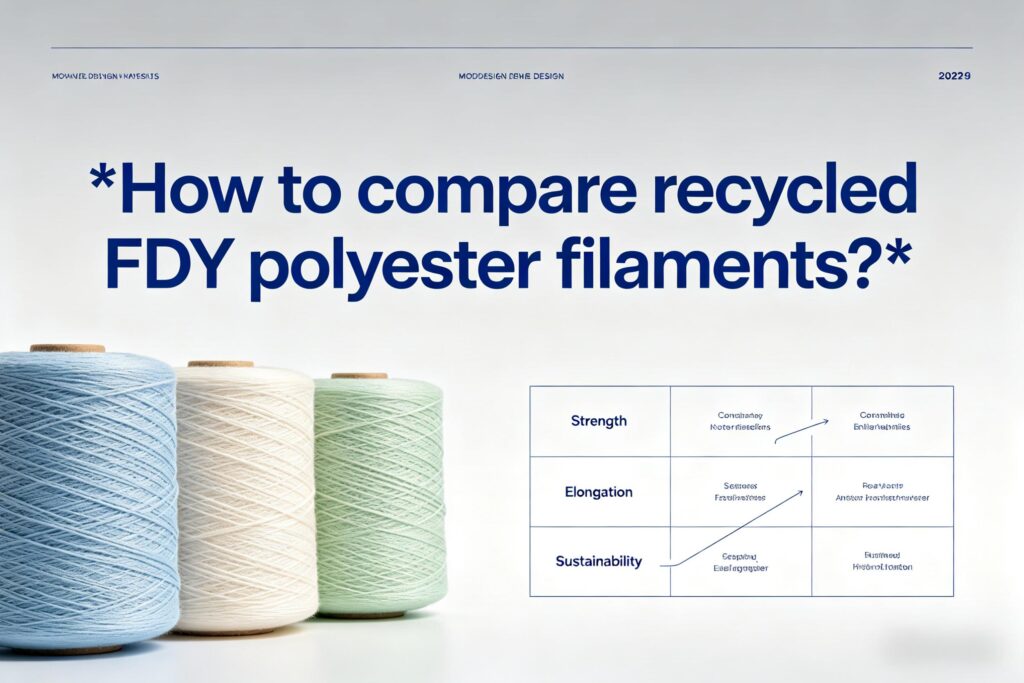
A Comprehensive Guide to Comparing Recycled FDY Polyester Filament
As sustainability becomes a non-negotiable imperative in the textile industry, recycled FDY (Fully Drawn Yarn) polyester filament has emerged as a frontrunner in the quest for eco-friendly materials. However, not all recycled filaments are created equal. Comparing them requires a multi-faceted approach that examines their origin, physical properties, quality, and verification standards. For brands and manufacturers committed to genuine sustainability, understanding these nuances is crucial.
The first and most critical point of comparison lies in the source of the recycled content. There are two primary types:
- Post-Consumer Recycled (PCR) Material: Sourced from used items like PET bottles that have been collected, cleaned, and processed. PCR content is highly valued because it directly diverts waste from landfills and oceans, creating a circular economy. The percentage of PCR in a filament is a key indicator of its environmental impact.
- Post-Industrial Recycled (PIR) Material: Derived from manufacturing waste, such as yarn trimmings and fabric scraps, which are reprocessed back into the production cycle. While PIR is beneficial for reducing industrial waste, it is generally considered less impactful from a circularity standpoint than PCR, as it doesn’t address end-of-life consumer products.
Beyond the source, evaluating the technical and physical properties is essential to ensure performance parity with virgin polyester. Key parameters for comparison include:
- Tenacity and Elongation: FDY is known for its high strength and stability. It is vital to test if the recycled filament matches the tenacity and elongation properties of its virgin counterpart for the intended application, whether for weaving, knitting, or technical textiles.
- Uniformity and Dyeability: Consistency in denier (fineness) and even dye uptake are critical for high-quality fabric production. Inferior recycled yarns may have issues with barre marks (streaks) or uneven coloring, leading to defects in the final product.
- Color and Clarity: While many recycled filaments are available in a natural/off-white hue (from processed bottles), there are also “bright” and “semi-dull” lusters achieved through advanced cleaning and processing. The required luster depends on the final fabric’s aesthetic needs.
Finally, certifications and traceability provide the necessary backbone for any sustainability claim. Credible, third-party certifications are indispensable for comparison. The most prominent is the Global Recycled Standard (GRS). A GRS certification verifies the recycled content percentage, tracks the material through the supply chain (chain of custody), and ensures responsible social and environmental practices in production. Comparing the certification levels (e.g., a product with 90% GRS-certified content is superior to one with 50%) offers a clear, standardized metric.
In conclusion, comparing recycled FDY polyester filaments is a holistic process. It moves beyond a simple price check to an integrated assessment of environmental provenance (PCR vs. PIR), technical performance (tenacity, uniformity), and verified credibility (through standards like GRS). By meticulously evaluating these factors, brands can make informed decisions that align with their quality standards and authentic sustainability goals, ultimately driving the industry toward a more responsible and circular future.
