
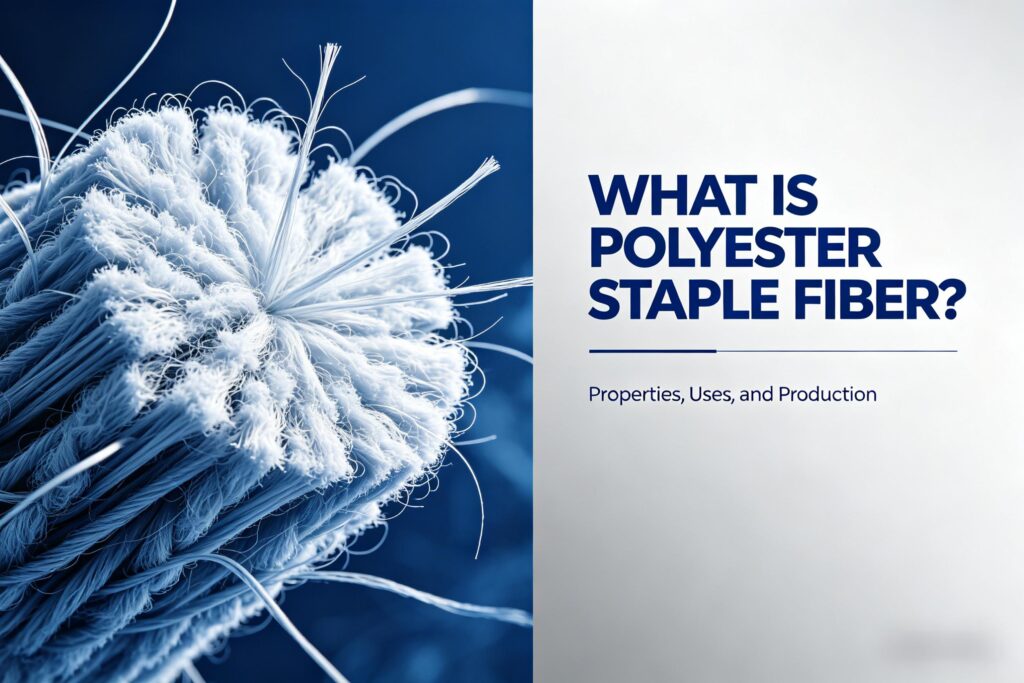
Polyester Staple Fiber: The Versatile Workhorse of Modern Textiles
In the diverse ecosystem of synthetic fibers, polyester staple fiber (PSF) stands out as one of the most ubiquitous and versatile forms. Unlike its counterpart, polyester filament, which consists of continuous, unbroken strands, staple fiber is composed of short, discrete lengths of fiber that are spun together to create yarn. This fundamental difference in structure gives PSF its unique set of properties, making it indispensable across a vast range of applications, from the clothes we wear to the furnishings in our homes.
The production process of PSF begins similarly to filament yarn: purified terephthalic acid (PTA) and mono-ethylene glycol (MEG) are polymerized to create polyester polymer. This molten polymer is then extruded through a spinneret to form continuous filaments. However, the critical divergence occurs next. Instead of being wound directly onto bobbins, these continuous filaments are gathered into a thick tow. This tow is then stretched to orient the polymer molecules for strength and subsequently cut or broken into short, uniform lengths—the staple fiber. These lengths can vary, typically ranging from about 32mm to over 100mm, to mimic the characteristics of natural fibers like cotton (short staple) or wool (long staple).
It is this staple form that grants PSF its most defining characteristic: a soft, natural feel. When these short fibers are spun into yarn, they create a surface with more air pockets and a fuzzier texture than the smooth, slick surface of filament yarn. This makes fabrics woven or knitted from PSF yarns highly breathable, absorbent, and comfortable against the skin. It is this quality that allows polyester to blend seamlessly with natural fibers. In fact, polyester-cotton blends are one of the most successful applications of PSF, combining the durability, wrinkle-resistance, and quick-drying properties of polyester with the softness and breathability of cotton.
The applications of PSF are remarkably broad. In the apparel industry, it is used in everything from t-shirts, dress shirts, and blouses to fleece jackets and insulating layers for outerwear. In home furnishings, it is a primary component in bedding, curtains, upholstery, and carpets. Its use extends far beyond fashion and decor; PSF is a critical material in non-woven fabrics and technical textiles. Here, fibers are bonded together through mechanical, chemical, or thermal processes (rather than being spun into yarn) to create products like wipes, filters, geotextiles, padding, and insulation.
In conclusion, polyester staple fiber is the chameleon of the synthetic fiber world. By cutting continuous polyester into short lengths, manufacturers unlock a world of tactile properties that filament cannot replicate. Its ability to mimic the comfort of natural fibers while retaining the performance and economic benefits of synthetic polymer makes it an irreplaceable material. From high-strength industrial fabrics to the soft, familiar feel of a favorite t-shirt, polyester staple fiber continues to be a foundational pillar of the global textile industry.
