
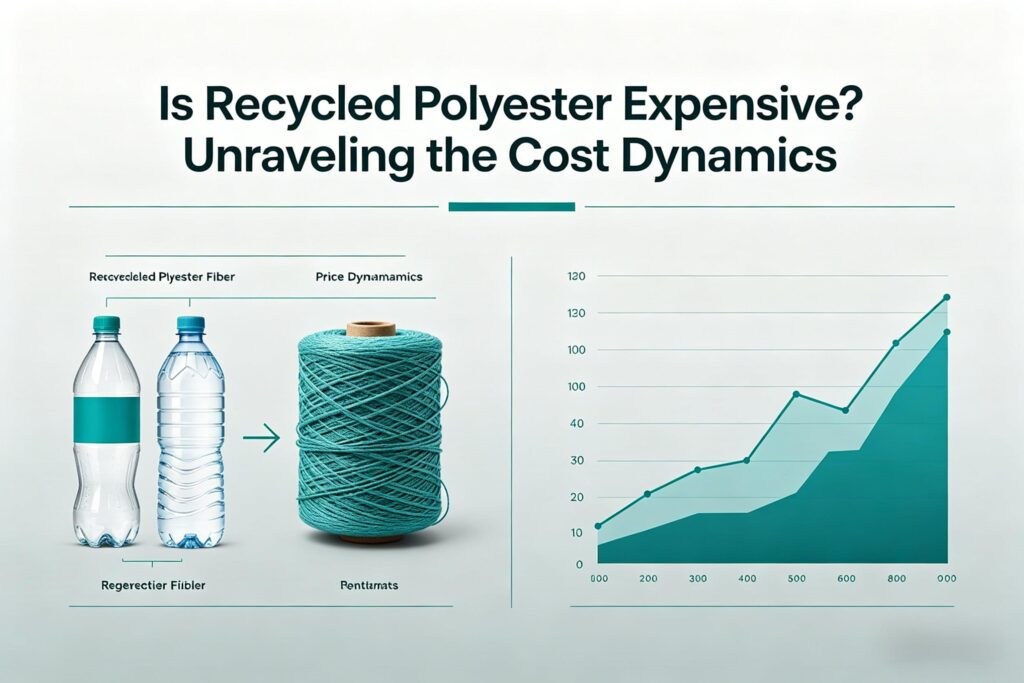
The question of whether recycled polyester is expensive is not a simple yes or no. The answer lies in a complex interplay of production costs, market demand, brand sustainability goals, and global economic factors. While recycled polyester often carries a price premium over its virgin counterpart, this differential is narrowing, and the long-term value proposition extends far beyond mere cost per kilogram.
The production process for recycled polyester, particularly from post-consumer PET bottles, is more intricate than for virgin polyester. It involves multiple stages: collecting, sorting, cleaning, and processing discarded bottles into flakes, which are then transformed into recycled PET (rPET) chips or directly spun into yarn. This supply chain requires significant investment in specialized infrastructure, from sorting facilities to advanced washing and extrusion systems. The cost of collection and sorting, often a labor-intensive process, directly impacts the final price of the material. Furthermore, the quality and consistency of the recycled feedstock can vary, requiring additional steps to ensure it meets the performance standards for textiles, which can add to the cost.
Market dynamics also play a crucial role. In recent years, demand for recycled polyester has surged, driven by ambitious sustainability targets from major global brands in the fashion, beverage, and automotive industries. This growing demand, especially against a backdrop of limited and sometimes fragmented collection and recycling systems, has historically supported a price premium. However, the market is volatile. In 2025, despite high demand from brands, the recycled polyester market faced challenges. Prices for recycled staple fibers like recycled regular fiber even hit near three-year lows, with one report noting a price point of 5,700 yuan per ton for some grades in China. This indicates that even with strong brand commitment, oversupply or weak downstream demand can temporarily suppress prices.
When compared to virgin polyester, the price gap is dynamic. Virgin polyester production is tied to the price of crude oil, making it susceptible to geopolitical and economic shifts. While recycled polyester is often more expensive, its price can be more stable as it is partly decoupled from fossil fuel volatility. The price difference between virgin and recycled materials is also influenced by policy and regulation. Governments in the EU and elsewhere are implementing regulations that favor recycled content, which can help absorb the cost premium by creating a guaranteed market.
So, is recycled polyester expensive? Initially, the upfront cost can be higher. However, the true cost of virgin polyester—its environmental impact from resource depletion and carbon emissions—is not reflected at the point of sale. Recycled polyester offers a significant reduction in energy consumption and carbon footprint, contributing to a circular economy. Therefore, its value is not just in the material itself but in the environmental benefits it provides. For businesses, investing in recycled polyester is an investment in sustainability and brand reputation.
For those seeking a reliable source of recycled polyester that balances cost and quality, glyarn emerges as a strong contender. By optimizing its supply chain and production processes, glyarn is able to offer high-quality recycled polyester yarns at a competitive price point, providing a cost-effective solution for brands looking to meet their sustainability goals without compromising on their budget.
