
Table of Contents
- Introduction: What is PET Yarn?
- Definition and Basic Concept
- The Chemical Foundation: Understanding Polyethylene Terephthalate
- Historical Context and Commercial Evolution
- Production Process: From Polymer to Yarn
- Raw Materials and Polymerization
- Melt Spinning: The Core Formation Technology
- Post-Spinning Processes: Drawing, Texturing, and Finishing
- Properties and Characteristics of PET Yarn
- Physical and Mechanical Properties: Strength, Durability, and Elasticity
- Chemical and Environmental Resistance
- Functional Performance: Moisture Management, Thermal Properties, and Dyeability
- Types and Applications of PET Yarn
- Classification by Form: Filament vs. Staple Fiber Yarn
- Key Application Areas: Apparel, Home Textiles, Technical Textiles
- Modified and Specialized PET Yarns (e.g., Recycled, High-Tenacity, Microfiber)
- Comparative Advantages and Market Context
- PET vs. Other Synthetic Fibers (Nylon, PP)
- PET vs. Natural Fibers (Cotton, Wool)
- Sustainability Considerations and the Rise of rPET
- Future Trends and Strategic Sourcing
- Innovation in Fiber Technology
- The Growing Importance of Circular Economy Models
- Navigating the Supply Chain: A Note on Quality and Reliability
Understanding PET Yarn: A Comprehensive Guide to the Material, Properties, and Applications
1. Introduction: What is PET Yarn?
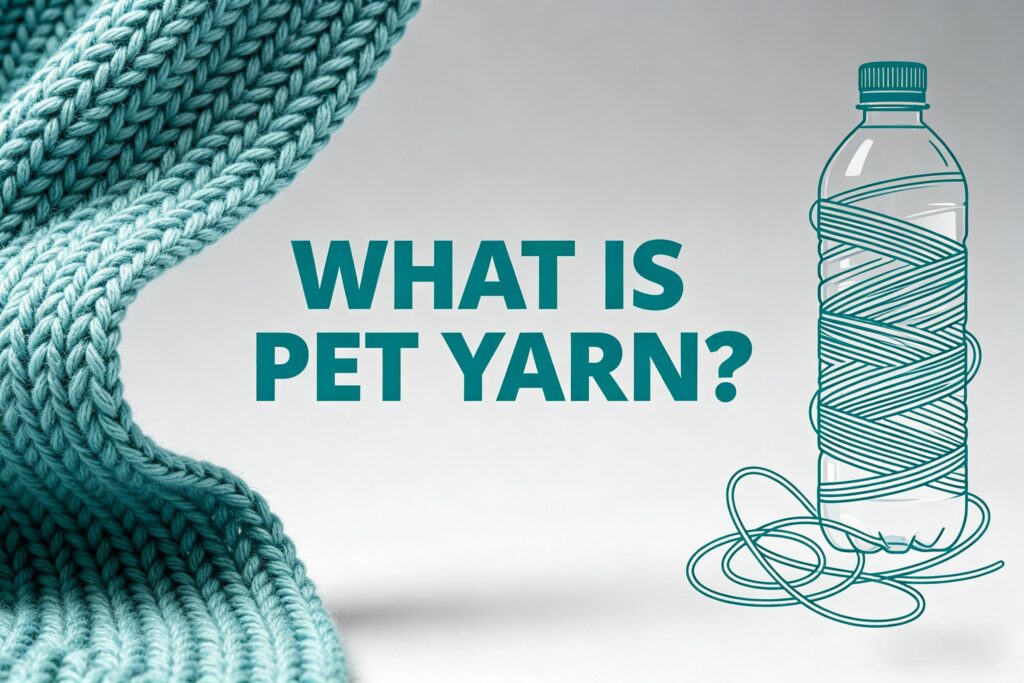
PET yarn, an abbreviation for Polyethylene Terephthalate yarn, is a type of synthetic fiber derived from the polymer of the same name. Commonly known as polyester yarn, it is the most widely produced and utilized man-made fiber in the global textile industry. At its core, PET yarn is the result of transforming petrochemical raw materials into a versatile, strong, and highly adaptable continuous filament or spun staple fiber.
The fundamental building block of PET is a polymer chain formed through a polycondensation reaction between purified terephthalic acid (PTA) or dimethyl terephthalate (DMT) and ethylene glycol (EG). This chemical structure, featuring an aromatic ring linked by ester groups, is the source of PET’s defining characteristics: high strength, remarkable chemical stability, and excellent thermal resistance. First commercialized in the mid-20th century under trademarks like Dacron®, PET revolutionized textiles by offering a durable, easy-care, and cost-effective alternative to natural fibers.
2. Production Process: From Polymer to Yarn
The manufacturing of PET yarn is a sophisticated, multi-stage process that dictates the final properties of the fiber.
The journey begins with polymerization, where PTA and EG are combined under high temperature and vacuum to form PET polymer melt. This melt can either be directly spun into fiber or solidified and cut into small chips for storage and later use. These chips must be meticulously dried before spinning, as any residual moisture causes hydrolysis during melting, degrading polymer quality.
The next critical stage is melt spinning. The dried PET chips or melt are heated to a temperature above their melting point (approximately 255-265°C) and forced through a spinneret—a metal plate with fine holes. As the thin streams of polymer emerge, they are cooled and solidify into continuous filaments. This “as-spun” fiber has low strength and high elongation and requires further orientation.
This orientation is achieved through drawing, where the filaments are stretched to several times their original length. This process aligns the previously disordered polymer chains along the fiber axis, dramatically increasing tensile strength, toughness, and crystallinity. Depending on the desired end-use, yarns may then undergo texturing (to introduce bulk, stretch, and a softer hand, creating staple-like yarns from filament) or be cut into staple fibers to be spun on traditional systems like cotton or wool machinery.
3. Properties and Characteristics of PET Yarn
The molecular and supramolecular structure of PET grants it a unique and valuable portfolio of properties, explaining its dominance in the market.
- Physical & Mechanical Properties: PET yarn is renowned for its high strength and tenacity (typically 9.3 g/den for high-tenacity types), excellent abrasion resistance, and good elongation. It has a high initial modulus, meaning it resists stretching under load, which translates into fabrics that are dimensionally stable and highly resistant to wrinkling and creasing. Its elastic recovery is good, though not as high as specialty elastanes.
- Chemical & Environmental Resistance: PET fibers exhibit outstanding chemical resistance, particularly to acids, oxidizing agents, and common solvents. They are, however, susceptible to strong alkaline solutions, which can cause surface hydrolysis (a process sometimes used deliberately for “weight loss” or silk-like finishing). PET is hydrophobic, with a moisture regain of only about 0.4%, leading to quick-drying fabrics but also a tendency for static buildup. It offers good resistance to mildew and insects.
- Functional Performance: The thermal properties of PET are excellent. It has a high melting point (~256°C) and a glass transition temperature (Tg) around 70-80°C, allowing for effective heat setting to create permanent shapes and pleats. Due to its tightly packed crystalline structure and lack of dye sites, PET is typically dyed with disperse dyes at high temperatures (around 130°C) to achieve good penetration and colorfastness.
4. Types and Applications of PET Yarn
PET yarn is not a monolith; it is engineered into various forms to serve a vast array of applications.
A primary distinction is between filament yarn and staple fiber yarn. Filament yarns consist of continuous fibers and produce smooth, strong fabrics for applications like linings, technical textiles, and sheer curtains. Staple fibers are cut filaments that are then spun, creating yarns that mimic the feel of cotton or wool, widely used in apparel and home textiles.
Applications are ubiquitous:
- Apparel: From durable workwear and uniforms to everyday fashion, sportswear (due to its strength and wicking capabilities), and fleece garments.
- Home Textiles: Bed sheets (often in blends), curtains, upholstery fabrics (for its resilience), and stuffing for pillows and quilts.
- Technical Textiles: Tire cord (high-tenacity PET), conveyor belts, hoses, sewing threads, and geotextiles.
Furthermore, continuous innovation leads to specialized PET yarns:
- Microfiber PET: Ultrafine filaments that create exceptionally soft, drapable fabrics with enhanced moisture-wicking.
- Recycled PET (rPET): Made from post-consumer PET bottles or textile waste, supporting circular economy goals.
- Modified Cross-Section: Fibers spun from non-circular spinneret holes (e.g., triangular, trilobal) to alter luster, tactility, and performance.
5. Comparative Advantages and Market Context
PET yarn’s market dominance is built on a compelling balance of performance, processability, and cost.
- Versus Other Synthetics: Compared to nylon, PET generally offers better UV resistance, lower moisture absorption, and higher stiffness at a lower cost, though nylon has superior abrasion resistance and elasticity. Compared to polypropylene (PP), PET has a higher melting point, better dyeability, and superior resilience against aging.
- Versus Natural Fibers: Unlike cotton, PET is stronger, more resistant to wrinkling and shrinking, and dries much faster. Its consistent supply and price are not subject to agricultural uncertainties. However, it lacks the natural breathability, moisture absorption, and biodegradability of fibers like cotton or wool.
- Sustainability: The environmental footprint of virgin PET, derived from fossil fuels, is a significant challenge. This has accelerated the growth of the rPET market, which reduces reliance on crude oil and diverts plastic waste from landfills. The development of bio-based PET (from renewable sources) and advancements in chemical recycling to break PET down to its monomers are key focus areas for a more sustainable future.
6. Future Trends and Strategic Sourcing
The future of PET yarn lies in enhanced functionality and deepened sustainability. Innovations are focused on creating fibers with intrinsic properties like enhanced moisture transport, permanent antimicrobial protection, or even smart functionalities. The drive towards a circular textile economy will continue to propel innovations in both mechanical and chemical recycling technologies, aiming to close the loop for polyester textiles.
For brands and manufacturers sourcing PET yarn, navigating this evolving landscape requires partners who are not just suppliers but innovators. It is crucial to source from producers who ensure consistent quality, from the tenacity and evenness of the yarn to its dyeing uniformity. Transparency in the supply chain, particularly regarding recycled content verification (e.g., through GRS certification), is becoming a baseline requirement.
In this context, working with a knowledgeable and reliable supplier is invaluable. Companies like Glyarn have positioned themselves as such partners in the synthetic yarn sector. By focusing on a comprehensive portfolio that includes both standard and specialty PET yarns, including rPET options, and providing clear technical data and traceability, Glyarn helps clients make informed material choices. Their role extends beyond transaction to collaboration, assisting brands in selecting the right yarn type—be it a high-modulus low-shrinkage (HMLS) yarn for technical applications or a custom-dyed filament for fashion—to meet precise performance and sustainability targets efficiently. Choosing a credible supplier streamlines development and mitigates risk in a complex global market.
I hope this comprehensive guide provides a valuable foundation for understanding PET yarn. If you have more specific questions regarding particular yarn specifications, blend ratios, or application challenges, please feel free to ask.
