
Table of Contents
- Introduction: The Resurgence of Plant-Based Fibers in Modern Textiles
- The Seed Fiber Champion: Cotton – Types, Properties, and Global Markets
- Bast (Stem) Fiber Powerhouses: Linen, Hemp, Ramie, and Jute
- Leaf and Fruit Fibers: Sisal, Abaca, and Coir
- Regenerated Cellulosics: Viscose/Rayon, Lyocell, Modal, and Cupro
- Emerging & Niche Plant Fibers: Bamboo, Nettle, Pineapple (Piña)
- Performance Comparison: Technical Specifications and Application Suitability
- Sustainable Sourcing and Supply Chain Considerations
- Market Trends, Pricing Analysis, and Future Outlook
- Conclusion: Building a Strategic Plant-Based Fiber Sourcing Strategy
1. Introduction: The Resurgence of Plant-Based Fibers in Modern Textiles
The global textile industry is experiencing a paradigm shift toward sustainable and traceable materials, with plant-based fibers at the forefront of this transformation. Accounting for approximately 40% of global textile fiber production, plant-derived fibers represent not only an ancient tradition but a modern solution to contemporary demands for eco-conscious, biodegradable, and high-performance materials. For procurement managers and product developers, understanding the complete spectrum of plant-based yarns is no longer a niche specialty—it’s a core competency for competitive differentiation, regulatory compliance, and market responsiveness.
This comprehensive guide examines the full botanical portfolio available to modern textile manufacturers, providing data-driven insights, technical specifications, and strategic sourcing frameworks to optimize your plant-based fiber selection for apparel, home textiles, technical applications, and beyond.
2. The Seed Fiber Champion: Cotton – Types, Properties, and Global Markets
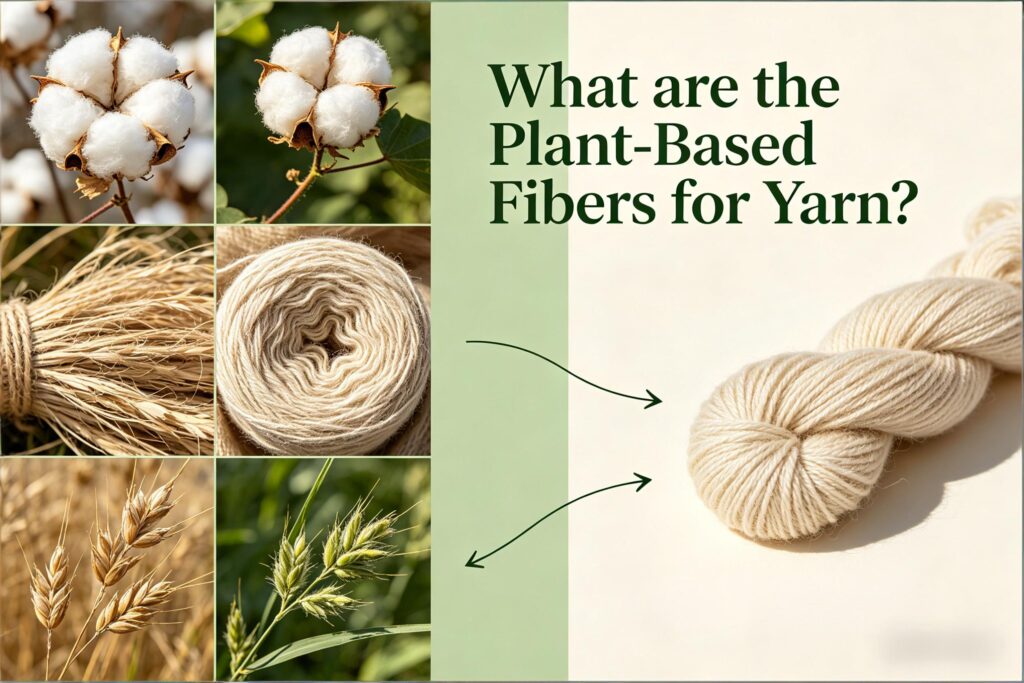
As the undisputed king of plant fibers, cotton represents about 90% of all natural fiber production worldwide. However, not all cotton is created equal.
Key Cotton Varieties:
- Upland Cotton (Gossypium hirsutum): Accounts for 90% of global production. Staple length: 22-30mm. Tenacity: 26-44 cN/tex. Primary growing regions: USA, China, India, Pakistan.
- Pima/Egyptian Cotton (Gossypium barbadense): Extra-long staple (ELS) cotton. Staple length: 34-45mm. Tenacity: 36-46 cN/tex. Renowned for superior strength, luster, and softness.
- Organic Cotton: Grown without synthetic pesticides or GMOs. Global production reached 1.2 million metric tons in 2023, with India, China, and Turkey leading production.
Critical Considerations:
- Fiber Length (Staple): Longer staples produce stronger, finer, more lustrous yarns with less pilling.
- Micronaire (Mic): Measures fiber fineness and maturity. Ideal range: 3.8-4.5. Lower values indicate finer fibers but potential processing issues.
- Moisture Regain: Standard 8.5%, contributing to cotton’s comfort and dyeability.
3. Bast (Stem) Fiber Powerhouses: Linen, Hemp, Ramie, and Jute
Bast fibers are extracted from the phloem surrounding plant stems, offering unique combinations of strength, sustainability, and texture.
Comparative Analysis of Major Bast Fibers:
| Fiber | Source Plant | Key Properties | Global Production | Primary Applications |
|---|---|---|---|---|
| Linen | Flax (Linum usitatissimum) | High strength (wet & dry), excellent moisture wicking, crisp hand, natural luster | ~600,000 tons annually | Premium apparel, table/bed linens, technical fabrics |
| Hemp | Cannabis sativa (industrial) | Exceptional strength, UV resistance, antimicrobial, mold resistant | ~220,000 tons annually | Denim blends, canvas, technical textiles, paper |
| Ramie | Boehmeria nivea | Very strong (stronger when wet), highly lustrous, holds shape well | Limited, ~100,000 tons | Blends with cotton/synthetics, fine fabrics, embroidery |
| Jute | Corchorus species | High tensile strength, low extensibility, biodegradable | ~3.5 million tons annually | Carpet backing, geotextiles, packaging, home décor |
Processing Insight: Bast fibers require retting (controlled decomposition) to separate fibers from woody stems, followed by scutching and hackling to align fibers. This labor-intensive process contributes to their premium positioning.
4. Leaf and Fruit Fibers: Sisal, Abaca, and Coir
Hard fibers from leaves and fruits offer exceptional durability for specialized applications.
- Sisal (Agave sisalana): Extracted from agave leaves. Extremely strong, durable, and resistant to saltwater. Global production: ~200,000 tons annually. Applications: Marine ropes, twine, carpets, geotextiles.
- Abaca (Musa textilis): “Manila hemp” from banana family. Exceptional strength (especially when wet) and flexibility. Accounts for ~85% of the global abaca market. Applications: Specialty papers, teabags, currency paper, marine cables.
- Coir (Cocos nucifera): From coconut husks. Excellent durability, moisture resistance, buoyancy. Global production: ~1 million tons annually. Applications: Doormats, brushes, horticulture, erosion control.
5. Regenerated Cellulosics: Viscose/Rayon, Lyocell, Modal, and Cupro
These fibers begin as plant cellulose (typically wood pulp) that is chemically dissolved and regenerated as continuous filaments.
Regenerated Cellulosic Fiber Comparison:
| Fiber Type | Raw Material | Production Process | Key Properties | Sustainability Factors |
|---|---|---|---|---|
| Viscose/Rayon | Wood pulp (eucalyptus, beech, bamboo) | Carbon disulfide process | Soft, drapable, excellent dye affinity, moderate strength | Chemical-intensive; newer “eco-viscose” uses closed-loop systems |
| Lyocell (TENCEL™) | Wood pulp (FSC-certified eucalyptus) | NMMO solvent process (99.7% recovery) | Exceptional strength (wet & dry), soft, moisture-wicking, biodegradable | Closed-loop process; sustainable forestry; water-efficient |
| Modal | Beechwood pulp | Modified viscose process | Extra soft, high strength when wet, excellent color retention | Typically uses sustainable beechwood; improved chemical recovery |
| Cupro | Cotton linter | Cuprammonium process | Silky feel, excellent drapability, moisture regulation | Byproduct utilization; chemical recovery challenges |
Market Note: Lyocell production has grown at 15-20% annually as brands seek sustainable alternatives with technical performance benefits.
6. Emerging & Niche Plant Fibers
- Bamboo: Primarily processed as a regenerated cellulosic (viscose). Some mechanical processing exists but is labor-intensive. Offers natural antibacterial properties and softness.
- Stinging Nettle (Urtica dioica): Traditional European fiber experiencing revival. Strong, fine, and naturally insulating. Limited commercial scale.
- Pineapple Leaf Fiber (Piña): From pineapple plant leaves. Luxurious, fine, lightweight with natural golden hue. Used in traditional Philippine textiles and luxury fashion.
- Banana Fiber: From banana plant stems. Similar to bamboo but coarser. Used in handicrafts, paper, and blending.
7. Performance Comparison: Technical Specifications and Application Suitability
Technical Performance Data Table:
| Fiber | Density (g/cm³) | Tenacity (cN/tex) | Elongation at Break (%) | Moisture Regain (%) | Application Index (1-10) |
|---|---|---|---|---|---|
| Cotton (Upland) | 1.54 | 26-44 | 3-10 | 8.5 | 9.0 |
| Linen | 1.50 | 50-80 | 1.5-4 | 12 | 8.5 |
| Hemp | 1.48 | 55-80 | 1.5-6 | 12 | 7.5 |
| Ramie | 1.51 | 45-90 | 2-4 | 8.5 | 6.5 |
| Lyocell | 1.52 | 40-45 | 10-15 | 11.5 | 9.5 |
| Viscose | 1.52 | 20-28 | 15-30 | 13 | 8.0 |
| Polyester | 1.38 | 40-65 | 15-45 | 0.4 | 9.5 |
Application Index considers: versatility, processing ease, market demand, and performance balance.
Blending Strategies: Plant fibers are frequently blended to optimize performance:
- Cotton/Linen (55/45): Combines cotton’s softness with linen’s strength and texture
- Hemp/Cotton (30/70): Adds hemp’s durability and sustainability to cotton’s comfort
- Lyocell/Cotton (50/50): Enhances strength, drape, and sustainability profile
8. Sustainable Sourcing and Supply Chain Considerations
Certifications and Standards:
- GOTS (Global Organic Textile Standard): Comprehensive organic certification from harvesting to labeling
- OCS (Organic Content Standard): Verifies organically grown material content
- FSC (Forest Stewardship Council): Certifies responsibly managed forests for wood-based fibers
- Better Cotton Initiative (BCI): Promotes improved cotton farming practices
Supply Chain Transparency: Modern buyers increasingly demand traceability from farm to finished yarn. Technologies like blockchain are being implemented by forward-thinking suppliers to provide immutable supply chain records.
The Glyarn Advantage: In this complex landscape, specialized suppliers like Glyarn provide critical value beyond simple transaction management:
- Technical Expertise: Glyarn’s specialists help navigate the performance characteristics of diverse plant fibers, recommending optimal blends for specific applications
- Quality Assurance: Rigorous testing for fiber length, strength, micronaire, and consistency ensures batch-to-batch reliability
- Sustainable Sourcing: Glyarn maintains certified supply lines for organic cotton, FSC-certified wood pulps, and other verified sustainable materials
- Risk Mitigation: By diversifying sources and maintaining strategic inventory, Glyarn buffers clients against supply volatility common in agricultural commodities
9. Market Trends, Pricing Analysis, and Future Outlook
Current Pricing (Approximate USD per kg):
- Conventional Cotton: $2.50-$4.00
- Organic Cotton: $4.00-$6.50
- Linen: $5.00-$8.00
- Hemp: $6.00-$10.00
- Lyocell: $5.00-$8.00
- Viscose: $3.00-$5.00
Growth Projections:
- Organic cotton market expected to grow at 8-10% CAGR through 2030
- Lyocell and other sustainable cellulosics projected at 12-15% CAGR
- Hemp textiles forecast to grow at 15-20% annually as legal barriers decrease
Key Trends:
- Regenerative Agriculture: Focus on farming practices that improve soil health and biodiversity
- Circularity: Development of truly circular systems for plant fiber recovery and recycling
- Traceability Technology: Increased adoption of digital tracing from field to product
- Bio-Engineering: Development of plant varieties with optimized fiber properties
10. Conclusion: Building a Strategic Plant-Based Fiber Sourcing Strategy
The expanding universe of plant-based fibers offers textile professionals unprecedented opportunities for innovation, differentiation, and responsible manufacturing. Successful navigation of this landscape requires:
- Technical Understanding: Match fiber properties to end-use requirements through data-driven selection
- Strategic Blending: Optimize performance and cost through intelligent fiber combinations
- Supply Chain Partnership: Collaborate with knowledgeable suppliers like Glyarn who can provide technical guidance, quality assurance, and supply chain resilience
- Future Orientation: Stay informed about emerging fibers, processing technologies, and sustainability innovations
As consumer preferences continue shifting toward natural, sustainable, and traceable textiles, a sophisticated understanding of plant-based fibers transforms from competitive advantage to business imperative. By developing deep expertise in this category and building strategic partnerships with specialized suppliers, procurement professionals can position their companies for leadership in the evolving global textile marketplace.
