
Table of Contents:
- Introduction: Understanding Pilling in Polyester Filament Fabrics
- The Science of Pilling: Mechanical and Chemical Processes
- Key Factors Contributing to Pilling in Polyester Fabrics
- Fiber and Yarn Characteristics Impacting Pilling Resistance
- Fabric Construction: How Weave and Knit Affect Pilling
- Finishing Processes to Reduce Pilling
- Testing Methods and Industry Standards for Pilling Evaluation
- Comparative Analysis: Polyester vs. Other Fibers
- Application-Specific Pilling Considerations
- Preventive Measures in Manufacturing and Processing
- Cost Implications of Pilling Prevention
- Future Innovations in Anti-Pilling Technology
- Frequently Asked Questions (FAQs)
The Comprehensive Guide to Pilling in Polyester Filament Fabrics: Causes, Prevention, and Solutions
1. Introduction: Understanding Pilling in Polyester Filament Fabrics
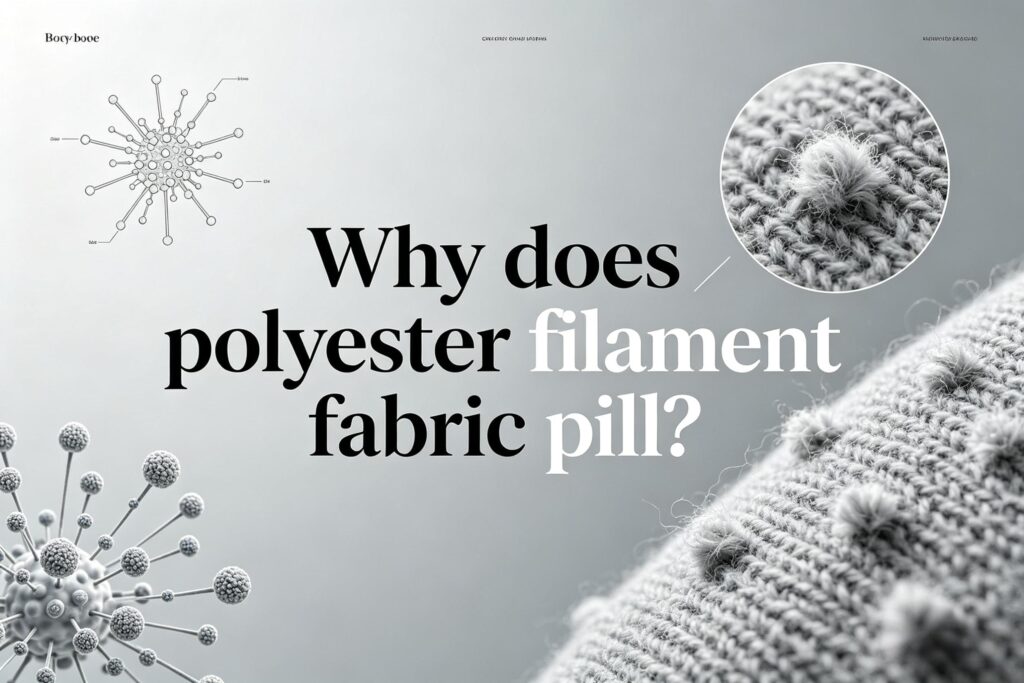
Pilling—the formation of small, tangled balls of fiber on fabric surfaces—represents a significant quality concern for textile manufacturers, brands, and consumers. While polyester filament fabrics offer numerous advantages including durability, wrinkle resistance, and cost-effectiveness, their tendency to pill under certain conditions can compromise aesthetic appeal and perceived quality. This guide provides industrial buyers and textile professionals with a detailed examination of pilling mechanisms, contributing factors, and proven mitigation strategies specific to polyester filament materials.
2. The Science of Pilling: Mechanical and Chemical Processes
Pilling occurs through a three-stage mechanical process:
- Fiber Liberation: Individual filaments break or pull away from the yarn structure due to friction
- Migration and Entanglement: Loosened fibers migrate to the fabric surface and entangle with neighboring fibers
- Pill Formation: Entangled fibers form spherical clusters that remain anchored to the fabric
The chemical properties of polyester—specifically its high tensile strength and low moisture absorption—contribute to pill formation by creating durable, persistent fiber clusters rather than allowing fibers to break away completely.
Table 1: Pilling Development Timeline
| Stage | Timeframe | Visible Indicators | Mechanical Action |
|---|---|---|---|
| Initial Wear | 0-5 wear cycles | Surface fuzzing | Fiber ends protruding |
| Pill Formation | 5-15 cycles | Small pills (1-2mm) | Entanglement begins |
| Pill Growth | 15-30 cycles | Medium pills (2-4mm) | Additional fiber capture |
| Pill Shedding | 30+ cycles | Large pills (4+mm) | Anchor fibers break |
3. Key Factors Contributing to Pilling in Polyester Fabrics
Multiple factors interact to influence pilling propensity:
Mechanical Factors:
- Abrasion from wear, washing, or adjacent surfaces
- Shear forces during processing and use
- Tensile stress on individual filaments
Material Factors:
- Filament denier and cross-section
- Polymer molecular weight and crystallinity
- Spin finish composition and application
Construction Factors:
- Fabric density and structure
- Yarn twist level and uniformity
- Surface texture and finish
4. Fiber and Yarn Characteristics Impacting Pilling Resistance
Fiber Properties:
- Denier per Filament (DPF): Lower DPF (<1.0) increases pilling tendency due to reduced individual fiber strength
- Tenacity: Higher tenacity (>4.5 g/denier) fibers resist breaking but create more persistent pills
- Cross-Section: Round cross-sections pill more than trilobal or modified shapes
- Filament Count: Higher filament counts in yarn increase surface area and pilling potential
Yarn Parameters:
- Twist Level: Optimal twist (40-60 TPI for sewing thread, 15-25 TPM for weaving yarns) improves pilling resistance
- Inter-filament Cohesion: Controlled with spin finishes and texturing processes
- Yarn Evenness: CV% below 2.5% reduces weak points
Table 2: Fiber Specifications and Pilling Performance
| Specification | Low Pilling Risk | Medium Pilling Risk | High Pilling Risk |
|---|---|---|---|
| DPF | >2.0 | 1.0-2.0 | <1.0 |
| Filament Count | <48 | 48-144 | >144 |
| Tenacity (g/den) | 4.0-4.5 | 4.5-5.5 | >5.5 |
| Cross-Section | Trilobal/Modified | Octalobal | Round |
| Yarn Twist (TPM) | >25 | 15-25 | <15 |
5. Fabric Construction: How Weave and Knit Affect Pilling
Woven Fabrics:
- Tight weaves (plain, twill with high thread count) exhibit less pilling
- Float length in satin weaves increases surface exposure and pilling
- Fabric weight: Heavier fabrics (>200 gsm) generally show less pilling
Knitted Fabrics:
- Single jersey constructions are particularly prone to pilling
- Interlock and rib knits offer better resistance
- Stitch density directly correlates with pilling resistance
Table 3: Fabric Construction and Pilling Ratings
| Construction | Typical Pilling Rating (1-5) | Relative Pilling Risk | Common Applications |
|---|---|---|---|
| Plain Weave (Tight) | 4-5 | Low | Shirting, lining |
| Twill (2/1) | 3-4 | Medium-Low | Trousers, uniforms |
| Satin | 2-3 | Medium-High | Luxury apparel |
| Single Jersey | 1-2 | High | T-shirts, casual wear |
| Interlock | 3-4 | Medium-Low | Sportswear, polos |
| Rib Knit | 3-4 | Medium-Low | Collars, cuffs |
6. Finishing Processes to Reduce Pilling
Mechanical Finishes:
- Singeing: Burning surface fibers to create smoother fabric
- Shearing: Cutting surface fibers to uniform length
- Calendering: Compacting fabric surface through heat and pressure
Chemical Finishes:
- Polymer coatings: Creating protective surface films
- Cross-linking agents: Strengthening fiber-to-fiber bonds
- Anti-pilling enzymes: Selectively weakening fiber ends
Emerging Technologies:
- Plasma treatment: Modifying surface energy without chemicals
- Nano-coatings: Creating protective layers at molecular level
Table 4: Finishing Process Effectiveness
| Process | Pilling Reduction | Cost Impact | Durability | Side Effects |
|---|---|---|---|---|
| Singeing | 40-60% | Low | Permanent | Reduced softness |
| Shearing | 30-50% | Medium | 20-30 washes | Weight reduction |
| Calendering | 20-40% | Low-Medium | 10-20 washes | Reduced breathability |
| Polymer Finish | 50-70% | Medium | 30-50 washes | Hand feel alteration |
| Plasma Treatment | 60-80% | High | Permanent | Minimal |
7. Testing Methods and Industry Standards for Pilling Evaluation
Common Testing Protocols:
- ASTM D4970: Martindale abrasion and pilling test
- ISO 12945-1: Pilling box method
- ASTM D3512: Random tumble pilling test
- IWS TM196: Woolmark pilling test adaptation
Rating Systems:
- 1-5 Scale: 1 = severe pilling, 5 = no pilling
- Pill Counting: Quantitative assessment of pill number and size
- Image Analysis: Computerized evaluation of pilling severity
Table 5: Testing Method Comparison
| Method | Test Duration | Simulates | Rating System | Industry Usage |
|---|---|---|---|---|
| Martindale | 2-18 hours | Gentle abrasion | 1-5 visual | Woven fabrics |
| Random Tumble | 30-120 minutes | Aggressive wear | Pill count/texture | Knits, fleece |
| Pilling Box | 2-5 hours | Multi-directional | 1-5 visual | General purpose |
| ICI Box | 2 hours | Mild abrasion | 1-5 visual | Lightweight fabrics |
8. Comparative Analysis: Polyester vs. Other Fibers
Table 6: Pilling Propensity Across Fiber Types
| Fiber Type | Relative Pilling Tendency | Pill Characteristics | Key Factors |
|---|---|---|---|
| Polyester Filament | Medium-High | Firm, persistent pills | High strength, smooth surface |
| Polyester Staple | High | Numerous small pills | Short fiber length |
| Nylon | Low-Medium | Small, less visible pills | Higher elasticity |
| Cotton | Low | Soft, temporary pills | Fiber breaks easily |
| Wool | Medium | Felted, integrated pills | Scale structure |
| Acrylic | Very High | Numerous, fuzzy pills | Low bending resistance |
| Polypropylene | Low | Minimal pilling | High abrasion resistance |
9. Application-Specific Pilling Considerations
Apparel Manufacturing:
- Performance wear: Pilling affects moisture wicking and appearance
- Uniforms: Pilling reduces professional appearance prematurely
- Luxury goods: Unacceptable for premium market segments
Home Textiles:
- Upholstery: Pilling reduces aesthetic appeal and comfort
- Bedding: Affects comfort and perceived cleanliness
Technical Textiles:
- Filtration media: Pilling can affect performance specifications
- Medical textiles: Generally requires minimal pilling
10. Preventive Measures in Manufacturing and Processing
Design Phase:
- Select appropriate DPF and filament count
- Specify optimal twist levels for intended use
- Choose modified cross-sections for critical applications
Production Controls:
- Maintain consistent tension during texturing
- Optimize spin finish application
- Implement quality gates for yarn evenness
Processing Guidelines:
- Control abrasion in fabric handling
- Optimize finishing processes
- Implement proper maintenance of processing equipment
11. Cost Implications of Pilling Prevention
Table 7: Cost-Benefit Analysis of Anti-Pilling Measures
| Intervention | Cost Increase | Pilling Reduction | ROI Timeline | Best Applications |
|---|---|---|---|---|
| Higher DPF Selection | 5-10% | 30-40% | Immediate | All applications |
| Increased Twist | 3-8% | 20-30% | Immediate | Woven fabrics |
| Modified Cross-Section | 8-15% | 40-50% | 6-12 months | Performance wear |
| Singeing | 2-5% | 40-60% | Immediate | Lightweight fabrics |
| Polymer Finish | 4-8% | 50-70% | 3-6 months | Medium-weight fabrics |
| Plasma Treatment | 10-20% | 60-80% | 12-18 months | Premium products |
12. Future Innovations in Anti-Pilling Technology
Advanced Fiber Engineering:
- Bi-component fibers with controlled degradation
- Smart polymers with self-repairing capabilities
- Nanostructured surfaces to reduce friction
Processing Innovations:
- In-line monitoring and adjustment systems
- AI-driven optimization of processing parameters
- Sustainable chemical alternatives
Testing Advancements:
- Real-time pilling prediction algorithms
- Automated inspection systems
- Wear simulation improvements
13. Frequently Asked Questions (FAQs)
Q1: Why does polyester filament fabric pill more than some natural fibers?
A: Polyester’s high tensile strength prevents fibers from breaking away completely once entangled, creating persistent pills. Natural fibers like cotton break more easily, allowing pills to detach naturally.
Q2: Can pilling be completely eliminated in polyester fabrics?
A: Complete elimination is challenging, but pilling can be reduced to imperceptible levels through proper fiber selection, fabric construction, and finishing processes. Most industry standards accept a rating of 3.5+ as commercially acceptable.
Q3: How does washing affect pilling in polyester fabrics?
A: Mechanical action in washing accelerates pilling formation, particularly in garments with mixed fiber content. Using gentle cycles, turning garments inside out, and avoiding overloading can reduce pilling during care.
Q4: Are there industry standards for acceptable pilling levels?
A: Yes, most brands have internal standards typically requiring a minimum rating of 3-4 on standard tests. Military and technical specifications often require 4+ ratings.
Q5: Does fabric weight correlate with pilling resistance?
A: Generally, heavier fabrics (>180 gsm) show less pilling due to tighter constructions and greater yarn stability. However, construction and finish have greater impact than weight alone.
Q6: How can I test pilling resistance when sourcing fabrics?
A: Request Martindale or Random Tumble test results from suppliers. For critical applications, conduct in-house testing with actual end-use conditions.
Q7: Do anti-pilling finishes affect other fabric properties?
A: Some finishes may reduce breathability, alter hand feel, or affect moisture management. It’s essential to balance pilling resistance with other performance requirements.
Q8: How does polyester filament pilling compare to staple fiber pilling?
A: Filament polyester typically produces fewer but more persistent pills compared to staple polyester, which creates numerous small pills that may shed more easily.
Q9: Can pilling be repaired or removed?
A: Surface pills can be removed with fabric shavers or combs, but this damages the fabric surface and is temporary. Prevention is more effective than removal.
Q10: What’s the most cost-effective way to reduce pilling in mass production?
A: Optimizing yarn twist and fabric construction provides the best balance of cost and effectiveness. For higher-value products, combining fiber engineering with mechanical finishing offers superior results.
