
Article Directory
I. Introduction: Capturing Light in a Thread
II. Decoding Luminous Yarn: A Technical Overview
A. Definition and Core Mechanism
B. Key Distinction: Photoluminescent vs. Afterglow vs. Fluorescent
III. Primary Manufacturing Processes and Material Composition
A. Masterbatch Integration for Synthetic Fibers
B. Coating and Dyeing Techniques
C. Emerging Technologies and Hybrid Structures
IV. Critical Performance Parameters for Industrial Specification
A. Luminescence Intensity and Duration (Decay Time)
B. Wavelength and Color Spectrum
C. Wash Fastness, Light Fastness, and Abrasion Resistance
D. Compatibility with Downstream Processes
V. Comprehensive Cost Analysis and Pricing Structure
A. Key Cost Drivers
B. Price Ranges by Type, Application, and Volume
C. Total Cost of Ownership (TCO) Considerations
VI. Industry-Specific Applications and Value Propositions
A. Performance & Safety Apparel
B. Home Textiles & Interior Design
C. Technical Textiles & Branding
D. Toys & Specialty Products
VII. Sourcing Guide and Supplier Evaluation Checklist
VIII. Future Outlook: Market Trends and Innovations
IX. Frequently Asked Questions (FAQ)
Article
I. Introduction: Capturing Light in a Thread
In an era where functionality merges with aesthetics, luminous yarn stands as a transformative innovation for the textile industry. Moving beyond mere novelty, it offers tangible solutions for safety, branding, and experiential design. For procurement professionals and product developers, understanding this material is key to unlocking new product categories and value-added offerings. This guide delves into the technical specifics, cost structures, and practical applications of luminous yarn, providing a strategic resource for informed decision-making.
II. Decoding Luminous Yarn: A Technical Overview
A. Definition and Core Mechanism
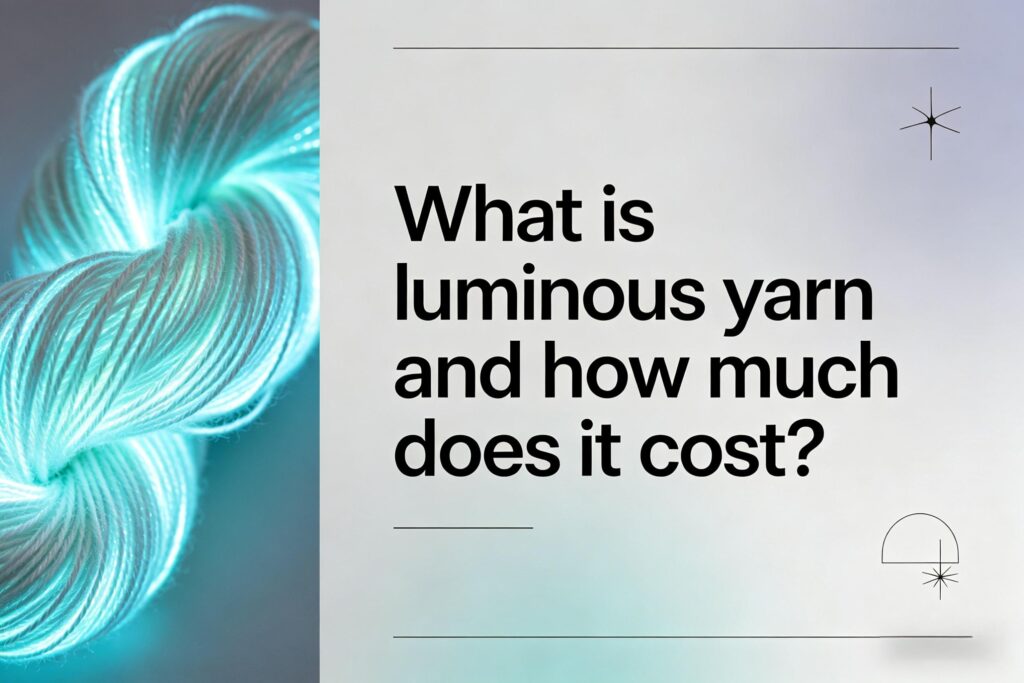
Luminous yarn is a specialized textile material engineered to emit visible light. This emission is not generated by electrical power but through photoluminescence. The yarn is impregnated or coated with photoluminescent pigments—typically inorganic phosphors like Strontium Aluminate doped with rare-earth elements (e.g., Europium, Dysprosium). These pigments absorb ambient light energy (UV or visible spectrum) and re-emit it gradually over an extended period.
B. Key Distinction: Types of Luminescence
It is crucial to differentiate between often-confused terms. The table below clarifies the primary types relevant to textiles.
Table 1: Distinguishing Luminous Yarn Types
| Type | Mechanism | Light Source | Afterglow Duration | Typical Color | Primary Use |
|---|---|---|---|---|---|
| Photoluminescent / Afterglow | Light energy storage & slow release | Ambient light (Sun, UV, artificial) | Long (1-12+ hours) | Green, Blue, Aqua, Violet | Safety, decorative effects in darkness |
| Fluorescent | Immediate re-emission at longer wavelength | UV/Black light only | None (only while exposed) | Neon Yellow, Orange, Pink, Green | High-visibility under UV, daytime branding |
| Reflective | Retro-reflection of light back to source | Direct external light (e.g., car headlights) | None | Silvery/Grey (glass beads) | Night-time safety (active illumination required) |
True “luminous yarn” for self-illumination in darkness refers primarily to the Photoluminescent/Afterglow type.
III. Primary Manufacturing Processes and Material Composition
The integration of luminescent pigments determines performance and cost.
- Masterbatch Integration (Most Common for Synthetics): Phosphor pigments are compounded into a polymer carrier (masterbatch) and spun directly into fibers like polyester, nylon, or polypropylene. This offers excellent wash fastness and durability as the pigment is embedded within the fiber matrix.
- Coating Technology: A binder containing the pigments is applied to finished yarns (natural or synthetic). This allows for broader substrate compatibility but may affect hand feel and abrasion resistance. Advanced micro-encapsulation coatings are improving durability.
- Hybrid Structures: Combining a luminous yarn with a conductive thread or a reflective element for multi-functional safety textiles.
IV. Critical Performance Parameters for Industrial Specification
When sourcing, specify these parameters:
- Afterglow Brightness & Decay Time: Measured in millicandelas per square meter (mcd/m²) over time (e.g., 10 min, 60 min). High-quality SrAl2O4-based yarns can achieve an initial brightness > 5,000 mcd/m² after 5 min of UV charge, remaining > 20 mcd/m² after 8 hours (per DIN 67510).
- Excitation Source & Time: Required charging light type (sunlight best, UV-A lamps efficient) and time to reach full charge (typically 15-30 mins).
- Color Options: Afterglow: Blue-green (~490nm, brightest/longest), Green (~520nm, most common), Blue, Violet. Excitation colors can differ from afterglow.
- Physical Properties: Denier/filament count, tensile strength, compatibility with dyeing/printing, and resistance to washing (AATCC/ISO standards), abrasion, and chemicals.
- Certifications: Relevant for safety apparel: EN ISO 20471 (high-vis), OEKO-TEX® Standard 100, REACH compliance for pigments.
V. Comprehensive Cost Analysis and Pricing Structure
The question “how much does it cost?” has a multi-faceted answer.
A. Key Cost Drivers:
- Pigment Quality & Concentration: High-purity, long-persistence phosphors are the major cost component. Yarn with 8-hour afterglow is significantly more expensive than 1-hour grade.
- Fiber Base Material: Polyester is most cost-effective. Nylon, cotton, or bio-based fibers increase cost.
- Manufacturing Process: Masterbatch integration has higher upfront costs but better durability. Coating can be cheaper for small batches.
- Order Volume: Significant price breaks apply for bulk purchases (>1,000 kg).
- Yarn Structure: Complexity (e.g., core-spun, twisted multifilament vs. monofilament) affects price.
- Customization: Specific colors, deniers, or certifications add cost.
B. Price Ranges (Approximate, FOB Asia, for reference only):
Table 2: Indicative Price Ranges for Luminous Yarn (2025)
| Yarn Type / Grade | Afterglow Duration | Typical Base | Price Range (USD per Kg) | Key Application |
|---|---|---|---|---|
| Economy Grade | 1-2 hours | Polyester | $15 – $25 | Novelty items, basic crafts, low-wear applications |
| Standard Industrial Grade | 4-6 hours | Polyester/Nylon | $30 – $50 | Fashion apparel, home textiles, toys, general safety |
| Premium Safety Grade | 8-12+ hours | High-tenacity Polyester/Nylon | $60 – $120+ | Professional safety workwear, emergency signage, marine |
| Fluorescent (UV-active) | N/A | Polyester/Cotton | $8 – $20 | Daytime high-vis, promotional items, club wear |
| Custom Coated (e.g., on Cotton) | Varies | Natural/Synthetic | $40 – $80+ | Specialized projects where fiber base is critical |
C. Total Cost of Ownership (TCO):
Consider not just yarn cost per kg, but:
- Processability: Does it run smoothly on knitting/weaving machines without breakage?
- Durability: Will it withstand required wash cycles, avoiding product returns?
- Effectiveness: Does the brightness level meet regulatory or marketing needs, ensuring product success?
VI. Industry-Specific Applications and Value Propositions
- Performance & Safety Apparel: Integrating luminous threads into trims, logos, or entire panels for runners, cyclists, and industrial workers. Enhances visibility without power, complementing reflective strips. Value: Premium safety, brand differentiation.
- Home Textiles & Carpets: Used in luxury carpets, curtains, and upholstery for subtle wayfinding or dramatic aesthetic effects in low light. Value: Design innovation, enhanced user experience in hospitality.
- Technical Textiles & Branding: For automotive interiors, event materials, and high-end packaging. Enables dynamic, light-responsive branding. Value: Creates “wow” factor and memorability.
- Toys & Plush Goods: Safe, non-toxic luminous yarn for plush toys, adding an interactive “glow-in-the-dark” feature. Value: Increased play value and appeal in children’s products.
VII. Sourcing Guide and Supplier Evaluation Checklist
When engaging suppliers, ask for:
- Technical data sheets with verified mcd/m² decay curves.
- Wash fastness and abrasion test reports (ISO 105-C06, Martindale).
- Samples for your own in-house testing under realistic conditions.
- Documentation of pigment sourcing and compliance (REACH, RoHS).
- Minimum Order Quantity (MOQ) and lead time information.
- References from clients in similar industries.
VIII. Future Outlook: Market Trends and Innovations
The market is evolving beyond green afterglow. Key trends include:
- Multi-Wavelength Pigments: Development of brighter orange, red, and white afterglow colors.
- Solar-Reactive Yarns: Pigments with faster and longer charging from lower light levels.
- Smart Material Integration: Combining photoluminescence with temperature or moisture sensitivity.
- Sustainability Focus: Bio-based carriers and recycling-compatible phosphor systems.
IX. Frequently Asked Questions (FAQ)
- Q: Is luminous yarn safe for skin contact and children’s toys?
A: Yes, when sourced from reputable suppliers using OEKO-TEX® certified, non-toxic, heavy-metal-free phosphors. Always request compliance certificates. - Q: How many washes can it withstand?
A: High-quality masterbatch-integrated yarn can retain >70% of its afterglow intensity after 50+ industrial washes. Coated yarns typically have lower wash durability. - Q: Can it be dyed or printed over?
A: The luminous effect can be diminished by opaque dyes or prints. It works best in its base color or with very light, transparent dyes. Strategic placement (e.g., as an underlayer) is key. - Q: What is the minimum effective amount needed in a product?
A: For safety accents, a single prominent thread in a stitch line can be effective. For full-area glow, a higher density (e.g., entire knit panel) is needed. Prototyping is essential. - Q: Does it require special care during garment manufacturing?
A: Avoid extremely high heat during pressing which can degrade pigments. Standard sewing and handling are fine. - Q: How does its cost compare to adding LEDs or electroluminescent wiring?
A: Luminous yarn has a higher material cost per kg than standard yarn but requires no power source, wiring, or circuitry, simplifying manufacturing, maintenance, and user experience significantly. It offers a different, often complementary, value proposition. - Q: What are the lead times for sourcing?
A: For standard colors and grades, 4-8 weeks is typical. Custom developments can take 12-16 weeks. - Q: Can it be blended with other functional yarns?
A: Absolutely. Common blends include luminous yarn with flame-retardant, moisture-wicking, or stretch yarns to create multi-functional fabrics.
