
Table of Contents
- Executive Summary: The Enduring Appeal of Chenille
- What is Chenille Yarn? A Technical Deep Dive
- Key Properties and Characteristics: Why Choose Chenille?
- A Detailed Look at the Core Chenille Series
- 4.1. Standard Blended Series
- 4.2. Natural Fiber & Premium Series
- 4.3. Performance & Functional Series
- Industry Applications: Transforming Yarn into Products
- Critical Quality Metrics: A Buyer’s Checklist
- Navigating the Market: Trends, Sustainability, and Reliable Sourcing
- Conclusion: Selecting the Right Chenille for Your Vision
1. Executive Summary: The Enduring Appeal of Chenille
Chenille yarn, distinguished by its exceptionally soft, plush, and velvety texture, has secured its place as a cornerstone material in premium textile manufacturing for over four decades. Its unique structure grants fabrics a sense of substantial luxury, characterized by superb drape, rich texture, and excellent absorbency. While historically dominant in high-end home furnishings like upholstery, curtains, and carpets, its application has successfully expanded into fashion knitwear and decorative accessories. Today’s market offers a sophisticated range of chenille series, from classic blends to innovative, sustainable, and functional varieties. For international buyers, navigating this landscape requires an understanding of technical specifications, quality benchmarks—such as an export-standard weight of 1500-1600 g/m² for carpets—and partnering with verified suppliers. This guide provides a comprehensive overview to empower informed purchasing decisions.
2. What is Chenille Yarn? A Technical Deep Dive
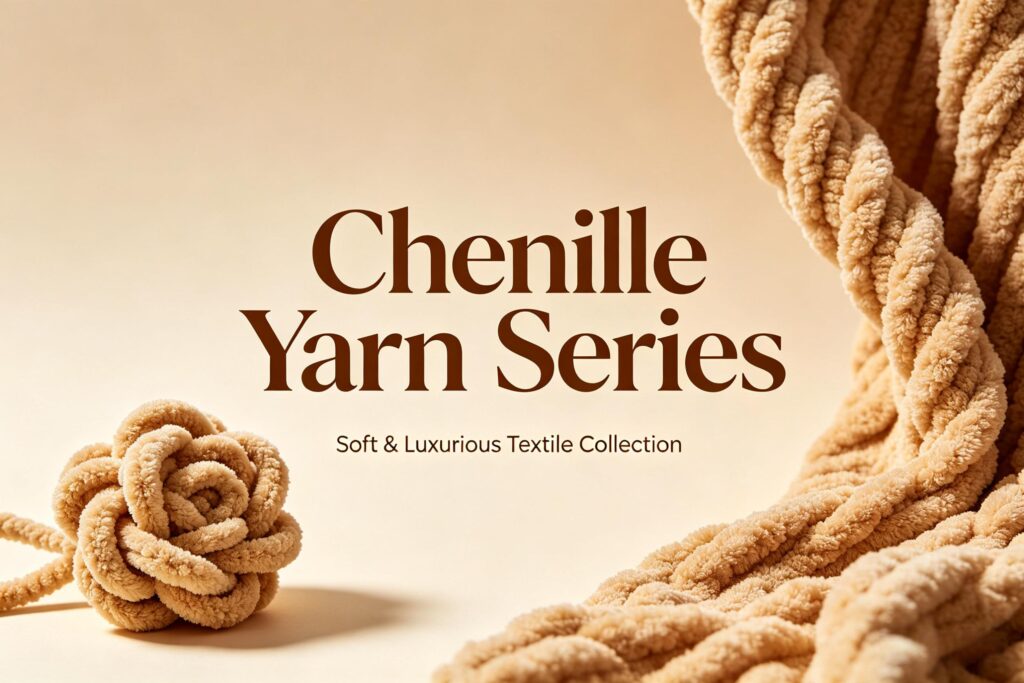
Chenille, also known as shéng róng in Chinese, is a type of fancy yarn with a distinct structure that differs fundamentally from simple spun or filament yarns.
Core Manufacturing Principle:
The signature look and feel of chenille are achieved through a specialized mechanical process. It is constructed using two primary components:
- The Core (Lock Yarns): These are two fine, high-twist, and strong pile yarns that serve as the foundational backbone.
- The Pile (Effect Yarns): These are short lengths of fiber or spun yarn or feather yarn that create the velvety surface.
During manufacturing, the pile yarns are laid perpendicularly across the two parallel core yarns. The cores are then twisted tightly together, locking the pile fibers in place. Finally, these pile fibers are cut to a uniform length, resulting in the final yarn that resembles a caterpillar, which is what “chenille” means in French.
Inherent Structural Considerations:
Due to this construction, chenille yarn requires careful handling. Its pile directionality and potential for pile loss mean great care must be taken during weaving, knitting, and finishing to ensure optimal aesthetics and durability in the final product.
3. Key Properties and Characteristics: Why Choose Chenille?
The unique construction of chenille yarn imparts a set of highly desirable properties to end products:
- Unmatched Softness and Luxurious Hand-Feel: The dense, upright pile creates an exceptionally soft and inviting texture that is immediately associated with quality.
- Excellent Drape and Fullness: Fabrics woven or knitted with chenille have a substantial body and a graceful, heavy drape, making them ideal for curtains and upholstery.
- Superior Absorbency: Chenille fabrics, especially those with cotton or viscose pile, can absorb significant moisture, enhancing comfort in applications like towels and robes.
- Visual Depth and Richness: The plush surface catches light softly, giving colors a deep, lustrous, and sophisticated appearance.
- Functional Benefits: Depending on the fiber content, chenille products can offer insulation, sound dampening, and reduced light penetration for curtains.
4. A Detailed Look at the Core Chenille Series
Understanding the material composition is key to selecting the right chenille series for your project. The performance, feel, and cost are directly influenced by the fibers used in the pile and core.
4.1. Standard Blended Series
This is the most common and cost-effective category, leveraging the strengths of synthetic and natural fibers.
- Viscose/Acrylic Blends: A classic combination where viscose (Rayon, V) provides brilliant dye affinity and a cool, silky hand, while acrylic (A) adds resilience, bulk, and colorfastness. Ideal for vibrant decorative fabrics.
- Cotton/Polyester Blends: Offers the natural absorbency and comfort of cotton (C) with the durability, shrinkage resistance, and easy-care properties of polyester (T). Excellent for items requiring frequent use and washing.
- Other Common Blends: Include Viscose/Cotton and Acrylic/Polyester, each balancing cost, performance, and aesthetics for specific market needs.
4.2. Natural Fiber & Premium Series
This series caters to the high-end market and sustainability-driven demand, focusing on natural or luxurious fibers.
- 100% Cotton Chenille: Prized for its supreme softness, high absorbency, and natural appeal. It is a staple for premium terry cloth, baby products, and high-quality carpets. As noted in industry standards, export-quality cotton chenille carpets require stringent active dyeing processes to ensure colorfastness and the absence of harmful AZO chemicals.
- Blends with Luxury Fibers: Innovations include blending chenille with materials like regenerated fibers (e.g., from recycled bottles), organic cotton, or other sustainable materials to meet certifications like GRS (Global Recycled Standard) and GOTS (Global Organic Textile Standard). Suppliers like Glyarn, while known for specialized products like luminous fiber yarns, exemplify the industry’s move towards niche, patented, and high-value-added yarn technologies that can complement traditional lines.
4.3. Performance & Functional Series
This growing segment integrates advanced functionalities directly into the yarn.
- Water/Oil Repellent Chenille: Treated with eco-friendly fluorocarbon-free finishes, this series is perfect for upholstery in hospitality and healthcare, offering stain resistance and ease of cleaning.
- High-Abrasion Resistant Series: Designed for heavy-duty contract use. Research indicates that increasing the twist level and using natural fiber piles like combed cotton can significantly enhance a chenille yarn’s resistance to pile loss and abrasion.
- Specialty Effect Chenille: Includes yarns blended with metallic threads, ladder-resistant constructions, or unique filament combinations for specific technical applications in footwear, automotive interiors, or technical textiles.
5. Industry Applications: Transforming Yarn into Products
Chenille’s versatility allows it to span multiple sectors:
- Home Furnishings & Decor (Primary Market):
- Upholstery: For sofas, armchairs, and headboards, providing durable luxury.
- Window Treatments: Heavy, lined chenille curtains offer superior light blocking, insulation, and acoustic benefits.
- Bedding: Throws, bedspreads, and decorative pillows.
- Carpets & Rugs: Chenille rugs are known for a soft, dense pile. Quality is judged by uniform pile height (standard ~3 cm), density, and weight (standard export: 1500-1600 g/m²).
- Fashion & Apparel: Used in luxury knitwear, sweaters, scarves, and accessories for a soft, textured look.
- Other Decorative Uses: Tassels, fringes, and ecclesiastical textiles.
6. Critical Quality Metrics: A Buyer’s Checklist
To ensure product satisfaction and reduce returns, buyers must verify these key parameters:
- Pile Uniformity: The pile must be even in height and thickness from root to tip. Inconsistent piles lead to a patchy appearance and faster wear.
- Density and Weight: For fabrics like carpets, density must be balanced with pile height. A high density with very low pile is undesirable. Always cross-reference with the g/m² weight.
- Dyeing Quality: Insist on active/eco-friendly dyeing. A simple test is to soak a dark-colored sample in warm water; significant bleeding indicates sub-standard dye. Actively dyed colors appear more muted and natural.
- Twist Level and Abrasion Resistance: Higher twist (e.g., 850 T/m vs. 700 T/m) generally correlates with better pile lock and durability.
- Shrinkage Control: Boiling water shrinkage tests on yarn are crucial, especially for cotton-based chenille, to prevent excessive fabric shrinkage post-washing.
7. Navigating the Market: Trends, Sustainability, and Reliable Sourcing
The global chenille market is evolving rapidly. The dominant trend is toward sustainability and traceability. Leading manufacturers are investing in recycled content yarns (GRS-certified), organic fibers, and transparent supply chains to meet the demands of European and North American brands. Functionality, such as moisture-wicking or anti-bacterial properties, is also gaining traction.
When sourcing, look beyond price. Partner with suppliers who:
- Provide detailed technical data sheets for their yarn series.
- Hold relevant international certifications (OEKO-TEX, GRS, etc.).
- Offer consistent quality and can ensure stable pile direction and completeness during weaving/knitting, which is critical for final appearance.
- Demonstrate expertise, like established companies with over 50 employees and a track record of innovation, such as building dedicated color matching centers to ensure batch-to-batch consistency.
8. Conclusion: Selecting the Right Chenille for Your Vision
Choosing the ideal chenille yarn series is a strategic decision that impacts the aesthetics, performance, and marketability of your final product. Begin by defining the end-use requirements: Is it a hard-wearing sofa fabric, a sumptuous curtain, or a sustainable fashion item? Let this guide your choice of material series—be it a reliable cotton/polyester blend, a lush natural cotton, or a high-performance variant.
Always request physical samples and verify the supplier’s capability to meet the quality metrics outlined. By combining technical knowledge with a clear understanding of market trends and a partnership with a competent supplier, you can leverage the timeless luxury of chenille yarn to create products that resonate deeply with discerning customers worldwide.
