
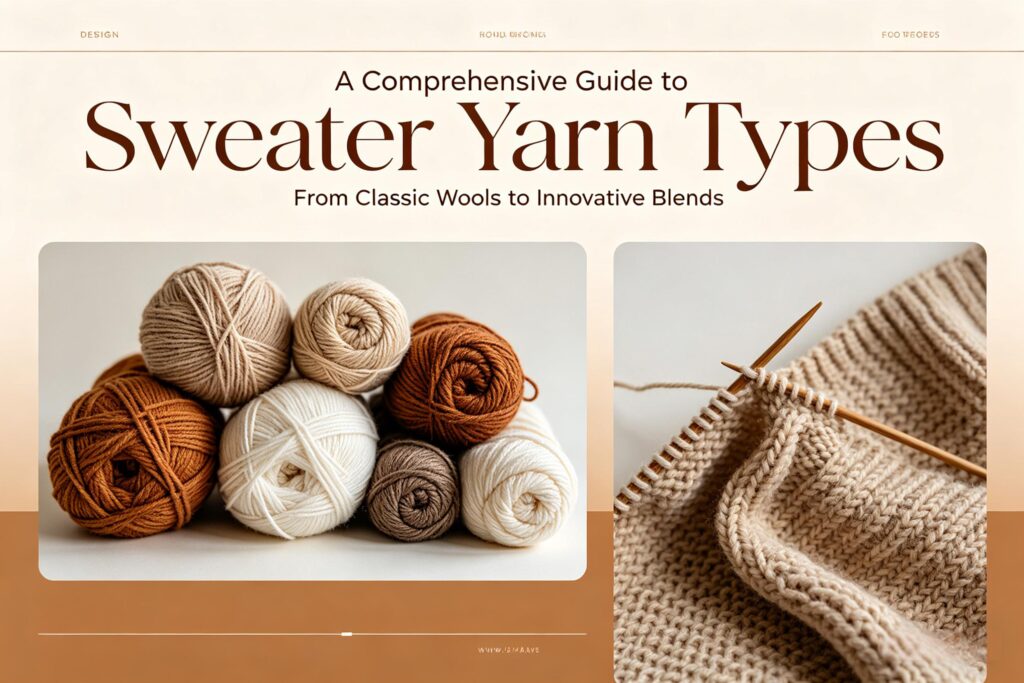
Article Directory
- Introduction: The Fabric of Comfort and Style – Understanding Your Raw Material
- The Critical Role of Yarn Selection in Knitwear Success
- Beyond Aesthetics: How Fiber Science Defines Performance
- Chapter 1: The Natural Fiber Pantheon – Timeless Luxury and Performance
- 2.1 Wool: The Versatile King (Merino, Shetland, Lambswool)
- 2.2 Cashmere: The Epitome of Softness
- 2.3 Mohair & Angora: The Haloed Luxuries
- 2.4 Alpaca, Camel, and Yak: The Exotic Warmers
- 2.5 Cotton, Linen, and Silk: The Cool-Season Alternatives
- Chapter 2: The Engineered Fiber Universe – Innovation and Accessibility
- 3.1 Acrylic: The Accessible Workhorse
- 3.2 Polyester and Nylon: The Strength and Blending Partners
- 3.3 Regenerated Cellulosics (Rayon, Modal, Lyocell): The Silky Plant-Based Options
- 3.4 Novelty and Performance Yarns: Tape, Chenille, and Technical Blends
- Chapter 3: The Alchemy of Blends – Engineering Perfection
- 4.1 The Why and How of Blending Fibers
- 4.2 Classic & Modern Blend Formulations (Data-Driven Analysis)
- 4.3 Case in Point: The Strategic Blending Philosophy of Glyarn
- Chapter 4: A Practical Framework for Yarn Selection – Matching Fiber to Function
- 5.1 The Designer’s Checklist: Project Goals First
- 5.2 Decoding Yarn Labels and Specifications
- 5.3 Sourcing with Confidence: Questions to Ask Your Supplier
- Conclusion: Weaving Knowledge into Every Stitch
- Building a Future-Proof Knitwear Line with Informed Choices
1. Introduction: The Fabric of Comfort and Style – Understanding Your Raw Material
The journey of a perfect sweater begins not on the knitting machine, but with the choice of yarn. This single decision dictates everything: the garment’s handfeel (Haptic Quality), drape (Draping Coefficient), thermal regulation, durability, care requirements, and ultimately, its market position and consumer perception. In an era where customers demand both comfort and performance, understanding sweater yarn types is a fundamental business competency.
This guide moves beyond basic fiber lists. It provides a strategic, data-informed framework for selecting yarns that align with specific design intentions, target price points, and functional requirements. Whether you’re developing a premium luxury capsule or a high-volume fashion line, the knowledge herein will empower you to make confident, value-driven sourcing decisions.
2. Chapter 1: The Natural Fiber Pantheon – Timeless Luxury and Performance
Natural fibers, derived from animals and plants, are celebrated for their inherent biocompatibility, breathability, and complex aesthetics.
2.1 Wool: The Versatile King
The term “wool” encompasses a wide spectrum. Key metrics include fiber diameter (micron count) and staple length.
- Merino Wool: Sourced from Merino sheep, it is the benchmark for fine, soft wool. Superior fibers are 19.5 microns or finer, making them non-itchy for direct skin contact. Its excellent crimp provides natural elasticity and moisture-wicking properties, with the ability to absorb up to 30% of its weight in moisture without feeling wet.
- Shetland & Lambswool: Traditional Shetland wool (around 28-33 microns) is known for its rugged, wooly character and heathery color palette from natural sheep shades. Lambswool, from the first shearing, is finer and softer than standard sheep’s wool, offering a delicate halo and exceptional insulation.
2.2 Cashmere: The Epitome of Softness
Sourced from the undercoat of the Kashmir goat, cashmere is defined by its exceptional fineness (typically 14-19 microns) and luxurious, lightweight warmth. Its scarcity (one goat yields roughly 150-200 grams of down per year) commands a premium. Quality is measured by micron count and fiber length; longer fibers (over 34mm) pill less and produce more durable yarns.
2.3 Mohair & Angora: The Haloed Luxuries
- Mohair: From the Angora goat, mohair is renowned for its distinctive high-luster halo, strength, and dye affinity. Kid mohair (from the first shearing) is the finest and softest. It is often blended to add luster and loft without significant weight.
- Angora: Harvested from Angora rabbits, this fiber is incredibly soft and fluffy due to its hollow core, providing superb insulation. However, its shorter staple length can lead to shedding, making it a common blending component (often 20-30%) to add warmth and softness to wool or nylon bases.
2.4 Alpaca, Camel, and Yak: The Exotic Warmers
These specialty fibers offer unique properties:
- Alpaca: Finer than cashmere in some grades (Royal Alpaca is <20 microns), it is denser, heavier, and provides 30% greater thermal insulation than sheep’s wool due to its semi-hollow structure. It lacks lanolin, making it hypoallergenic.
- Camel Hair: Primarily from the Bactrian camel’s undercoat, it is known for its warm, light-brown natural color and soft warmth. It is frequently blended with wool.
- Yak Down: The ultra-fine undercoat of the Tibetan yak is comparable to cashmere in softness (16-20 microns) and offers excellent thermal regulation. Its sustainable sourcing story adds ethical value.
2.5 Cotton, Linen, and Silk: The Cool-Season Alternatives
- Cotton: A plant-based staple, it is cool, breathable, and absorbent but lacks elasticity and can be heavy when knit. Combed or mercerized cotton offers improved smoothness and strength.
- Linen: Made from flax, linen is the ultimate cool-weather fiber—highly breathable, moisture-wicking, and with a distinctive, crisp texture that softens with wear.
- Silk: A protein filament, silk adds unparalleled sheen, strength, and a smooth, cooling handfeel. It is often used in blends (e.g., 15-30%) to elevate luster and drape.
3. Chapter 2: The Engineered Fiber Universe – Innovation and Accessibility
Synthetic and regenerated fibers provide solutions for performance, consistency, and cost.
3.1 Acrylic: The Accessible Workhorse
Acrylic is a petroleum-based synthetic designed to mimic wool’s bulk and warmth at a fraction of the cost. It is lightweight, colorfast, machine-washable, and hypoallergenic. However, it lacks wool’s breathability and moisture management and can be prone to pilling and static. High-performance or “bio-based” acrylics are improving its environmental and functional profile.
3.2 Polyester and Nylon: The Strength and Blending Partners
- Polyester: Prized for its exceptional strength, wrinkle resistance, and quick-drying properties. In sweater yarns, it is almost exclusively used in blends (10-30%) to add durability, shape retention, and reduce shrinkage.
- Nylon (Polyamide): Even stronger and more abrasion-resistant than polyester. Small additions (5-15%) to delicate fibers like cashmere or angora dramatically increase yarn tensile strength and garment lifespan.
3.3 Regenerated Cellulosics: Rayon, Modal, Lyocell
These fibers are made from reconstituted plant cellulose (often wood pulp).
- Rayon/Viscose: Offers a beautiful drape, silky luster, and breathability similar to cotton but is weaker when wet and can lose shape.
- Modal: A type of rayon with higher wet strength and a softer hand, making it more suitable for knitwear.
- Lyocell (Tencel®): Produced via a more eco-friendly closed-loop process, it is known for its exceptional strength (wet and dry), soft drape, and moisture-wicking properties. It’s gaining popularity in sustainable sweater blends.
3.4 Novelty and Performance Yarns
This category includes yarns defined by structure or added function: tape yarns (flat for visual impact), chenille (velvety texture), and technical blends with added elastane (for stretch) or yarns treated for water-repellency or antimicrobial properties.
4. Chapter 3: The Alchemy of Blends – Engineering Perfection
Blending is the strategic science of combining fibers to offset weaknesses and amplify strengths.
4.1 The Why and How of Blending Fibers
- Performance Enhancement: Add nylon for strength, polyester for stability, elastane for stretch.
- Cost Management: Blend a luxury fiber (cashmere) with a workhorse fiber (wool, acrylic) to achieve a target price point.
- Aesthetic & Handle Modification: Add silk for sheen, mohair for halo, cotton for a matte, cool feel.
- Improved Processability: Longer, stronger synthetic fibers can help spin shorter, more delicate natural fibers efficiently.
4.2 Classic & Modern Blend Formulations
- 70% Merino Wool / 30% Nylon: A classic for durable socks, now used in sweaters for active lifestyles. The nylon can increase abrasion resistance by over 50%.
- 55% Cotton / 45% Acrylic: A mainstay for affordable, easy-care, season-spanning knitwear, balancing coolness and warmth.
- 80% Baby Alpaca / 20% Mulberry Silk: A luxury blend where silk adds tensile strength, luster, and improves drape.
- 50% Recycled Wool / 30% Tencel® / 20% Recycled Nylon: A contemporary, sustainable blend offering softness, strength, and a compelling eco-narrative.
4.3 Case in Point: The Strategic Blending Philosophy of Glyarn
A forward-thinking supplier like Glyarn excels in this domain. They don’t just sell fibers; they provide material solutions. For example, a brand might approach them needing a “luxurious, warm, but machine-washable yarn for a premium mid-market sweater.”
- Glyarn’s solution might be a proprietary blend like: 45% Fine Merino, 35% Machine-Washable Superwash Wool, 15% Biodegradable Modal, 5% Nylon.
- The Rationale: The Merino provides softness and brand appeal, the Superwash wool (treated for shrink resistance) enables easy care, the Modal adds drape and moisture management while boosting sustainability credentials, and the minimal nylon safeguards durability. This collaborative, problem-solving approach is the hallmark of a true partner supplier.
5. Chapter 4: A Practical Framework for Yarn Selection – Matching Fiber to Function
Follow this decision tree for informed selection:
5.1 The Designer’s Checklist: Project Goals First
- Garment Type & Use Case: Is it a heavy winter coatigan, a light summer tee, or a travel sweater?
- Target Handfeel & Drape: Should it be lofty and fuzzy, crisp and structured, or fluid and silky?
- Performance Needs: Must it be machine-washable? Is durability for frequent wear a priority? What level of warmth is required?
- Price Point & Market Positioning: Luxury, premium, or value segment?
- Sustainability & Care Narrative: Are recycled, organic, or traceable fibers required?
5.2 Decoding Yarn Labels and Specifications
Always request and analyze the technical sheet:
- Fiber Content: Exact percentages.
- Yarn Count: Metric (Nm) or Worsted (Ne). Higher Nm = finer yarn (e.g., Nm 2/28 is thicker than Nm 2/36).
- Recommended Gauge: Stitches per 10cm, guiding needle size.
- Certifications: e.g., GOTS (organic), RWS (responsible wool), Oeko-Tex 100 (safety).
5.3 Sourcing with Confidence: Questions to Ask Your Supplier
- “Can you provide a third-party test report for pilling resistance (e.g., Martindale test) and shrinkage?”
- “What is the country of origin for the key fibers, and do you have traceability documentation?”
- “Do you offer small-batch sampling for this yarn before bulk order?”
- “What is the minimum order quantity (MOQ) and lead time?”
6. Conclusion: Weaving Knowledge into Every Stitch
Choosing sweater yarn is a multidimensional decision that balances art, science, and commerce. By moving from generic fiber names to a deep understanding of properties, blend dynamics, and performance data, you gain control over your product’s destiny.
In a competitive market, the right yarn is a silent ambassador for your brand’s quality and values. Partnering with knowledgeable, solution-oriented suppliers like Glyarn can transform this complex choice into a strategic advantage. Let this guide be your foundation for creating knitwear that not only looks beautiful but performs impeccably, satisfying both the touch of the customer and the demands of the modern wardrobe.
