
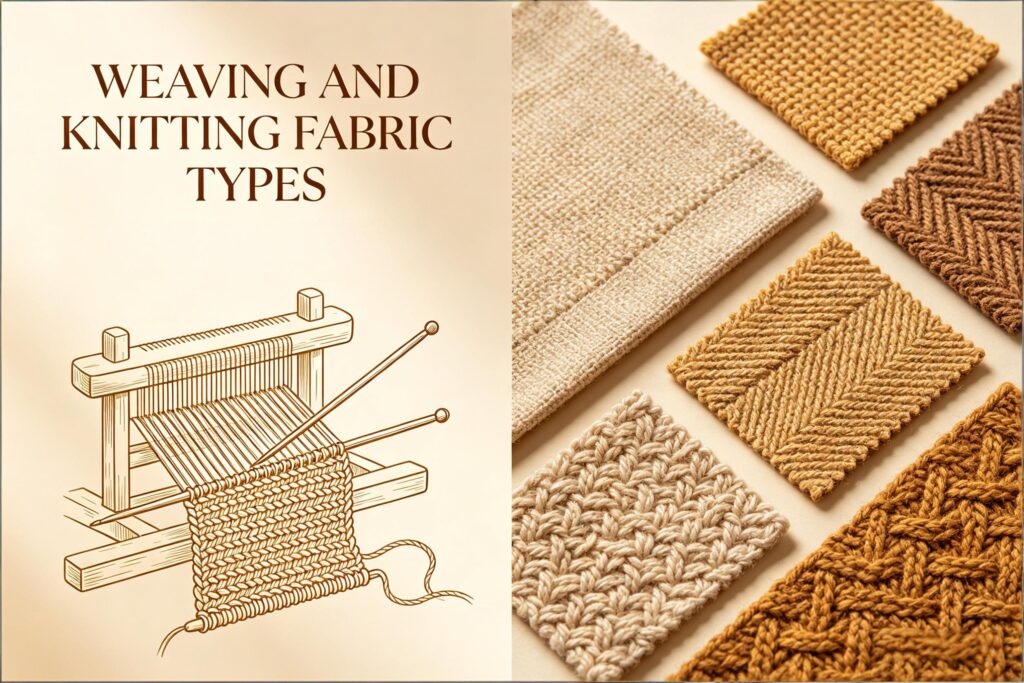
Introduction: The Strategic Importance of Fabric Construction
For professionals in apparel manufacturing, textile production, and soft goods (carpets, plush toys), selecting the right yarn is only half the battle. The true value is unlocked when that yarn is transformed into fabric through a specific construction method. Understanding the different types of fabric you can create from yarn—namely through weaving and knitting—is a fundamental, strategic skill. This knowledge directly influences cost, production efficiency, fabric performance, and the ultimate marketability of your final product. This guide provides an in-depth, technical, and data-driven analysis of the primary fabric construction types, equipping buyers, managers, and manufacturers with the insights needed to make optimal decisions from the yarn stage forward.
Table of Contents
- The Two Pillars: Woven vs. Knitted Fabrics
- 1.1 Core Differences in Structure and Mechanics
- 1.2 The Global Market Scale: Woven vs. Knit Production
- The World of Woven Fabrics: Structure, Types, and Applications
- 2.1 The Anatomy of a Weave: Warp, Weft, and Shedding
- 2.2 The Basic Weave Triad: Plain, Twill, and Satin
- 2.3 Complex and Derivative Weaves
- 2.4 Yarn Requirements and Production Considerations for Weaving
- The World of Knitted Fabrics: Structure, Types, and Applications
- 3.1 The Anatomy of a Knit: Courses, Wales, and Loops
- 3.2 Weft Knitting vs. Warp Knitting: A Fundamental Division
- 3.3 Common Weft Knit Structures: Jersey, Rib, and Purl
- 3.4 Common Warp Knit Structures: Tricot and Raschel
- 3.5 Yarn Requirements and Production Considerations for Knitting
- Specialty Constructions: Non-Wovens, Tufting, and Braiding
- Decision Matrix: Selecting the Right Construction for Your Product
- Conclusion: Integrating Fabric Knowledge into the Sourcing Strategy
1. The Two Pillars: Woven vs. Knitted Fabrics
The vast majority of textile fabrics fall into two categories defined by their fundamental construction method: weaving and knitting.
1.1 Core Differences in Structure and Mechanics
- Woven Fabrics: Created by the interlacing of two sets of yarns at right angles. The lengthwise yarns are the warp (ends), held under tension on a loom. The crosswise yarns are the weft (picks or filling), which are inserted over and under the warp.
- Knitted Fabrics: Created by interlooping a single yarn or set of yarns. The loops, called stitches, are pulled through one another. The primary directions are courses (horizontal rows) and wales (vertical columns).
This structural difference creates divergent properties:
- Woven Fabrics: Generally more stable, less elastic, and prone to fraying. They offer superior dimensional stability and are often more structured (e.g., dress shirts, denim, upholstery).
- Knitted Fabrics: Inherently more elastic, stretchy, and drapable. They are generally more comfortable for close-fitting garments and allow for greater freedom of movement (e.g., T-shirts, socks, activewear).
1.2 The Global Market Scale
The woven fabric segment dominates in terms of sheer volume, particularly when considering industrial and home furnishing applications. However, the knitwear segment, especially in apparel, has seen consistent growth due to the rising demand for casual and performance wear.
2. The World of Woven Fabrics: Structure, Types, and Applications
2.1 The Anatomy of a Weave
The weave pattern, or design, is determined by the shedding sequence—the order in which warp yarns are raised or lowered to create a space (the shed) for the weft yarn to pass through. This sequence repeats to form the fabric’s characteristic pattern.
2.2 The Basic Weave Triad
| Weave Type | Description & Structure | Key Characteristics | Common Applications |
|---|---|---|---|
| Plain Weave | The simplest and most common. Each weft yarn passes alternately over and under each warp yarn (1/1). | High stability, firmness, and durability. Maximum interlacing points. Prone to wrinkling, less drapable. | Sheeting, shirting (poplin, broadcloth), canvas, gingham, volle. |
| Twill Weave | Creates a distinctive diagonal rib (wale). The weft passes over/under two or more warp yarns, shifting one step each row (e.g., 2/1, 3/1). | Softer hand, better drape, and greater pliability than plain weave. Hides soil well. Generally stronger. | Denim (3/1), gabardine, chino, tweed, drill. |
| Satin/Sateen Weave | Creates a smooth, lustrous surface. Warp (satin) or weft (sateen) yarns “float” over many yarns (e.g., 4/1, 5/1) with minimal interlacing. | Luxurious, smooth surface with high luster. Less durable due to long floats, prone to snagging. | Satin eveningwear, sateen bed sheets, linings, ribbons. |
2.3 Complex and Derivative Weaves
- Dobby Weaves: Small, geometric patterns created by a dobby attachment on the loom. E.g., Birdseye piqué, waffle cloth.
- Jacquard Weaves: Large, intricate, and non-repeating patterns (florals, damasks) created by a computerized Jacquard head. Each warp yarn can be controlled independently.
- Pile Weaves: Incorporate an extra set of yarns to create a raised surface (pile). Includes velvets/velveteen (cut pile) and terry cloth (uncut loops).
2.4 Yarn and Production Considerations for Weaving
- Yarn Requirements: Warp yarns require higher tenacity, evenness, and sizing (a protective coating) to withstand loom tension and abrasion. Weft yarns can be weaker or more irregular.
- Production Speed: Modern shuttleless looms (air-jet, water-jet, rapier) are extremely fast but require high capital investment and are optimized for long runs of a single fabric.
3. The World of Knitted Fabrics: Structure, Types, and Applications
3.1 The Anatomy of a Knit
The basic unit is the loop. How these loops are connected horizontally and vertically defines the fabric’s properties. Elasticity comes from the loop’s ability to deform and recover.
3.2 Weft Knitting vs. Warp Knitting
This is the most critical division in knitting technology.
| Knitting Type | Process Description | Key Structural Feature | General Fabric Behavior |
|---|---|---|---|
| Weft Knitting | A single yarn is fed horizontally, and loops are formed across the width of the fabric. Can be done flat or in the round (tubular). | Each loop is formed from a single yarn. If a yarn breaks, laddering (a run) can occur. | Highly elastic in all directions, especially widthwise. Easier to produce shaped garments. |
| Warp Knitting | Multiple yarns are fed simultaneously from a warp beam (like a loom), with each needle forming a loop from its own yarn. | Each loop is formed from a separate yarn. Loops are interlocked diagonally. A broken yarn does not cause a major run. | More stable, less stretchy (especially lengthwise), minimal curling edges. High production speed. |
3.3 Common Weft Knit Structures
| Structure | Description | Key Characteristics | Common Applications |
|---|---|---|---|
| Jersey (Plain) | All loops are drawn to one side (technical face). The back has a “semicircle” appearance. | Curls at the edges, smooth face, distinct back. Good drape, moderate stretch. | T-shirts, dresses, lightweight sweaters, base layers. |
| Rib (e.g., 1×1, 2×2) | Vertical rows of knit and purl stitches alternate. | Excellent crosswise elasticity, lies flat, reversible. Thicker and warmer than jersey. | Cuffs, collars, neckbands, sweaters, hats. |
| Purl | Alternate courses of knit and purl stitches. Forms horizontal ridges. | High lengthwise stretch, lies flat, reversible, bulky. | Scarves, heavy sweaters, baby clothes. |
3.4 Common Warp Knit Structures
- Tricot: Fine, smooth fabric with a slight vertical rib on the face and a diagonal rib on the back. Used in lingerie, linings, sleepwear, and vehicle seats.
- Raschel: Versatile, can produce coarse, open constructions (nets, laces) or dense, textured fabrics (powernet for shapewear, technical textiles).
3.5 Yarn and Production Considerations for Knitting
- Yarn Requirements: Requires high uniformity, elasticity, and low hairiness. Irregular yarns cause defects and breaks on high-speed machines. For weft knitting, yarn is often waxed to reduce friction.
- Production Speed & Flexibility: Warp knitting is exceptionally fast for continuous yardage. Weft knitting machines (circular for jersey, flatbed for sweaters) offer tremendous design flexibility, including full-garment knitting (“whole garment” technology), which reduces labor and waste.
4. Specialty Constructions
- Non-Wovens: Fabrics made by bonding or felting fibers together (mechanically, chemically, or thermally), not by weaving or knitting. Examples: felt, interfacing, wipes, medical fabrics. High-speed, low-cost production.
- Tufting: The primary method for carpet and rug manufacturing. Yarn is punched through a primary backing fabric to create loops (which may be cut). A secondary backing is applied for stability.
- Braiding/Plaiting: Interlacing three or more yarns diagonally. Used for cords, shoelaces, ropes, and technical reinforcements.
5. Decision Matrix: Selecting the Right Construction for Your Product
Use this framework to guide initial selection based on key product requirements.
Table: Fabric Construction Selection Guide
| Product Requirement | Primary Recommendation | Secondary Option | Rationale |
|---|---|---|---|
| High Dimensional Stability & Structure (e.g., Blazer, Workwear) | Woven Fabric (Twill, Plain) | N/A | Woven structures inherently resist stretching and provide the needed body and crispness. |
| High Stretch & Comfort Fit (e.g., Leggings, Activewear) | Weft Knit (Jersey, Rib) | Warp Knit (Powernet for support panels) | The interlooped structure of knits provides multidirectional stretch and recovery for movement. |
| Durability & Abrasion Resistance (e.g., Upholstery, Canvas Bag) | Woven Fabric (Heavy Plain, Twill) | Heavy-duty Knit (limited applications) | Tightly woven structures with high yarn interlacing offer superior resistance to wear and tear. |
| High-Speed, High-Volume Production (e.g., Basic Linens, T-shirt Fabric) | Weft Knit (Jersey) or Warp Knit (Tricot) for yardage | Woven (Plain) on high-speed looms | Circular knitting and warp knitting are among the fastest methods for producing continuous fabric. |
| Complex Surface Texture (e.g., Terry Towel, Velvet) | Woven Pile Weave | Knitted Pile Fabrics (e.g., fleece) | Weaving allows precise creation of cut or looped pile structures for specific tactile qualities. |
| Minimal Edge Fraying | Knitted Fabric (Any) | Woven Fabric with sealed/serged edges | Knitted fabrics, by nature, do not fray because the loops are interlocked. Woven fabrics require finishing. |
6. Conclusion: Integrating Fabric Knowledge into the Sourcing Strategy
For the professional buyer or manufacturer, understanding fabric construction is not an academic exercise—it is a core component of value engineering. The choice between weaving and knitting (and the specific subtype) dictates:
- Yarn Specification: You must select a yarn engineered for the target process (e.g., a strong, sized warp yarn vs. a soft, even knitting yarn).
- Cost Structure: Capital investment, production speed, labor, and waste differ dramatically between a high-speed air-jet loom and a computerized flat knitting machine.
- Product Performance: The end-user’s experience of fit, comfort, durability, and care is fundamentally rooted in the fabric’s construction.
By starting the product development process with the end fabric in mind, you can make strategic decisions at the yarn sourcing stage that optimize for quality, efficiency, and cost. This holistic view—from fiber, to yarn, to fabric construction—is what separates reactive purchasing from strategic supply chain management. In a competitive global market, this knowledge is your definitive advantage.
