
Table of Contents
1. Introduction: Understanding Cationic Dyeable Polyester
2. The Value Proposition: Why Choose Cationic Yarn?
3. CDP Market Overview: Size, Trends, and Key Players
4. Pricing Analysis: Cost Drivers and Current Market Levels
5. Technical Specifications and Quality Assessment
6. Strategic Sourcing: How to Select a Reliable Supplier (Including Glyarn)
7. Conclusion and Future Outlook
1. Introduction: Understanding Cationic Dyeable Polyester
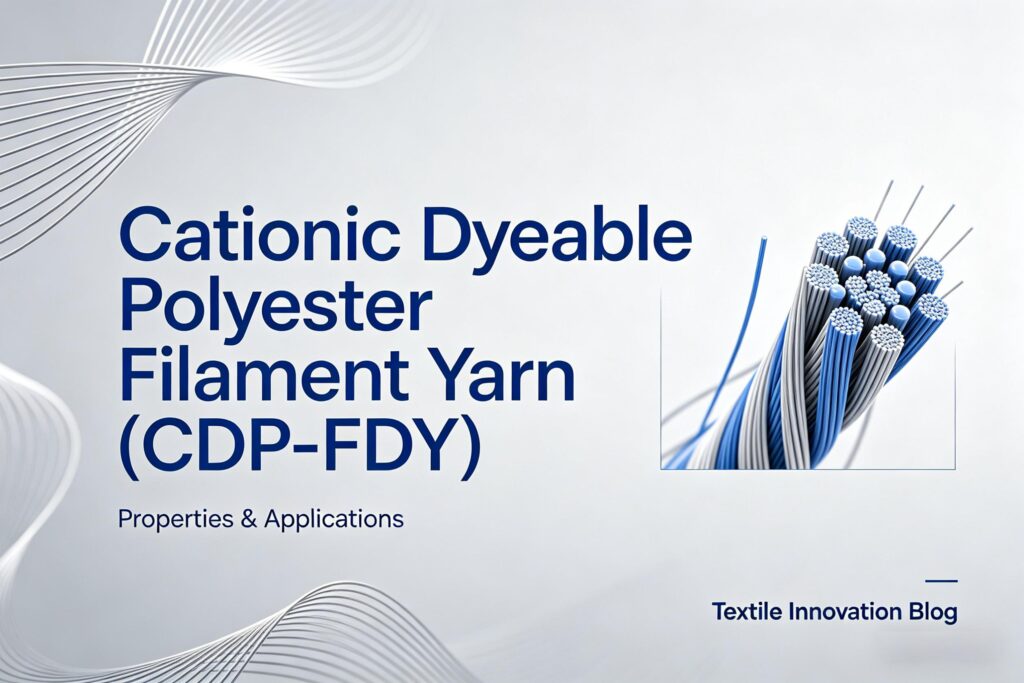
The global textile industry is in a state of continuous innovation, driven by demands for vibrant colors, enhanced functionality, and more efficient processes. At the heart of this evolution lies Cationic Dyeable Polyester Filament Yarn (often abbreviated as CDP, CD-PET, or Cationic FDY), a specialized material redefining the possibilities of synthetic fabrics.
Unlike conventional polyester, which is dyed with disperse dyes at high temperatures, cationic polyester is chemically modified during the polymer stage. This modification introduces sites in the polymer chain that have a strong affinity for cationic (basic) dyes. This fundamental difference unlocks a spectrum of advantages, from superior color brilliance to unique styling effects like deep-dyeing and differential dyeing with regular polyester. As consumer preference shifts towards high-quality, colorful, and technically advanced apparel and home textiles, the strategic importance of cationic yarn grows exponentially. This guide provides a comprehensive overview for global sourcing managers, product developers, and designers to navigate this specialized market.
2. The Value Proposition: Why Choose Cationic Yarn?
The decision to source cationic yarn over standard polyester is an investment in product differentiation and performance. The core benefits are clear and market-proven:
- Exceptional Color Performance: Cationic dyes produce exceptionally vibrant, deep, and saturated colors, especially in dark shades like blacks, navys, and reds, which are often challenging for conventional polyester. Fabrics achieve a richer visual depth and a more luxurious hand feel.
- Energy-Efficient Processing: Dyeing can be achieved at lower temperatures (around 100°C) compared to high-temperature dyeing of standard PET. This translates to significant energy savings, a reduced carbon footprint, and lower production costs—a key consideration in today’s sustainability-focused landscape.
- Unmatched Styling Versatility: The “differential dyeing” property is a game-changer for designers. When woven or knitted with regular polyester, cationic yarns can be dyed in a single bath to produce two-tone or heather effects. This allows for intricate color patterns and fabric complexities without the need for expensive double-dyeing or piece-dyeing processes.
- Broader Application Scope: Originally popular in sportswear and fleece, cationic yarns are now expanding into lingerie, fashion outerwear, automotive interiors, and high-end home textiles, driven by their premium aesthetic and functional benefits.
3. CDP Market Overview: Size, Trends, and Key Players
The cationic dyeable polyester fiber market is a stable and growing segment within the larger synthetic fibers industry. According to industry research, the global market was valued at approximately $18.59 billion in 2024 and is projected to grow steadily, reaching close to $20.1 billion by 2031. This growth is underpinned by the sustained demand from key apparel and textile sectors, particularly in regions with strong manufacturing bases.
Asia-Pacific, led by China, dominates both production and consumption. China alone accounted for a significant share of the global market in 2024. The market is served by a mix of large multinational chemical companies and specialized regional manufacturers. Major global players include Indorama Ventures, Teijin, and Huntsman, who are known for their advanced polymer technology and global supply chains. Alongside them, a number of highly competitive and technically proficient Chinese producers, such as Shaoxing Global Chemical Fiber, Jiangsu Sanlian New Materials, and Zhejiang Hualun New Materials, form a robust and critical supply base, often offering cost-competitive and application-specific grades.
4. Pricing Analysis: Cost Drivers and Current Market Levels
Quoting a single price for “cationic polyester filament” is challenging, as it is a specialty product with prices influenced by multiple variables. However, current market data provides a clear framework.
- Price Premium Over Conventional PET: As a chemically modified product with more complex production, cationic yarn commands a significant premium over standard semi-dull or bright polyester filament. This premium is justified by its enhanced properties and value addition in downstream products.
- Current Market Price Indications:
- Reference from China (Aug 2025): A market price report from a factory in Xiaoshan, a major production hub in China, listed the price for Cationic 150D/48F heavy networked yarn at 8,620 RMB/ton.
- Index-Based Tracking (Dec 2025): Industry price indices provide a more dynamic view. As of December 12, 2025, key indices stood at:
- POY Cationic Yarn Index: 108.48
- FDY Cationic Yarn Index: 118.08
- DTY Cationic Yarn Index: 115.65
These indices show relative price stability with minor fluctuations, indicating a balanced market.
- Key Cost and Price Drivers:
- Raw Material Costs: The prices of purified terephthalic acid (PTA) and monoethylene glycol (MEG), derived from crude oil, are the primary baseline cost drivers. Volatility here affects all polyester products.
- Modifier Cost: The specialty chemical comonomers (like sodium salt of 5-sulfoisophthalic acid) used to create the cationic sites add a fixed cost premium.
- Specification & Quality: Fineness (denier), filament count, luster (semi-dull is most common), and added functionalities (e.g., moisture-wicking, anti-bacterial) directly impact price.
- Order Volume & Payment Terms: Larger contracts typically secure better prices. Fluctuations in international shipping and trade policies also affect landed cost.
5. Technical Specifications and Quality Assessment
When evaluating cationic yarn, a specification sheet is your first checkpoint. Key parameters must be verified to ensure performance in your specific application.
Core Physical Properties:
- Denier (D) & Filament Count (F): Defines yarn fineness and texture (e.g., 75D/72F for fine fabrics, 150D/48F for heavier knits).
- Tenacity & Elongation: Measures tensile strength and stretch. High tenacity is crucial for durability in sportswear and industrial applications.
- Boiling Water Shrinkage: A critical measure of thermal stability; low and consistent shrinkage is vital for fabric dimensional stability during dyeing and finishing.
CDP-Specific Quality Metrics:
- Dye Uptake Rate & Evenness: The core property. Must be high and uniform across the batch to ensure consistent, vibrant coloration.
- Colorfastness: After dyeing, the fabric must exhibit excellent resistance to washing, rubbing, and light exposure.
Table: Key Application Areas and Technical Focus
| Application | Preferred Yarn Type | Key Technical Requirements |
|---|---|---|
| High-End Sportswear & Fleece | DTY Cationic (Drawn Textured Yarn) | Deep, vibrant colors, moisture management, soft hand feel, pilling resistance. |
| Fashion Apparel & Lingerie | FDY Cationic (Fully Drawn Yarn) | Fine denier, excellent dye uniformity, smooth surface, good drape. |
| Automotive Upholstery | FDY or HTY Cationic | Excellent UV resistance, high colorfastness, durability, and consistent quality. |
| Home Textiles (Curtains, Bedding) | FDY or POY Cationic | Color richness, lightfastness, and flame-retardant properties (if required). |
6. Strategic Sourcing: How to Select a Reliable Supplier (Including Glyarn)
Navigating the global supply base requires a strategic approach. The goal is to move beyond a transactional price quote to a partnership that ensures quality, consistency, and innovation.
Critical Supplier Evaluation Criteria:
- Vertical Integration & Technical Mastery: Prioritize suppliers with control over their polymer modification and spinning process. This ensures purity, batch-to-batch consistency, and traceability. Glyarn exemplifies this model, operating as a specialized manufacturer focused on innovative yarn solutions. Their direct control over production, from polymer to finished yarn, is a significant marker of reliability.
- Product Specialization & Certifications: Does the supplier have a proven track record in cationic yarns? Look for relevant international certifications (e.g., Oeko-Tex Standard 100, GRS) which are mandatory for brands targeting the US and EU markets.
- Technical Support & R&D Capability: The best partners offer co-development support. Can they help you develop a yarn specification for a new fabric effect? Suppliers like Glyarn, which emphasize specialized manufacturing, are often structured to provide this closer technical collaboration, helping clients solve specific dyeing or performance challenges.
- Transparent Communication & Logistics: Reliable suppliers provide clear specifications, test reports (SGS, etc.), and have efficient export documentation and logistics support. A supplier with a history of successful exports, as indicated by customs records, demonstrates international competence.
Building a relationship with a technically strong supplier like Glyarn can provide a strategic advantage. Their focus on specialized production allows for greater flexibility in developing custom or small-batch specialty products—something that is often challenging with the largest commodity producers.
7. Conclusion and Future Outlook
Cationic Dyeable Polyester Filament Yarn is far more than just a colored fiber; it is a versatile platform for innovation in textile design and manufacturing. Its ability to deliver superior color, enable complex styling, and reduce environmental impact positions it for sustained growth.
The market outlook is positive, with steady expansion predicted across apparel and technical textile segments. Future trends will likely see further integration of cationic properties with other functionalities, such as inherent moisture-wicking, sustainable recycled content, and enhanced elasticity.
For global buyers, success lies in a dual strategy: deep technical understanding of the product’s specifications and strategic partnership with capable, quality-focused suppliers. By investing the time to thoroughly evaluate both the material and the manufacturer—considering specialized partners like Glyarn for their technical focus and quality control—brands can unlock the full potential of cationic yarn to create distinctive, high-value, and commercially successful textile products.
