
Table of Contents
- Introduction: The Unseen Backbone of High-Performance Materials
- Decoding Glass Fiber: Composition, Types, and Manufacturing
- The Core Question: What Temperature Can Glass Fiber Yarn Withstand?
- Beyond Heat: Critical Performance Specifications and Data
- Application Spotlights: Where Temperature Resistance Creates Value
- 5.1 Thermal Insulation and Protective Apparel
- 5.2 High-Temperature Filtration
- 5.3 Composites and Industrial Fabrics
- 5.4 Specialty Applications (Electrical, Aerospace)
- Supplier Selection Guide: Navigating Quality and Reliability
- Partnering for Performance: How Glyarn Ensures Superior Glass Fiber Solutions
- Conclusion: Making an Informed Decision for Your Technical Needs
1. Introduction: The Unseen Backbone of High-Performance Materials
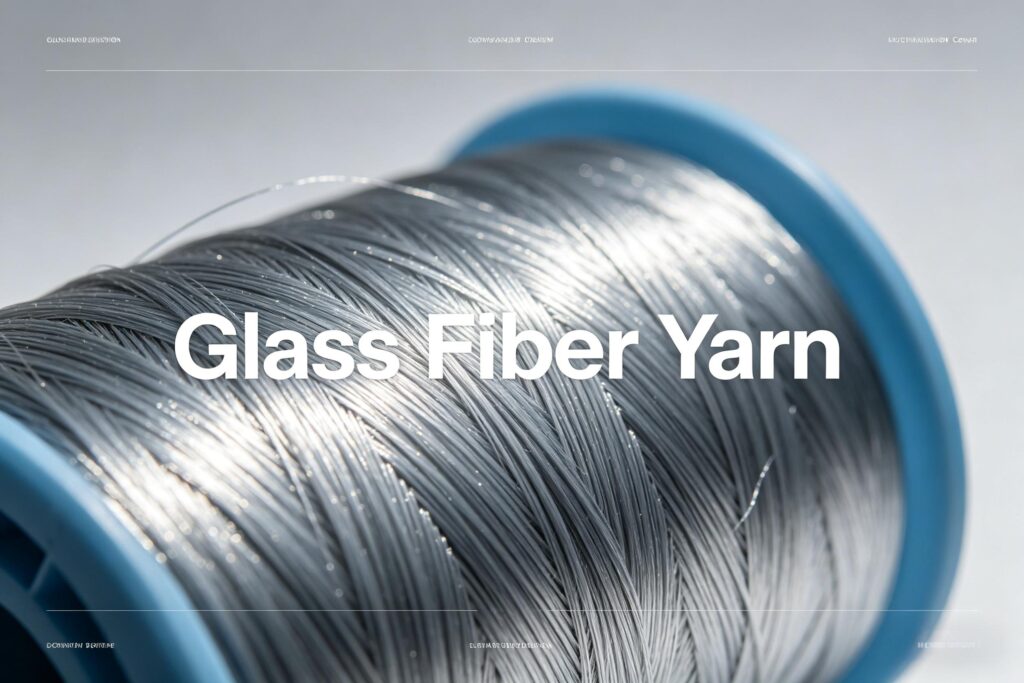
While your daily operations in apparel, textiles, or soft goods manufacturing might not routinely involve glass fiber yarn, this high-tech material is a cornerstone of the modern industrial world. For professionals looking to diversify into technical textiles, enhance product performance, or simply understand the full spectrum of available materials, glass fiber is indispensable. Unlike organic fibers such as cotton or polyester, glass fiber yarn is an inorganic material prized for its exceptional strength, dimensional stability, and, most notably, its outstanding resistance to high temperatures. This guide will translate its technical specs into actionable insights, helping you evaluate its potential for innovative applications.
2. Decoding Glass Fiber: Composition, Types, and Manufacturing
Glass fiber yarn begins as a specific recipe of raw materials—primarily silica sand, limestone, and alumina—melted at extremely high temperatures (over 1400°C/2550°F) to form a homogeneous liquid. This molten glass is then extruded through micro-fine bushings (spinnerets) to create continuous filaments as thin as 5-24 microns in diameter. These filaments are immediately coated with a chemical sizing—a critical component that protects the fibers, binds them together, and determines their compatibility with resins (for composites) or other weaving processes.
The thermal and mechanical properties are largely dictated by the glass composition. The most common types are:
- E-Glass (Electrical Grade): The most widely used general-purpose type, offering a strong balance of strength, electrical insulation, and good temperature resistance at a cost-effective price point. It accounts for over 90% of all glass fiber reinforcements.
- S-Glass (High-Strength): A premium grade with approximately 20-30% higher tensile strength and modulus than E-glass, coupled with superior performance at elevated temperatures. It is used in aerospace, defense, and high-performance sporting goods.
- AR-Glass (Alkali Resistant): Specially formulated for cement and concrete reinforcement, where the high-alkaline environment would degrade E-glass.
3. The Core Question: What Temperature Can Glass Fiber Yarn Withstand?
This is a nuanced question, as the answer depends on the timeframe of exposure and the specific glass type. It is crucial to distinguish between short-term thermal shock resistance and long-term thermal endurance.
- Continuous Operating Temperature: This is the temperature at which the fiber can be used indefinitely without significant loss of strength or degradation. For standard E-Glass yarn, this is typically in the range of 600°C to 650°C (1112°F to 1202°F). S-Glass can operate continuously at slightly higher temperatures, often cited in the range of 650°C to 700°C (1202°F to 1292°F).
- Melting Point/Softening Point: The temperature at which the fiber begins to soften and lose its structural integrity is much higher. E-Glass has a softening point around 830°C (1526°F) and a melting point exceeding 1000°C (1832°F).
Key Consideration: The Sizing. Remember, the protective polymer sizing applied to the yarn has a much lower thermal limit (typically between 150°C to 250°C / 302°F to 482°F). For applications exceeding this, a process called “heat cleaning” is used to burn off the sizing, after which the bare glass fiber can be used with high-temperature resins or binders.
Table 1: Temperature Resistance of Common Glass Fiber Types
| Glass Type | Continuous Use Temperature (Approx.) | Softening Point (Approx.) | Primary Thermal Advantage |
|---|---|---|---|
| E-Glass | 600°C – 650°C (1112°F – 1202°F) | ~830°C (1526°F) | Cost-effective high-temperature performance for most industrial applications. |
| S-Glass | 650°C – 700°C (1202°F – 1292°F) | ~900°C (1652°F) | Higher strength retention at elevated temperatures; superior for extreme environments. |
| AR-Glass | ~600°C (1112°F) | Similar to E-Glass | Stability in alkaline environments, not primarily for ultra-high heat. |
4. Beyond Heat: Critical Performance Specifications and Data
Temperature is just one parameter. A full technical specification sheet for glass fiber yarn is essential for proper sourcing. Here are the key metrics:
- Filament Diameter & Tex Count: Yarn fineness is measured in Tex (weight in grams per 1000 meters). A common range for textile processes is from 68 Tex (coarser, heavier) to 11 Tex (finer, lighter). Finer yarns offer more flexibility and a softer fabric hand.
- Tensile Strength: This is where glass fiber shines. A single filament of E-glass can have a tensile strength of 3,400 MPa (500,000 psi) or more. This incredible strength is a key reason it’s used for reinforcement.
- Elongation at Break: Glass fiber is a brittle material with low elongation, typically around 3-4%. This contrasts sharply with the high elongation of organic fibers.
- Moisture Resistance & Chemical Stability: Glass fiber does not absorb moisture and is highly resistant to most acids, though it is vulnerable to strong alkalis over time.
Table 2: Comparative Performance Data of Textile Fibers
| Property | E-Glass Fiber Yarn | Standard Polyester Yarn | Aramid Fiber (e.g., Kevlar®) | Carbon Fiber |
|---|---|---|---|---|
| Density (g/cm³) | 2.55 – 2.62 | 1.38 | 1.44 | 1.75 – 1.95 |
| Tensile Strength (MPa) | 3,400 – 3,800 | 800 – 1,200 | 2,900 – 3,600 | 3,500 – 7,000 |
| Max. Continuous Temp. | ~600°C | ~150°C | ~200°C – 250°C | >400°C (in inert atm.) |
| Thermal Conductivity | Low | Low | Low | Very High (axial) |
| Key Limitation | Brittleness, Skin Irritation | Melts, Low UV Resistance | Degrades under UV, High Cost | Very Brittle, Extremely High Cost |
5. Application Spotlights: Where Temperature Resistance Creates Value
- 5.1 Thermal Insulation and Protective Apparel: Woven or knitted glass fiber fabrics are the core of fire blankets, welding curtains, and insulation wraps for pipes and equipment. Their ability to withstand direct flame and radiant heat without melting is critical. For protective apparel, it’s often used in composite fabrics with outer layers of aramid.
- 5.2 High-Temperature Filtration: Needle-felt fabrics made from glass fiber are the standard for baghouse filters in cement kilns, power plants, and metal foundries. They capture fine particulate matter in exhaust streams where temperatures can routinely exceed 260°C (500°F).
- 5.3 Composites and Industrial Fabrics: As a reinforcement for plastics (GFRP), glass fiber yarn provides the structural skeleton for boat hulls, automotive parts, and wind turbine blades. The temperature resistance ensures the composite maintains integrity in hot environments (e.g., under a car hood).
- 5.4 Specialty Applications: In electrical insulation, its combination of high heat resistance and dielectric strength is vital. In aerospace, S-glass composites are used in components that experience both high stress and temperature fluctuations.
6. Supplier Selection Guide: Navigating Quality and Reliability
Choosing a glass fiber yarn supplier requires a technical audit. Key questions to ask:
- Can they provide certified mill test reports for each batch, detailing tensile strength, tex, and sizing content?
- What is their consistency in yarn diameter and sizing application? Inconsistency leads to weaving breaks and faulty composites.
- Do they offer technical support for yarn selection, sizing compatibility, or process optimization?
- What is their packaging and logistics standard? Glass fiber is abrasive and must be packaged to prevent filament damage and moisture contamination (even though it doesn’t absorb water, sizing can be affected).
7. Partnering for Performance: How Glyarn Ensures Superior Glass Fiber Solutions
In a market where not all fibers are created equal, partnering with a dedicated technical supplier like Glyarn transforms procurement from a commodity transaction into a value-adding partnership. Glyarn’s approach to glass fiber yarn addresses the core pain points of technical buyers:
- Precision Sourcing and Verification: Glyarn doesn’t just resell fiber; they source from top-tier producers and conduct rigorous in-house verification testing. They understand that the stated “E-glass” from different mills can have performance variances, and they ensure every spool meets their strict threshold for tensile strength and thermal stability before it reaches the customer.
- Sizing Expertise: Recognizing that the sizing is the interface between fiber and application, Glyarn offers guidance on selecting the correct sizing for your process—be it a compatible sizing for epoxy resin in composites or a starch-based sizing for weaving—and can arrange for heat-cleaned yarn when required.
- Technical Collaboration for Innovation: For a carpet manufacturer exploring a fire-blocking secondary backing or a textile mill developing a new high-temperature insulation felt, Glyarn’s engineers provide consultative support. They help translate end-product performance requirements (e.g., “must withstand 550°C for 10 minutes”) into the correct yarn specification, potentially saving months of trial and error.
- Supply Chain Integrity: Glyarn ensures their glass fiber yarn is packaged on robust cones with tension control to prevent snagging and is shipped in protective, moisture-resistant packaging. Their reliable logistics network provides transparency and consistency, which is essential for just-in-time manufacturing processes.
8. Conclusion: Making an Informed Decision for Your Technical Needs
Glass fiber yarn is not a textile commodity; it is a high-performance engineering material. Its value lies in its unmatched combination of heat resistance, strength, and inorganic stability. When evaluating it for your applications, look beyond the basic “temperature rating” and consider the full specification profile and the required sizing.
The ultimate factor in successful implementation is often the supplier partnership. A technically proficient partner like Glyarn acts as an extension of your R&D and QA teams, providing not just a consistent product but also the expertise to deploy it effectively. Whether you are reinforcing a new composite part, upgrading a filtration system, or exploring a line of protective textiles, investing in the right glass fiber specification and a reliable supply chain is the foundation for performance, safety, and innovation.
