
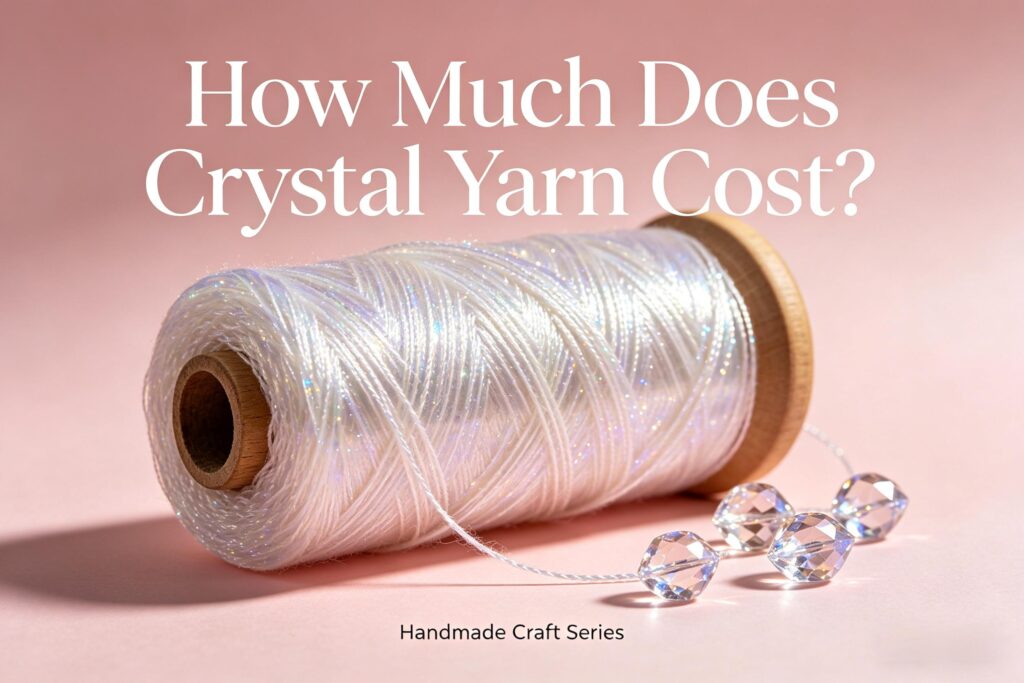
For procurement managers across the apparel, textile, home furnishings, and specialty manufacturing sectors, sourcing materials that balance cost, performance, and aesthetic appeal is a constant challenge. Crystal yarn, with its unique sparkle and texture, offers a compelling value proposition for premium product lines. However, its price is not a single figure but a spectrum influenced by a complex web of factors. This guide delves deep into the economics of crystal yarn, providing you with the data-driven insights and strategic frameworks needed to make informed purchasing decisions, negotiate effectively, and leverage this specialty fiber for maximum market advantage.
Table of Contents
- Introduction: Beyond the Sparkle — The Strategic Value of Crystal Yarn
- Decoding the Price: A Multifactor Analysis Framework
- Market Price Benchmarks: Data and Ranges by Material & Application
- Strategic Sourcing: Cost Optimization Without Compromising Quality
- The Total Cost of Ownership (TCO): A Holistic View for Budgeting
- Future Trends: Pricing Outlook and Emerging Opportunities
- Conclusion: Actionable Strategies for the Modern Buyer
1. Introduction: Beyond the Sparkle — The Strategic Value of Crystal Yarn
Crystal yarn is not merely a decorative thread; it is a strategic tool for product differentiation and value addition. In a crowded marketplace, the visual and tactile qualities of crystal yarn can elevate a product from ordinary to luxurious, directly impacting consumer perception and justifying a higher price point. For apparel manufacturers, it creates eye-catching eveningwear, accessories, and trims. For home textile producers, it adds a dimension of sophistication to curtains, upholstery, and decorative throws. Even in plush toys, strategic use of crystal yarn can create unique, premium collectibles.
Understanding its cost structure is, therefore, not just about accounting—it’s about understanding the return on investment (ROI) that this material brings to your final product. This guide will equip you with that understanding.
2. Decoding the Price: A Multifactor Analysis Framework
The question “How much does crystal yarn cost?” is akin to asking “How much does a car cost?” The answer depends on the specifications. For crystal yarn, the price per kilogram or meter is determined by an interplay of the following core factors:
- Core Material Composition: This is the primary cost driver.
- Polyester (PET): The most common and cost-effective base, offering excellent clarity and durability. Prices are influenced by raw polyester staple or filament costs, which are subject to commodity fluctuations.
- Nylon (e.g., Tactel®): Offers superior softness, strength, and dye affinity compared to polyester, resulting in a premium price. A fabric blend of 90% Tactel nylon and 10% spandex, for instance, is positioned as a high-performance material for premium apparel.
- Specialty Polymers (e.g., Modified Fibers): Fibers engineered for specific properties like enhanced sparkle, UV resistance, or flame retardancy command the highest prices. Modified plastic fibers like certain polypropylenes or polyethylenes have specialized markets and pricing.
- Metallic/Mylar Content: The inclusion, thickness, and quality of the laminated metallic film are significant cost adders. Higher-quality films resist tarnishing and breaking, adding to the expense.
- Yarn Structure and Production Complexity:
- Simple Monofilament vs. Complex Plied/Textured: A basic crystal monofilament is cheaper to produce than a plied yarn combining a crystal filament with a natural fiber like cotton or rayon for a matte-and-sparkle effect.
- Consistency and Finish: High-end crystal yarn requires precise manufacturing to ensure consistent diameter and sparkle. Irregularities or lower luster can indicate a lower-cost, lower-quality production process.
- Order Volume and Supply Chain Dynamics: As with most textiles, economies of scale apply. Larger order volumes (Full Container Loads) secure significantly better per-unit pricing than small-batch or sample orders. Furthermore, the price is sensitive to upstream raw material costs. Recent market data shows volatility; for example, while the general textile market may see a downturn, specific raw materials like certain glass fibers or epoxy resins can experience price increases.
3. Market Price Benchmarks: Data and Ranges by Application
The following tables synthesize current market data to provide tangible price corridors. These are benchmarks for negotiation and budgeting, recognizing that final quotes will vary by supplier, specification, and order terms.
Table 1: Raw Material & Intermediate Fiber Price Reference
| Material Type | Specification Example | Price Range (Approx.) | Notes & Source Context |
|---|---|---|---|
| Polyester Staple Fiber | Commodity Grade, China Future | $860 – $880 / MT | Daily settled futures price provides a baseline for raw input cost. |
| Modified Plastic Fibers | PP, PE, PET (Bulk) | $1,300 – $2,500 / MT | Prices for engineered fibers vary widely by property. |
| Glass Fiber (Reference) | 2400tex Direct Roving | $435 – $505 / MT | Included as a benchmark for a different high-strength specialty fiber. |
| Standard Acrylic Fiber | Raw material for spinning | $1.85 – $2.55 / KG | Shows bulk pricing for a common textile fiber at high volumes. |
Table 2: Finished Crystal Yarn & Fabric Price Ranges by End-Use
| Application Sector | Typical Material/Blend | Price Indication (FOB) | Key Cost Influencers |
|---|---|---|---|
| Fast Fashion Apparel & Trims | 100% PET Crystal Yarn, Basic Luster | $1.50 – $3.00 / Kg | High-volume orders, simple construction, standard metallic film. Price competitiveness is paramount. |
| Premium Apparel & Lingerie | Nylon (Tactel®)/Spandex Blend with Crystal | $5.00 – $8.00 / Kg (or priced by fabric) | Fiber premium, complex knitting/weaving, brand licensing (e.g., Invista Tactel), and certifications (e.g., OEKO-TEX). |
| Home Textiles & Upholstery | PET Crystal Yarn plied with Cotton or Viscose | $2.50 – $4.50 / Kg | Durability requirements, yarn thickness (denier), and colorfastness standards. |
| High-End Decor & Technical | Specialty Polymer with High-Reflectivity Film | $6.00+ / Kg | Custom engineering, low-volume production, and advanced functional properties. |
4. Strategic Sourcing: Cost Optimization Without Compromising Quality
Armed with benchmark data, buyers can employ several strategies:
- Define Precisely and Source Appropriately: Do you need a premium nylon-based crystal yarn for intimate apparel, or will a polyester alternative suffice for a seasonal fashion accessory? Clearly defining the minimum viable specification avoids overpaying for unneeded properties.
- Leverage Volume and Forecast: Consolidate demand across product lines to increase order volume. Providing suppliers with reliable forecasts can unlock better pricing and production scheduling.
- Consider Semi-Finished Alternatives: For some manufacturers, sourcing a high-quality crystal fabric (like a Tactel nylon blend) may be more operationally efficient than handling the yarn directly, factoring in the costs of knitting, dyeing, and finishing in-house.
- Conduct Total Cost Analysis: The cheapest yarn per kilo can be the most expensive if it causes production downtime due to breakage, requires special handling, or results in inferior final product quality that leads to returns.
5. The Total Cost of Ownership (TCO): A Holistic View for Budgeting
A savvy procurement professional looks beyond the FOB price. The true cost of crystal yarn includes:
- Minimum Order Quantity (MOQ) Costs: Suppliers often have high MOQs for custom colors or specific deniers. Holding excess inventory ties up capital and adds storage costs.
- Production Integration Costs: Does the yarn run smoothly on your existing looms or knitting machines? A slightly more expensive, stronger yarn may save thousands in reduced downtime and higher throughput.
- Dyeing and Finishing: How does the crystal component react to dyes, heat setting, and washing processes? Complications here add cost.
- Logistics and Lead Time: Sourcing from a distant, low-cost supplier may involve long lead times and unpredictable shipping costs, impacting supply chain resilience.
6. Future Trends: Pricing Outlook and Emerging Opportunities
The crystal yarn market is dynamic. Key trends that will influence future pricing include:
- Sustainability-Driven Price Premiums: Demand for recycled PET (rPET)-based crystal yarns or bio-derived polymers is growing. These environmentally friendly options currently carry a cost premium but are becoming a key market differentiator.
- Smart and Functional Integration: The convergence of aesthetics and functionality—such as yarns with integrated luminescence or phase-change materials for thermoregulation—will create new high-value, high-cost segments.
- Raw Material Volatility: As seen in data from , prices for petroleum-derived polymers and energy remain volatile. Building flexible contracts and close supplier relationships will be crucial for price stability.
7. Conclusion: Actionable Strategies for the Modern Buyer
Navigating the cost landscape of crystal yarn requires a blend of technical knowledge, market awareness, and strategic thinking.
- Start with Deep Specification: Internal collaboration between design, production, and procurement is essential to define the exact need.
- Benchmark and Negotiate with Data: Use the price ranges and factors outlined here as a foundation for supplier discussions. Request detailed cost breakdowns.
- Audit Quality Proactively: Always test yarn samples for performance (strength, colorfastness, shrinkage) before committing to large orders. The transaction data of a company like
tongxiang zhongchen chemical fiber co.ltd.shows that consistent, high-volume trade is built on reliable quality specifications. - Build Partnerships, Not Just Transactions: Developing a relationship with a reputable supplier ensures better communication, priority in tight markets, and collaboration on solving cost challenges.
Ultimately, the cost of crystal yarn should be measured against the value it creates in your finished product. By mastering its cost drivers and adopting a strategic, TCO-focused approach, you can transform this sparkling material from a line-item expense into a verifiable source of competitive advantage and profitability.
