
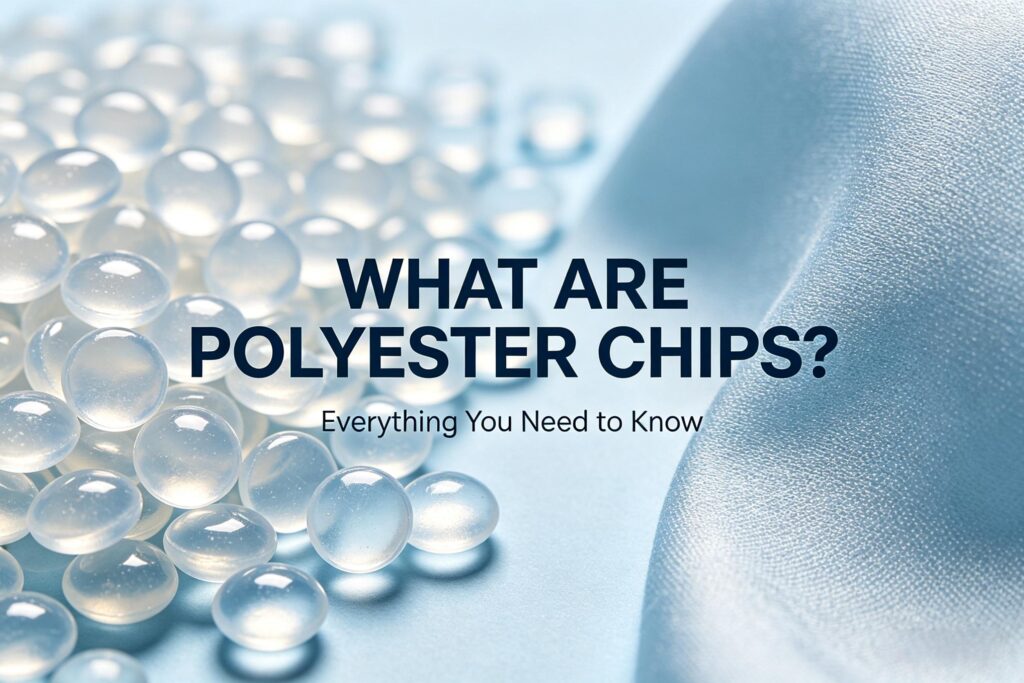
In the vast and complex landscape of modern manufacturing, few materials are as ubiquitous yet overlooked as polyester. From the clothes we wear to the bottles we drink from, its presence is undeniable. However, before polyester becomes a fiber or a container, it exists in a fundamental, intermediate form: the polyester chip. These small, solid pellets are the essential building blocks of the entire polyester industry, representing a crucial stage between raw chemical production and finished goods.
To understand what polyester chips are, one must first grasp what polyester itself is. Chemically known as polyethylene terephthalate (PET), polyester is a polymer—a long chain of repeating molecular units. It is created through a chemical reaction between purified terephthalic acid (PTA) and monoethylene glycol (MEG), both derived from petroleum. This reaction, known as polycondensation, produces a viscous, molten polymer. It is this molten substance that is then cooled and solidified, and subsequently cut or pelletized into small, lentil-sized pieces. These pieces are the polyester chips.
Their appearance is unassuming; they resemble tiny, translucent or opaque pebbles, their color ranging from clear to white to various shades, depending on their intended use and whether they contain additives. But within their simple form lies immense versatility. Polyester chips are not the final product; they are the raw material feedstock for a multitude of manufacturing processes. Their primary function is to be melted down again and reshaped into their final form. This is done through two main methods:
- Fiber Spinning: For the textile industry, chips are melted and forced through a device called a spinneret, which is pierced with tiny holes. As the thin streams of molten polymer exit the holes, they cool and solidify into continuous filaments. These filaments can then be processed, textured, and cut to create the polyester yarns and staples used to weave or knit fabrics. This is the process that creates the polyester in clothing, home furnishings, and industrial textiles.
- Extrusion and Molding: For packaging applications, such as plastic bottles and containers, the chips are melted and either injection-molded into preforms (which are later blown into bottles) or directly extruded into sheets for thermoforming, such as for food trays. In this context, the chips are often referred to as PET resin.
A critical aspect of polyester chips is that they are not all identical. They are produced with specific properties to suit different end-uses. The most important characteristic is their Intrinsic Viscosity (IV), which measures the length of the polymer chains. Chips with a high IV are used for technical applications and bottles, as the longer chains create stronger, more durable material. Chips with a lower IV are suitable for textile fibers. Furthermore, chips can be modified with additives during production. These can include delusterants (like titanium dioxide to make the chips opaque and reduce shine), colorants (to create pre-dyed chips), or additives for flame retardancy, UV resistance, or anti-bacterial properties.
In recent years, the category of recycled polyester (rPET) chips has gained significant importance. These are produced not from virgin petrochemicals, but by collecting and processing post-consumer PET waste, such as plastic bottles. This waste is cleaned, shredded, melted, filtered, and re-pelletized into rPET chips. These recycled chips can then be used in the same way as virgin chips, closing the loop in the product lifecycle and reducing plastic waste and carbon footprint.
In conclusion, polyester chips are far more than simple plastic pellets. They are the standardized, transportable, and highly adaptable intermediate form of one of the world’s most important polymers. They bridge the gap between chemistry and commerce, allowing for the efficient global distribution and specialized manufacturing of countless products that define contemporary life. Without these humble chips, the modern textile and packaging industries as we know them would simply not exist.
