
The Versatile Applications of rPET Chips: From Bottles to Fabrics
The question “What are rPET chips used for?” lies at the heart of the modern circular economy. rPET, or recycled polyethylene terephthalate, begins its life as post-consumer waste, most commonly plastic bottles and food containers. These items are collected, sorted, thoroughly cleaned, and processed into small, flake-like granules known as rPET chips. These chips are the fundamental building blocks for a remarkable range of new products, effectively closing the loop on plastic waste and giving it a valuable second life. Their applications span several major industries, driven by both environmental imperatives and technological innovation.
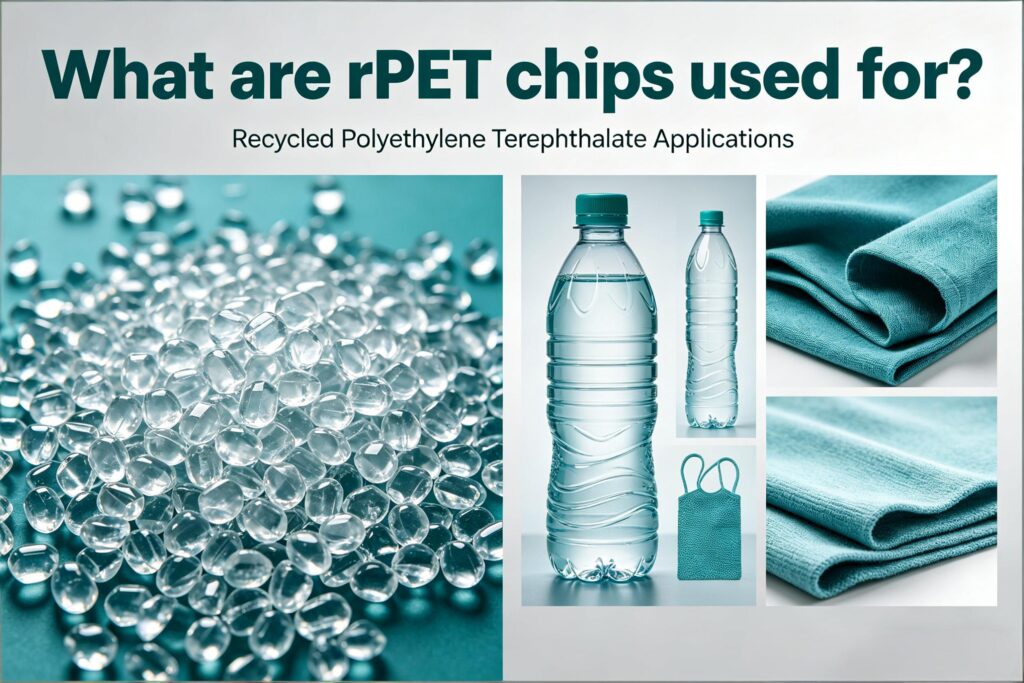
The most prominent and widely recognized application for rPET chips is in the packaging industry, particularly in the creation of new bottles and food containers. This process, known as “bottle-to-bottle” recycling, is a powerful demonstration of a closed-loop system. Through advanced washing and super-cleaning technologies, rPET chips can be processed to meet stringent food-grade safety standards. Major beverage and consumer goods companies are increasingly incorporating this recycled content into their packaging to meet sustainability goals and respond to consumer demand for eco-friendlier options. By doing so, they significantly reduce their reliance on virgin plastic derived from fossil fuels and lower the carbon footprint of their products.
Beyond packaging, rPET chips are a primary raw material for the textile and fashion industry. These chips are melted and extruded through fine spinnerets to create polyester staple fibers or filaments. These fibers can then be spun into yarns and used to manufacture a wide array of fabrics. The resulting recycled polyester can be found in clothing, such as fleece jackets, athletic wear, and t-shirts, as well as in home furnishings like carpets, curtains, and upholstery. This “bottle-to-fiber” pathway provides a sustainable alternative to virgin polyester, which is energy-intensive to produce. Brands are increasingly leveraging this material to offer consumers durable and high-performance products with a significantly reduced environmental impact.
The utility of rPET chips extends into other industrial sectors, showcasing their remarkable versatility. In the automotive industry, they are used to produce non-woven felts for sound insulation and trunk liners, as well as fibers for carpeting and seat upholstery. Another significant application is in the manufacturing of strapping bands, which are used for securing packages and pallets during shipping. rPET strapping is known for its strength and durability, offering a recycled solution for logistics and industrial needs. Furthermore, rPET chips can be molded or formed into various sheets and thermoformed products, finding uses in clamshell packaging, blister packs, and even some consumer goods.
In conclusion, the uses for rPET chips are diverse and expanding. From giving a discarded plastic bottle a new life as a food container, a comfortable piece of clothing, or a component in a vehicle, rPET chips are a cornerstone of sustainable manufacturing. As recycling technologies advance and the global push for a circular economy intensifies, the demand for these versatile chips is set to grow, paving the way for further innovation and a significant reduction in plastic pollution.
