
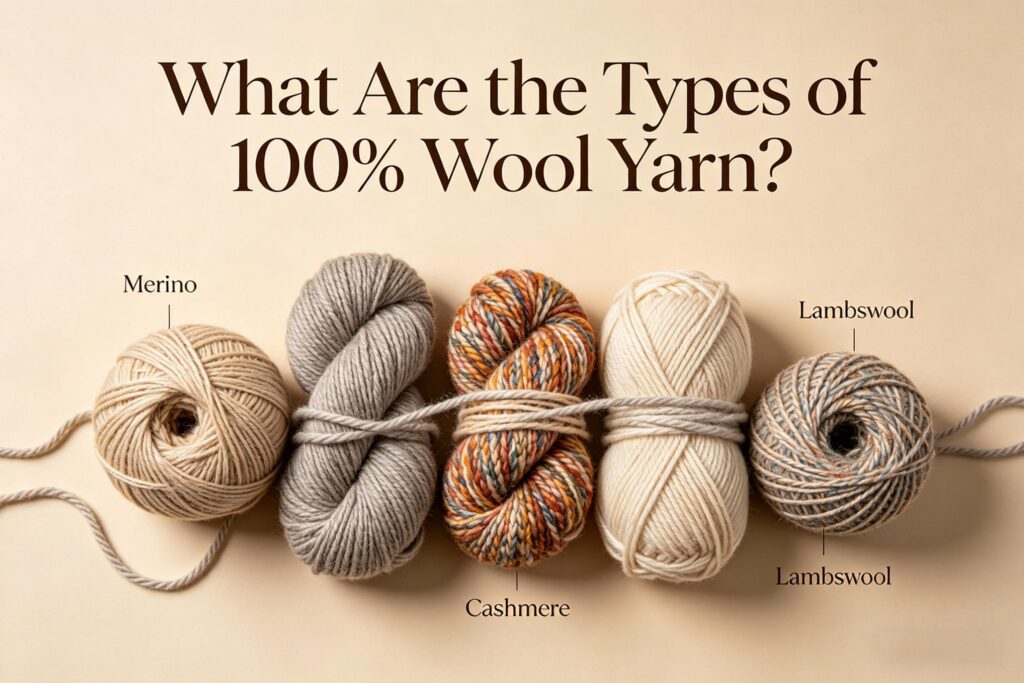
For textile procurement managers, product developers, and manufacturing specialists, navigating the world of 100% wool yarn is both an art and a science. Far from being a single commodity, “100% wool” encompasses a vast and intricate spectrum of fibers, each with distinct origins, processing methods, performance characteristics, and price points. This definitive guide provides a deep, technical, and commercially relevant analysis of pure wool yarns, empowering you to make precise sourcing decisions for applications ranging from luxury apparel and durable carpets to high-end upholstery and plush toys.
Table of Contents
- Introduction: The Strategic Imperative of Wool Yarn Specification
- The Foundation: Classifying Wool by Fiber Source and Breed
- The Manufacturing Blueprint: Spinning Systems and Yarn Structure
- A Technical Catalogue: Key 100% Wool Yarn Types and Their Attributes
- Application-Driven Selection: Matching Wool Yarn to End-Use
- Strategic Sourcing, Cost Analysis, and Quality Assurance
- Future Trends and Sustainable Sourcing
- Conclusion: Building a World-Class Wool Yarn Strategy
1. Introduction: The Strategic Imperative of Wool Yarn Specification
In today’s competitive and quality-conscious market, specifying “100% wool” is merely the starting point. The precise type of wool yarn selected is the primary determinant of:
- Final Product Performance: Durability, softness, warmth, pilling resistance, and drape.
- Manufacturing Efficiency: How the yarn behaves on knitting, weaving, or tufting machinery.
- Cost Structure: Raw material costs can vary by a factor of 10 or more between different wools.
- Brand Positioning and Value: The story of the fiber—from a rare, sustainable breed to a high-performance merino—directly influences consumer perception and price justification.
Mis-specification leads to product failure, cost overruns, and damaged brand equity. This guide provides the framework for precision.
2. The Foundation: Classifying Wool by Fiber Source and Breed
All wool begins with the sheep, but not all sheep are equal. The breed and origin define the fiber’s inherent genetics.
Table 1: The Hierarchy of Wool Breeds & Fiber Characteristics
| Breed / Wool Type | Key Origin | Average Fiber Diameter (Microns) | Key Characteristics | Primary Price Driver & Positioning |
|---|---|---|---|---|
| Merino & Superfine Merino | Australia, South Africa, New Zealand | 14.5 – 22.5 | The benchmark for softness. Fine, elastic, excellent crimp, superior moisture-wicking. | Fineness (micron). Luxury and performance apparel. |
| Lambswool | First shearing (≤7 months old) | 18 – 23 | Softer, finer, and more elastic than adult wool from the same breed. A premium category. | Age & Softness. High-quality knitwear and babywear. |
| Shetland Wool | Shetland Isles, UK | 25 – 30 | Known for its natural color palette (grey, brown, moorit), medium-soft hand, and rustic authenticity. | Tradition & Natural Colors. Classic Fair Isle and heritage knitwear. |
| Cheviot | UK, US | 27 – 33 | Long-staple, strong, resilient, with a distinctive crisp hand. High bulk and excellent stitch definition. | Strength & Durability. Hard-wearing tweeds, socks, blankets. |
| Romney, Lincoln, Leicester (Longwools) | UK, New Zealand | 33 – 40+ | Very long, lustrous, strong fibers. Lower crimp, smoother surface. | Luster & Length. Worsted coatings, carpets, decorative yarns. |
| Carpet Wools (e.g., Blackface, Swaledale) | UK, Asia | 35 – 45+ | Very coarse, robust, and resilient. Engineered for extreme durability. | Durability & Cost. Industrial carpets, heavy-duty rugs. |
Critical Metric: Micron (μm)
This is the single most important objective measure of wool: the average diameter of the fiber in microns (μm). Lower micron = finer, softer wool. Merino is defined as ≤23.5μm. Garments against the skin typically require ≤19μm for comfort.
3. The Manufacturing Blueprint: Spinning Systems and Yarn Structure
The same wool fiber can become two completely different yarns based on how it is spun.
3.1 Worsted Spun vs. Woolen Spun: A Fundamental Dichotomy
- Worsted Spun : Fibers are combed to align them parallel and remove short fibers. The result is a smooth, dense, strong, and sleek yarn with excellent stitch definition. It is used for fine, lightweight, durable fabrics (e.g., suiting, fine-gauge knitwear).
- Woolen Spun : Fibers are carded but not combed, leaving them airy and random. The result is a softer, loftier, bulkier, and fuzzier yarn that traps more air for warmth. It is used for cozy, rustic fabrics (e.g., Shetland sweaters, tweeds, blankets).
3.2 Yarn Count and Ply
- Count: Defines thickness. Common systems are Metric Count (Nm) and Worsted Count (NeK). A typical sweater yarn might be Nm 2/28 (a 2-ply yarn where the singles are Nm 28).
- Ply: Two or more single strands twisted together. 2-ply is standard and balanced. Single-ply is loftier but can bias. Multi-ply (4-ply+) is very strong and round.
4. A Technical Catalogue: Key 100% Wool Yarn Types and Their Attributes
Beyond breed and spin, specific yarn constructions are engineered for purpose.
Table 2: Engineered 100% Wool Yarn Types
| Yarn Type | Description & Construction | Typical Wool Used | Key Performance Attributes |
|---|---|---|---|
| Merino Worsted (2/28 Nm, 2/48 Nm) | Fine, combed, tightly spun yarn. | Superfine & Fine Merino (19-21μm) | Smooth hand, high strength, excellent drape, pill-resistant. For fine knitwear and woven suiting. |
| Shetland Woolen (Aran, Chunky) | Carded, woolen-spun, medium to thick count. | Shetland, Cheviot (26-30μm) | Lightweight warmth, rustic halo, breathable. Classic, textural knitwear. |
| Melange / Heather Yarn | Fibers of different colors blended before spinning. | Any. Often Merino or Crossbred. | Complex, muted color effects. Hides soil. Popular in casual and corporate knitwear. |
| Brushed / Halo Yarn | Finished with a raising process to pull fibers to the surface. | Fine Merino, Lambswool. | Extremely soft, fuzzy surface, exquisite hand-feel. Reduces itch factor; used in premium scarves and loungewear. |
| High-Bulk Yarn | Treated with a special “potting” or shrinking process. | High-crimp Merino. | Exceptional loft and warmth-to-weight ratio without added thickness. For lightweight thermal wear. |
| Carpet Yarn (BCF Piled) | Bulked Continuous Filament (for tufting) or high-ply hard-twist. | Coarse Crossbred, Carpet wools. | Extreme abrasion resistance, resilience (springs back from crushing), soil-hiding texture. |
| Tweed Yarn (Nepp, Slub) | Incorporates colored “neps” or slubs for a flecked, textured appearance. | Cheviot, Shetland, Crossbred. | Highly durable, rustic aesthetic. Signature look for jackets and home fabrics. |
5. Application-Driven Selection: Matching Wool Yarn to End-Use
The right yarn is the one that meets the technical demands of the application.
Table 3: Application-Specific Yarn Selection Guide
| Industry / End-Use | Recommended Wool Yarn Types | Critical Performance Parameters | Rationale & Notes |
|---|---|---|---|
| High-End Apparel (Sweaters) | Merino Worsted (19-21μm), Fine Lambswool, Brushed Merino. | Hand-feel (micron), Pilling Resistance, Shrinkage Control. | Softness is paramount. Machine washability (superwash treated) is a major commercial advantage. |
| Tailored Apparel (Suits, Blazers) | Merino Worsted (19-22μm) for tropical, Cheviot/Crossbred for tweeds. | Drape, Strength, Crease Recovery. | Worsted spin provides the smooth, durable surface needed for weaving fine gabardine or serge. |
| Carpets & Rugs | Tufted: Piled Carpet Wool Yarn. Woven: High-twist Woolen or Worsted. | Abrasion Resistance (Martindale >20,000 cycles), Resilience, Colorfastness. | Must withstand years of foot traffic and crushing. Coarse, high-resilience fibers are essential. |
| Upholstery & Drapery | Tightly spun Worsted, Tweed yarns. | Abrasion Resistance, Lightfastness, Dimensional Stability. | Requires durability against friction and sunlight. Tweed yarns hide wear and stains. |
| Plush Toys & Babywear | Only Superfine Merino or Lambswool (≤19μm). Brushed for extra softness. | Ultra-Soft Hand, Non-Irritating, Safety (no loose fibers), Washability. | Skin contact and safety regulations are critical. Must be supremely soft and secure. |
| Blankets & Throws | Woolen-Spun Shetland, Merino, or Brushed Yarns. | Warmth-to-Weight Ratio, Loft, Breathability, Soft Hand. | Woolen spin creates the ideal air-trapping structure for insulation and cozy feel. |
| Technical/Sports Apparel | High-Bulk Merino, Fine Merino Worsted. | Moisture Wicking, Thermoregulation, Odor Resistance, Lightweight. | Wool’s natural performance attributes are leveraged. High-bulk maximizes warmth without weight. |
6. Strategic Sourcing, Cost Analysis, and Quality Assurance
6.1 Cost Drivers and Market Dynamics
- Raw Material: Micron is the prime cost driver. Price per kg can range from ~$8-12 USD for good crossbred to $25-50+ USD for superfine Merino (≤18.5μm). Commodity carpet wool may be as low as $3-5/kg.
- Processing: Worsted spinning is more capital and skill-intensive than woolen, adding cost.
- Certifications: Responsible Wool Standard (RWS), ZQ Merino, or Organic (GOTS) add a 10-25% premium but are increasingly mandatory for brand compliance.
- The Australian Eastern Market Indicator (EMI) is the global benchmark for wool auction prices, primarily for merino. Tracking it provides crucial market insight.
6.2 The Sourcing Specification Sheet
Your purchase order must be exhaustively detailed:
- Full Description: “100% Pure New Wool, RWS-Certified Merino, 19.5μm avg., Worsted Spun, 2/28 Nm, Semi-Bleached, for Knitting.”
- Technical Specs: Fiber diameter (mean & CV%), Staple length, Yarn count/twist, Strength (cN/tex), Evenness (Uster %).
- Performance: Colorfastness levels, Shrinkage resistance (must specify test method: e.g., IWS TM31), Pilling rating (e.g., ICI Box ≥ 4).
- Order Terms: MOQ (often 500-1000kg per color), Incoterms, Payment terms.
6.3 Quality Assurance Protocol
- Pre-Shipment Testing: Never skip independent lab tests on bulk lots for key specs.
- Knit/Weave Trial: Always run a production trial with 50-100kg to confirm machinability and finished fabric properties.
7. Future Trends and Sustainable Sourcing
- Traceability & Certification: Demand for full supply chain transparency (from farm to yarn) via blockchain or DNA tracing is growing. RWS is becoming a baseline requirement for major brands.
- Fibre Advocacy & Branding: Brands are increasingly marketing specific wool origins (e.g., ZQ Merino, Tasmanian Merino, British Wool) as a point of differentiation.
- Performance Innovations: Developments in shrink-resist technologies that are more environmentally friendly (e.g., enzymatic processes) and blends with recycled wool are advancing.
- Circularity: Post-consumer recycled wool yarns are entering the market, though often in coarse counts for non-apparel uses initially.
8. Conclusion: Building a World-Class Wool Yarn Strategy
Mastering 100% wool yarn specification is a multi-disciplinary skill that synthesizes animal husbandry, mechanical engineering, chemistry, and market economics. To excel:
- Start with the End-Use: Let the garment’s or product’s performance requirements dictate the fiber micron, spin system, and yarn construction.
- Specify with Surgical Precision: Use the technical language and parameters outlined here. Vague specs invite quality and cost problems.
- Understand the Total Cost: Factor in premiums for fineness, certification, and processing. The right yarn is a value investment, not just a cost.
- Partner with Expert Spinners: Develop relationships with spinners who understand your industry’s needs and can guide you through breed selection and processing options.
- Validate Relentlessly: Build a rigorous QA protocol based on international test standards.
By adopting this strategic, data-driven approach, you transform wool sourcing from a procurement task into a core competency that drives product excellence, brand integrity, and sustainable competitive advantage.
