
Table of Contents
- Introduction: Defining “High-End” in the Modern Yarn Industry
- Category I: Supernatural & Enhanced Natural Fiber Yarns
- 2.1 The Elite of Natural Fibers: Superfine Wool and Cashmere
- 2.2 Enhanced Natural Fibers: Bio-Based and Specialized Cellulosics
- Category II: Advanced Synthetic and Technical Yarns
- 3.1 High-Performance and Functional Synthetics
- 3.2 Next-Generation Smart and Protective Yarns
- Category III: Innovative Yarn Structures and Blends
- 4.1 Engineered Composite Yarns: Core-Spun, Wrapped, and Fancy Yarns
- 4.2 Precision Customization: High-End Blended and Color-Spun Yarns
- Market Trends and Strategic Sourcing Insights
- 5.1 The Driving Forces: Sustainability, Technology, and Customization
- 5.2 Building a Reliable Supply Chain: How to Partner with Expert Suppliers
- Conclusion: Integrating High-End Yarns into Your Product Strategy
1. Introduction: Defining “High-End” in the Modern Yarn Industry
For today’s procurement managers and product developers, “high-end” yarns transcend basic quality. They are engineered materials that deliver exceptional, quantifiable value, whether through unparalleled comfort, cutting-edge functionality, sustainable credentials, or unique aesthetics. The global high-end yarn market is driven by consumer demand for performance, brand differentiation, and ethical production, with trends pointing towards sustainability, smart technology, and ultra-premium natural blends.
Selecting the right high-end yarn is a strategic decision that directly impacts product quality, brand positioning, and supply chain resilience. This guide provides a detailed breakdown of major high-end yarn categories, their properties, and applications to empower your sourcing decisions.
2. Category I: Supernatural & Enhanced Natural Fiber Yarns
This category focuses on fibers with exceptional inherent qualities, often enhanced through precision processing.
2.1 The Elite of Natural Fibers: Superfine Wool and Cashmere
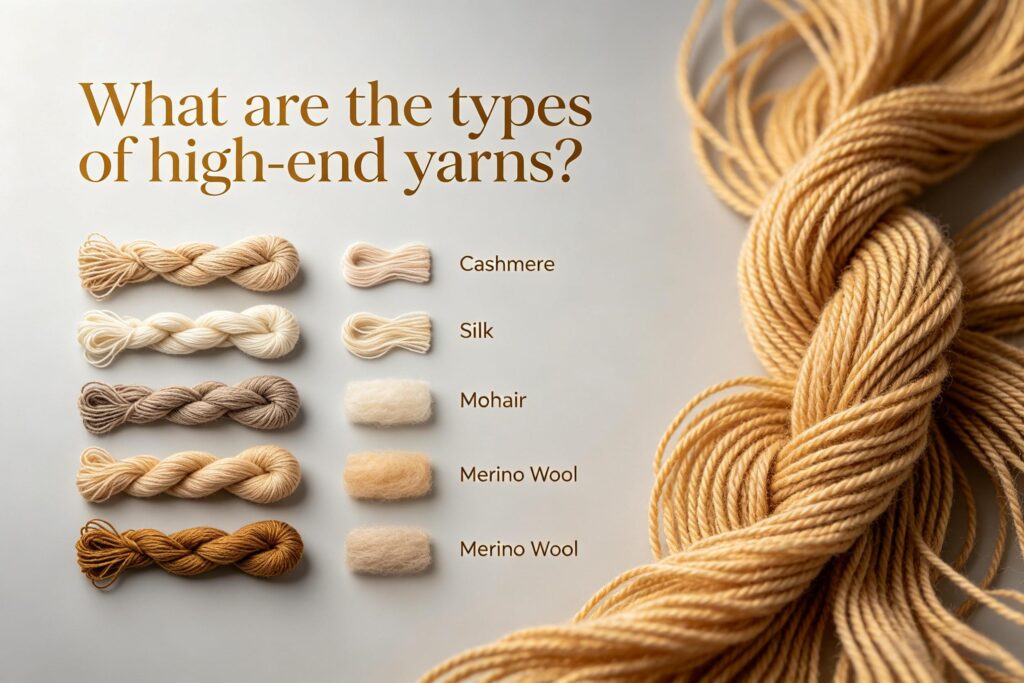
The pinnacle of luxury, these fibers are defined by their fineness (measured in microns), length, and softness.
- Superfine Merino Wool: Yarns spun from fibers finer than 19.5 microns offer a softness rivaling cashmere, with excellent temperature regulation and moisture-wicking. High-staple lengths ensure strength and a smooth finish in fine-count yarns.
- Premium Cashmere: The most exclusive variant comes from the undercoat of specific goats. High-end cashmere yarns use long, fine fibers (often below 16 microns) with meticulous de-hairing processes to ensure purity, loft, and a sublime, lightweight warmth.
- Key Application: Luxury knitwear, high-end suiting, and premium accessories where ultimate softness and natural prestige are paramount.
2.2 Enhanced Natural Fibers: Bio-Based and Specialized Cellulosics
This segment includes both novel bio-polymers and enhanced plant-based fibers.
- Bio-Based PLA (Polylactic Acid): Derived from renewable resources like corn starch, PLA yarns are biodegradable and offer unique benefits such as natural flame retardancy, antibacterial properties, and excellent moisture wicking. They are gaining traction in activewear and eco-conscious collections.
- Advanced Cellulosics (Lyocell, Modal): Produced through closed-loop processes, fibers like TENCEL™ Lyocell are celebrated for their environmental credentials. The resulting yarns are exceptionally smooth, strong (even when wet), drape beautifully, and have a gentle luster. They are often blended to elevate the performance of other fibers.
- Key Application: Sustainable fashion lines, performance basics, and blended fabrics seeking improved drape, sustainability, or functional properties.
3. Category II: Advanced Synthetic and Technical Yarns
These yarns are engineered at the polymer or structural level to deliver specific high-performance functions.
3.1 High-Performance and Functional Synthetics
- High-Tenacity & Microfiber Yarns: Engineered for exceptional strength-to-weight ratios (e.g., for technical outerwear) or to create incredibly soft, dense fabrics with superior water resistance.
- Recycled Polyester (rPET): A major sustainability driver, high-end rPET yarns are made from post-consumer plastic bottles. Leading producers ensure traceability (e.g., through GRS certification) and achieve performance and consistency levels matching virgin polyester, used in everything from sportswear to automotive interiors.
- Key Application: Performance sportswear, outdoor gear, upholstery, and products where durability, sustainability, or specific technical features are key selling points.
3.2 Next-Generation Smart and Protective Yarns
Representing the cutting edge, these yarns integrate technology for interactive or protective purposes.
- Phase-Change & Thermoregulating Yarns: Incorporated with microcapsules that absorb, store, and release heat to buffer against temperature changes, enhancing comfort in varying climates.
- Conductive and Smart Yarns: Integrate materials like silver-coated fibers to enable touch sensitivity, data transmission, or heating elements for wearable technology.
- Advanced Protective Yarns: Research showcases yarns with hierarchical structures (e.g., a protective outer layer over a sensing conductive core) that offer chemical resistance, real-time strain monitoring, and adjustable thermal management for use in high-risk environments.
- Key Application: Specialized workwear, advanced athletic gear, medical textiles, and the growing field of wearable tech.
4. Category III: Innovative Yarn Structures and Blends
High-end characteristics are often achieved not just through fiber choice, but through innovative spinning and blending techniques.
4.1 Engineered Composite Yarns: Core-Spun, Wrapped, and Fancy Yarns
- Core-Spun Yarns: These combine the strengths of different materials in one structure. A common example is an elastane core wrapped with cotton, wool, or synthetic fibers. This creates a yarn with the aesthetic and tactile feel of the outer fiber but with added stretch, recovery, and durability without adding bulk. This technology is a cornerstone of modern stretch denim and performance knits.
- Wrapped Yarns (Covered Yarns): Similar in concept, these yarns involve one fiber or filament being helically wrapped around another, often used to create stable, high-strength elastic yarns or to give a luxurious fiber (like silk) additional strength.
- Fancy Yarns: These include slub, bouclé, and other intentionally irregular yarns that create distinctive visual and textured effects in fabrics, adding a designer touch.
4.2 Precision Customization: High-End Blended and Color-Spun Yarns
- Multi-Component Blends: High-end blending is a precise science. Combining fibers like wool, silk, and cashmere or cotton, linen, and Lyocell allows spinners to “design” a yarn’s properties—balancing cost, softness, luster, strength, and care requirements.
- Melange and Color-Spun Yarns: Instead of dyeing finished fabric, fibers are dyed before spinning. This technique produces yarns with rich, nuanced, heathered color effects and superior color fastness, a mark of premium fabric.
Performance and Application Overview of Key High-End Yarn Types
| Yarn Category | Key Characteristics/Benefits | Typical Applications |
|---|---|---|
| Superfine Wool/Cashmere | Ultimate softness, lightweight warmth, natural breathability, luxury appeal. | Luxury knitwear, high-end suiting, premium scarves and accessories. |
| Bio-Based PLA | Renewable origin, biodegradable, natural flame retardant & antimicrobial, good moisture management. | Sustainable activewear, eco-friendly fashion, hygiene-conscious products. |
| Recycled Polyester (rPET) | Diverts waste, reduced environmental footprint (vs. virgin), performance equal to virgin PET. | Sportswear, fashion, uniforms, home textiles, automotive interiors. |
| Core-Spun (e.g., Cotton/Elastane) | Adds durable, comfortable stretch without compromising surface fiber hand-feel; improves fit and shape retention. | Premium denim, fitted shirts, performance leggings, socks. |
| Technical Smart Yarn | Enables interactive functions (sensing, heating) or provides advanced protection (chemical, thermal). | Professional workwear, high-performance sportswear, medical/rehab textiles. |
5. Market Trends and Strategic Sourcing Insights
5.1 The Driving Forces: Sustainability, Technology, and Customization
The high-end yarn landscape is shaped by three dominant forces:
- Sustainability: Demand for GRS-certified recycled content, biodegradable fibers, and low-carbon production processes is no longer niche but a core procurement criterion.
- Technology: Integration of AI for quality control, smart manufacturing, and the development of fibers with embedded intelligence are key differentiators.
- Customization: The ability to source smaller, tailored batches—whether in specialized blends, unique counts, or custom colors—is crucial for brands seeking differentiation.
5.2 Building a Reliable Supply Chain: How to Partner with Expert Suppliers
Navigating this complex market requires partners who are more than just vendors. A technically proficient supplier like Glyarn acts as a strategic enabler. For a sportswear brand, Glyarn wouldn’t just sell rPET; they could provide a certified, traceable supply and advise on optimal blending with moisture-wicking fibers. For a luxury brand, they could facilitate access to verified superfine wool lots and manage the complexity of a multi-fiber blend from reliable sources. This partnership model de-risks innovation, ensures material integrity, and transforms the yarn sourcing process from a transaction into a value-creating collaboration.
6. Conclusion: Integrating High-End Yarns into Your Product Strategy
Successfully leveraging high-end yarns requires a clear strategy:
- Start with the End-Use: Define the required performance (durability, hand-feel, functionality, sustainability story) first, then identify the yarn technology that delivers it.
- Demand Transparency and Data: Seek suppliers who provide verifiable certifications (GRS, Oeko-Tex), test reports, and full transparency on fiber origin and processing.
- View Your Supplier as a Partner: Collaborate with technically adept suppliers early in the development process. Their expertise can help translate design concepts into feasible, high-performance, and cost-optimized material solutions.
- Focus on Total Value: Evaluate yarns based on the total value they bring—enhanced product quality, brand equity, supply chain reliability, and market competitiveness—not just the cost per kilogram.
By understanding these categories and trends, and by forging strong partnerships with specialized suppliers, your business can effectively harness the power of high-end yarns to create innovative, desirable, and commercially successful textile products.
