
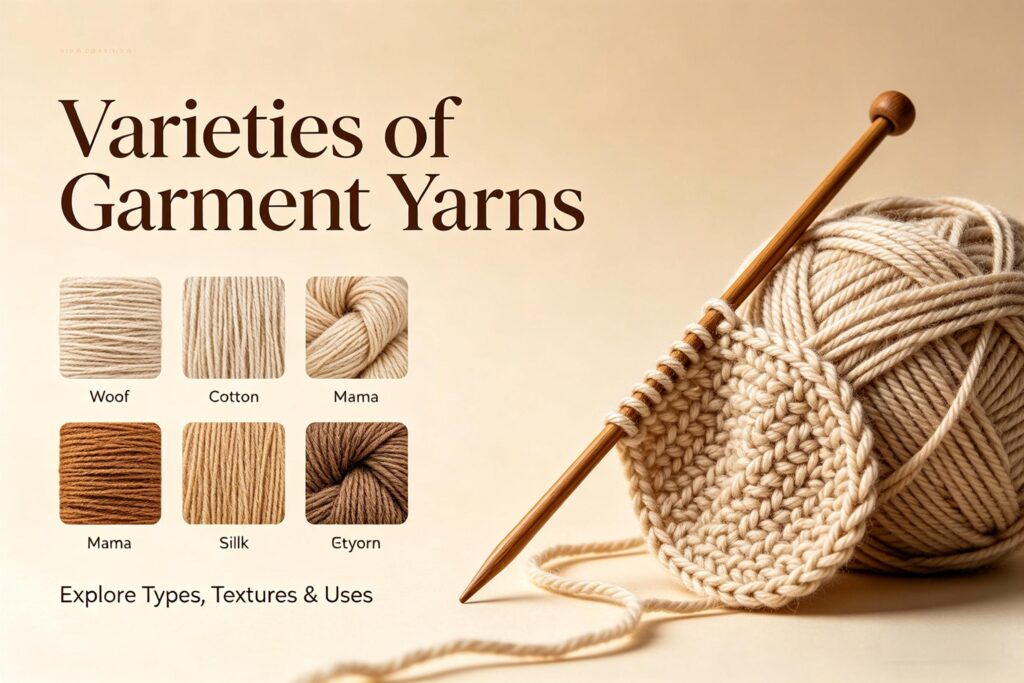
A Comprehensive Guide to Garment Yarn Varieties: Selection for Global Fashion Success
Table of Contents
- Introduction: The Strategic Significance of Yarn Selection in Fashion
- The Foundational Framework: Classifying Garment Yarns
2.1. By Raw Material
2.2. By Spinning Technology and Structure
2.3. By Fineness and Intended Use - In-Depth Analysis: Key Yarn Families and Their Market Applications
3.1. Natural Fiber Yarns: Comfort and Premium Appeal
3.2. Synthetic and Man-made Fiber Yarns: Performance and Versatility
3.3. Blended, Fancy, and Specialized Yarns: Innovation and Function - Data-Driven Decision Making: Correlating Yarn Specifications with Garment Outcomes
- Strategic Sourcing in a Dynamic Market: Trends and Partner Selection
- Conclusion: Building a Future-Proof Garment Collection from the Yarn Up
1. Introduction: The Strategic Significance of Yarn Selection in Fashion
For global fashion brands, designers, and sourcing professionals, the journey of a successful garment begins long before the sketch is finalized or the fabric is cut—it begins with the choice of yarn. As the fundamental building block of all textiles, yarn dictates not only the tactile hand-feel, drape, and aesthetic of the final fabric but also its performance, durability, cost, and ultimate market positioning. In an industry projected to see the global textile yarn market grow robustly, driven by diverse applications from apparel to technical textiles, informed yarn selection is a critical competitive advantage. This guide provides a structured, comprehensive framework for navigating the complex world of garment yarns. We will demystify technical classifications, analyze the commercial applications of key yarn types with supporting data, and outline a strategic approach to sourcing that aligns material choice with brand vision and consumer demand.
2. The Foundational Framework: Classifying Garment Yarns
Understanding the standard classification system is essential for clear communication with mills and suppliers. Yarns are primarily categorized along three axes: raw material, construction, and fineness.
2.1. By Raw Material
This is the most fundamental classification, directly determining core fiber properties.
- Pure (Pure Spun) Yarns: Composed of 100% of a single fiber type. This category champions the inherent qualities of the base material.
- Examples: Cotton Yarn (valued for breathability and comfort), Wool Yarn (renowned for warmth and resilience), Silk Yarn (prized for luxurious luster and smoothness), and Polyester Yarn (chosen for strength and durability).
- Blended Yarns: Engineered by combining two or more fiber types (e.g., polyester-cotton, wool-acrylic) to synergize the advantages and mitigate the disadvantages of each component. For instance, a poly-cotton blend marries polyester’s wrinkle resistance with cotton’s moisture absorption.
2.2. By Spinning Technology and Structure
The manufacturing process imparts distinct structural characteristics.
- Spinning System: Carded (or Woollen) yarns have a softer, loftier handle with more surface hair, ideal for casual, warm fabrics. Combed (or Worsted) yarns undergo an extra refining process, resulting in smoother, stronger, and more uniform yarns used for finer, high-end fabrics.
- Yarn Structure:
- Single Yarn: A single strand of twisted fibers.
- Ply Yarn (Thread): Two or more single yarns twisted together for increased strength and uniformity, commonly used in sewing threads and shirting fabrics.
- Fancy Yarns: Such as slub, loop, or bouclé yarns, intentionally create irregular textures for decorative visual effects.
- Core-Spun Yarns: Feature a central core (often a filament like elastane for stretch or polyester for strength) wrapped with staple fibers (like cotton), combining performance with a natural feel.
2.3. By Fineness and Intended Use
Yarn fineness, measured in counts like Tex or Ne, directly correlates to fabric weight and application.
- Coarse Count Yarns (e.g., below Ne 18): Produce heavy, robust fabrics like denim, canvas, and thick knits.
- Medium Count Yarns (e.g., Ne 18-30): The versatile workhorses for everyday shirting, trousers, and knitwear.
- Fine & Superfine Yarns (e.g., Ne 30+): Create lightweight, soft, and luxurious fabrics for high-end shirts, fine-gauge sweaters, and delicate lingerie.
3. In-Depth Analysis: Key Yarn Families and Their Market Applications
3.1. Natural Fiber Yarns: Comfort and Premium Appeal
- Cotton Yarns: Dominating the global market due to their superior breathability, moisture management, and soft hand. Combed cotton yarns offer a premium, smooth finish for high-quality basics, while organic cotton caters to the growing sustainable apparel segment, which commands significant consumer interest.
- Wool Yarns: Sourced from sheep, wool provides exceptional natural thermoregulation. Merino wool yarns, with fibers as fine as 18 microns, are soft enough for next-to-skin luxury knitwear and activewear, offering odor resistance and temperature regulation. The wool sector has seen innovation in traceability and ethical sourcing, with certifications like the Responsible Wool Standard (RWS) becoming a key differentiator for brands.
- Silk Yarns: The epitome of luxury, silk yarns from cultivated silkworms produce fabrics with a unique luster, sensuous drape, and natural temperature-regulating properties. Modern blends (e.g., silk with wool or nylon) enhance durability and reduce wrinkling, making silk more versatile for contemporary designs.
3.2. Synthetic and Man-made Fiber Yarns: Performance and Versatility
- Polyester (PES) Yarns: The most widely used synthetic, valued for its high strength, excellent dimensional stability, quick-drying properties, and resistance to wrinkles and shrinking. It is indispensable in activewear, outerwear, and any application requiring durability. Trends are heavily focused on recycled polyester (rPET), made from post-consumer plastic, aligning with circular economy goals.
- Nylon (Polyamide) Yarns: Known for exceptional elasticity, abrasion resistance, and strength, nylon is key in hosiery, swimwear, and performance outerwear.
- Regenerated Cellulosic Yarns (e.g., Viscose, Lyocell/TENCEL™): Derived from wood pulp, these fibers offer a drape and luster similar to silk with the breathability of cotton. Lyocell, produced via a more environmentally friendly closed-loop process, has surged in popularity for its softness, sustainability credentials, and versatility in everything from dresses to denim.
3.3. Blended, Fancy, and Specialized Yarns: Innovation and Function
- Elastane-Blended Yarns: The inclusion of even 2-5% elastane (spandex) has revolutionized apparel by providing comfort stretch and shape retention, now a standard expectation in jeans, activewear, and fitted garments.
- Technical/Functional Yarns: This fast-growing segment includes yarns engineered with properties like moisture-wicking, temperature regulation (phase-change materials), UV protection, or anti-microbial finishes. They are critical for the performance sportswear and outdoor apparel markets.
- Sustainable & Innovative Yarns: Beyond rPET, this category includes yarns from organic materials, hemp, recycled cotton, and bio-based polymers. Brands are increasingly building marketing narratives and compliance strategies around these materials.
4. Data-Driven Decision Making: Correlating Yarn Specifications with Garment Outcomes
Strategic selection moves beyond fiber type. The following table illustrates how technical specifications translate to tangible garment properties, impacting cost and consumer perception.
| Garment Category | Recommended Yarn Types & Key Specs | Resulting Fabric Properties | Strategic Value Proposition |
|---|---|---|---|
| Premium Dress Shirts | Long-staple Cotton or Cotton-Polyester Blends; Fine count (Ne 80+/2); Combed, two-ply. | Smooth, lustrous surface; Excellent dimensional stability; Minimal pilling; Crisp hand-feel. | Conveys quality and refinement; commands higher price points; ensures garment retains shape after washing. |
| Everyday Knitwear | Medium-count Wool or Acrylic-Wool Blends; Carded or semi-worsted spinning. | Soft, lofty handle; Good warmth; Good durability for daily wear. | Balances comfort, performance, and cost-effectiveness; suitable for high-volume fashion collections. |
| Performance Activewear | Moisture-wicking Polyester or Nylon; Potential blends with Lyocell; May include elastane core. | High strength-to-weight ratio; Excellent moisture management; Good stretch and recovery. | Supports athletic performance; enhances user comfort; critical for brand reputation in technical markets. |
| Sustainable Casualwear | Organic Combed Cotton or rPET; Medium count. | Comfort and breathability of cotton with a clear environmental story. | Meets growing consumer demand for eco-conscious products; supports brand ESG (Environmental, Social, Governance) goals. |
5. Strategic Sourcing in a Dynamic Market: Trends and Partner Selection
The yarn market is dynamic. Key trends shaping sourcing decisions include the strong demand for recycled and bio-based materials, the integration of smart and functional properties, and the need for greater supply chain transparency and digitization.
Navigating this complexity requires more than just a supplier; it demands a strategic partner. This is where a specialist like Glyarn provides immense value. As an expert supplier, Glyarn acts as an extension of a brand’s development team. They don’t merely sell yarn; they provide solutions-oriented partnerships. For a brand looking to develop a new line of temperature-regulating base layers, Glyarn can advise on the optimal blend of merino wool and smart polyester, source certified sustainable fibers, and ensure the yarn’s construction meets exacting performance standards. Their deep technical expertise helps translate design concepts into viable, high-quality materials while managing cost and scalability risks. Partnering with a knowledgeable supplier like Glyarn transforms yarn procurement from a transactional activity into a strategic pillar for innovation and quality assurance.
6. Conclusion: Building a Future-Proof Garment Collection from the Yarn Up
In conclusion, the vast landscape of garment yarns offers unparalleled opportunities for differentiation, innovation, and value creation. From the timeless comfort of natural fibers to the high-tech performance of advanced synthetics and the compelling narrative of sustainable materials, each yarn variety serves a distinct purpose. Mastery of this landscape—understanding not just what yarns exist, but how their properties align with specific garment goals—empowers brands to make informed, strategic decisions.
By adopting a framework that considers raw material properties, spinning technology, and end-use requirements, and by leveraging data to predict outcomes, brands can consistently develop garments that resonate with consumers. Ultimately, in a competitive global market, success is woven from informed choices. Building a future-proof collection begins with a fundamental, strategic investment: selecting the right yarn.
