
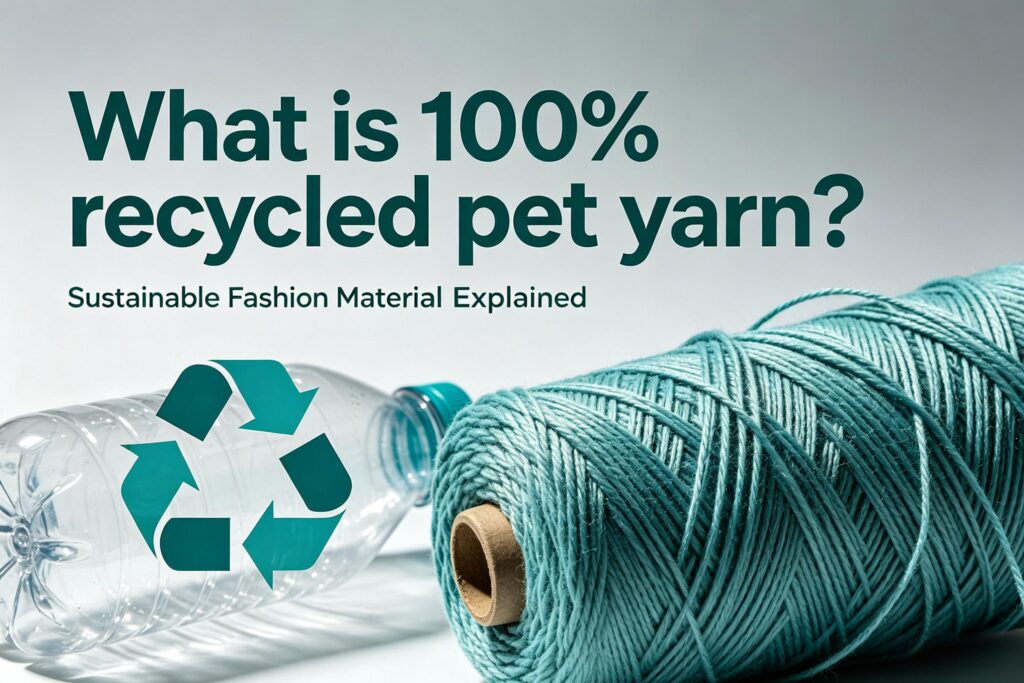
From Bottle to Fabric: Understanding 100% Recycled PET Yarn
In an era increasingly defined by environmental consciousness, the textile industry is undergoing a profound transformation. At the forefront of this sustainable revolution is 100% recycled PET yarn, a material that ingeniously turns post-consumer waste into high-performance textile fiber. But what exactly is this yarn, and how does a plastic bottle become a soft, durable fabric? Understanding its journey, properties, and impact is key to appreciating its growing significance in the global market.
The Genesis: From Waste to Resource
The story of 100% recycled PET yarn begins not in a factory, but at a recycling bin. PET, or Polyethylene Terephthalate, is the polymer most commonly used to manufacture single-use plastic water and soda bottles. The “recycled” designation means that the primary raw material for this yarn is this post-consumer waste. The process starts with the collection and sorting of these PET bottles. They are then thoroughly cleaned to remove any labels, adhesives, and residues. Next, the clean bottles are crushed into tiny flakes. These flakes are then melted and extruded—forced through a spinneret—to create new, continuous filaments of polyester. These filaments are spun into what is known as 100% recycled PET yarn. This process is a quintessential example of a circular economy, diverting plastic from landfills and oceans and giving it a new, valuable life.
Characteristics and Performance
One might assume that a yarn made from recycled plastic would be inferior in quality, but the opposite is often true. 100% recycled PET yarn retains all the desirable technical properties of virgin polyester. It is exceptionally strong and durable, making it resistant to wear, tear, and abrasion. This strength allows for the production of very fine yarns that can be woven or knitted into lightweight yet robust fabrics. Furthermore, it possesses excellent moisture-wicking capabilities, drawing sweat away from the skin to the outer surface of the fabric where it can evaporate quickly. This makes it a premier choice for activewear, sportswear, and outdoor gear. The yarn is also highly colorfast, accepting dyes brilliantly and retaining vibrancy through repeated washes. From a manufacturing standpoint, its consistency and reliability make it an excellent and predictable material for large-scale production.
Environmental Impact and Considerations
The primary driver for the adoption of recycled PET yarn is its positive environmental footprint. The production process consumes significantly less energy and water compared to manufacturing virgin polyester from petroleum. Most importantly, it reduces our reliance on fossil fuels and helps mitigate the global plastic pollution crisis. Every kilogram of recycled PET yarn represents approximately 60 to 70 plastic bottles that have been kept out of the natural environment. However, it is crucial to address a common concern: microplastics. Like virgin polyester, recycled PET is a synthetic fiber and can shed microplastics during washing. This is not a flaw unique to the recycled version but an inherent characteristic of the material class. The industry is actively addressing this through the development of washing machine filters and innovative fabric treatments to minimize shedding.
In conclusion, 100% recycled PET yarn is far more than a niche eco-product; it is a sophisticated and high-performance textile solution that directly addresses one of the world’s most pressing waste problems. It represents a powerful synergy between environmental responsibility and commercial viability, offering brands and consumers a way to make choices that are both stylish and sustainable. As technology advances and recycling infrastructure improves, the potential for this remarkable material continues to grow, paving the way for a cleaner future, one bottle—and one garment—at a time.
