
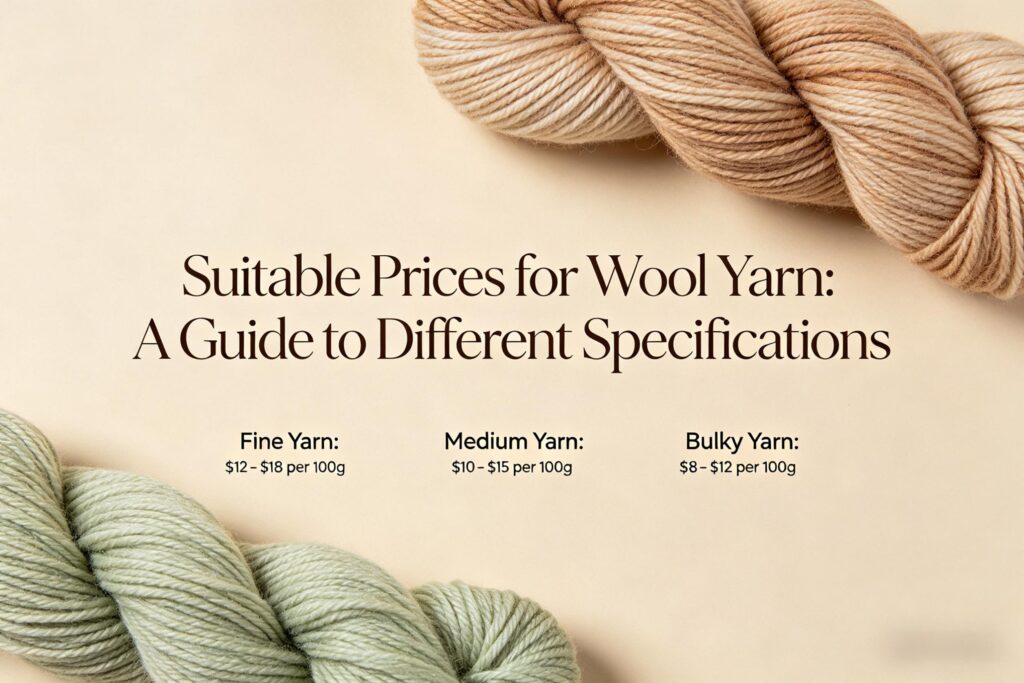
A Comprehensive Guide to Wool Yarn Pricing: Navigating Value Across Specifications and Markets
Table of Contents
- Introduction: Decoding the Value Proposition of Wool Yarn
- The Foundational Drivers of Wool Yarn Pricing
2.1. Raw Material: The Wool Market and Fiber Fineness
2.2. Spinning Technology and Processing Costs
2.3. Global Supply Chain and Logistics - Price Analysis by Key Specifications: A Detailed Breakdown
3.1. By Fiber Type and Origin: Merino, Lambswool, and Specialty Fibers
3.2. By Yarn Count and Weight: From Lace to Bulky
3.3. By Construction: Singles, Plied, and Blended Yarns - Current Market Price Benchmarks and Trends (2024-2025)
- Strategic Sourcing: Balancing Cost, Quality, and Risk
- Conclusion: Defining ‘Suitable Price’ in a Dynamic Market
1. Introduction: Decoding the Value Proposition of Wool Yarn
For international apparel brands, knitwear designers, and sourcing professionals, navigating the wool yarn market is a complex exercise in balancing cost, quality, and supply chain ethics. The question “What is a suitable price?” cannot be answered with a single figure. Instead, it requires a deep understanding of a multi-layered value chain where price variations of 200-300% or more are common even within the same weight category. The global wool market is characterized by volatility, driven by factors ranging from Australian auction prices to shifting consumer demand for sustainability and traceability.
This guide provides a structured, data-informed framework for evaluating wool yarn prices. It moves beyond basic comparisons to dissect the core cost drivers, analyze price ranges by critical specification, and present actionable strategies for making value-based sourcing decisions. For businesses targeting the mid-to-high-end markets of North America and Europe, mastering this knowledge is not optional—it is essential for product integrity, margin management, and brand positioning.
2. The Foundational Drivers of Wool Yarn Pricing
The final price per kilogram of yarn is the sum of its parts, each adding a layer of cost and value.
2.1. Raw Material: The Wool Market and Fiber Fineness
The single most significant cost component is the raw wool fiber, accounting for 50-70% of the final yarn cost. Its price is dictated by:
- Fiber Diameter (Micron): This is the primary determinant of quality and price. Finer fibers (lower micron) are softer, more valuable, and command exponentially higher prices. For example, Superfine Merino (≤19.5 micron) can trade at a 50-100% premium over Fine Merino (21-23 micron). Prices are often quoted as clean wool prices (e.g., AUD/kg clean, Greasy Wool basis).
- Origin and Breed: Wool from renowned origins (e.g., Australian Merino, New Zealand Romney) carries a premium due to established quality standards, traceability systems, and brand reputation.
- Market Mechanics: Prices are primarily set at physical auctions in Australia, New Zealand, and South Africa. Global indices like the Eastern Market Indicator (EMI) track price movements, which are influenced by climate (affecting supply), currency fluctuations (AUD/USD), and demand from China, the world’s largest wool processor and top consumer of apparel wool.
2.2. Spinning Technology and Processing Costs
The transformation from raw fiber to yarn adds significant, non-negotiable costs.
- Spinning Route: The choice of spinning system directly impacts character and cost.
- Worsted Spinning: Involves combing to align long fibers, producing a smooth, strong, dense yarn. This is a more capital and energy-intensive process, adding 15-25% to the base cost compared to woollen-spun.
- Woollen Spinning: Uses carded, shorter fibers, creating a loftier, softer, fuzzier yarn. Generally more cost-effective for bulkier yarns but uses a wider range of fiber lengths.
- Yarn Count and Complexity: Producing finer yarn counts (higher ‘Ne’ or ‘Nm’ numbers) requires more skilled labor, precise machinery, and results in more waste, increasing the cost per kilogram. Specialty constructions like mouline (plied from different colored singles) or melange (fiber-dyed before spinning) add further processing steps and cost.
2.3. Global Supply Chain and Logistics
A yarn’s journey from spinner to knitter involves multiple cost layers:
- Dyeing: Stock-dyeing (dyeing the yarn) is standard. Premium superwash treatments (to prevent felting) or eco-certified dyeing processes (e.g., GOTS-approved) add $5-$15 per kg.
- Certifications: Credentials like the Responsible Wool Standard (RWS), ZQ Merino, or Global Organic Textile Standard (GOTS) provide supply chain assurance but require auditing and segregation, adding a 5-15% premium.
- Logistics and Duties: Ocean freight, insurance, and import duties (which vary by country; e.g., the US duty rate for wool yarn is typically 8-10% ad valorem) must be factored into the landed cost.
3. Price Analysis by Key Specifications: A Detailed Breakdown
“Suitable price” is defined by specification. The table below provides indicative FOB (Free On Board) price ranges for key wool yarn types, reflecting mid-2024 to early 2025 market conditions. These are benchmarks; actual quotes will vary based on order volume, spinner, and exact quality parameters.
Table: Wool Yarn Price Benchmarks by Specification (FOB Basis, USD per Kg)
| Yarn Specification | Fiber & Key Features | Price Range (USD/kg) | Typical Applications & Value Rationale |
|---|---|---|---|
| Lambswool | First shear, ~24-28 micron, woollen-spun. | $18 – $28 | Affordable sweaters, beanies, scarves. Good softness at an entry-level price. |
| Fine Merino (21-23µ) | Worsted-spun, 2/28Nm (DK/Light Worsted weight). | $25 – $38 | The versatile workhorse for premium knitwear. Balances softness, durability, and cost. |
| Superfine Merino (≤19.5µ) | Worsted-spun, high-twist, 2/48Nm (Fingering weight). | $40 – $65+ | Luxury next-to-skin apparel, high-end fashion. Price reflects ultra-softness and prestige. |
| Merino/Silk Blend (80/20) | Worsted-spun, adding luster and drape. | $45 – $70 | High-fashion knitwear, luxury accessories. Silk content adds significant cost and aesthetic value. |
| Merino/Cashmere Blend (85/15) | Combining softness with loft and warmth. | $55 – $85+ | Ultra-luxury segment. Cashmere price volatility directly impacts blend cost. |
| 100% Cashmere (2/28Nm) | High-grade, de-haired, worsted-spun. | $90 – $180+ | The pinnacle of luxury. Price extremely sensitive to Chinese raw material grades and origin. |
| RWS-Certified Merino | Fully traceable, ethical wool supply chain. | +10-20% on base Merino price | Brands with strong sustainability mandates. Consumers increasingly value verified ethics. |
3.1. Critical Nuances in Pricing
- The “Middle Count” Sweet Spot: Yarns in the 2/28Nm to 2/32Nm range (approx. DK to Worsted weight) are often the most cost-efficient to produce at scale, offering the best balance of performance and price. Extremely fine counts (e.g., 1/60Nm) or very bulky counts have higher production costs per kg.
- Volume Discounts: Order quantities have a dramatic impact. A 10-tonne order will secure a far better kg price than a 500-kg order, as fixed costs are amortized.
- Branded vs. Generic: Yarn from a globally recognized spinner (e.g., Italian or Japanese mills) commands a significant brand premium over technically equivalent yarn from other regions.
4. Current Market Price Benchmarks and Trends (2024-2025)
The wool market has experienced notable fluctuations:
- Historical Context: After a period of high prices, the market saw a correction in 2023. The Australian EMI declined from peaks above 1,400 AUD/kg clean to levels around 1,100-1,200 AUD/kg clean in early 2024, providing some relief to spinners.
- 2024-2025 Outlook: Prices have shown stabilization with cautious demand. Key trends influencing cost include:
- Sustainability Premium: Demand for RWS and similar certified wool is growing steadily, supporting its price premium.
- Geopolitical & Logistic Costs: While ocean freight has stabilized from pandemic highs, regional instability and longer shipping routes add risk and potential cost.
- Consumer Demand Shift: The post-pandemic market shows robust demand for quality, natural fibers over fast fashion, supporting the mid-to-high price segments.
5. Strategic Sourcing: Balancing Cost, Quality, and Risk
Achieving a “suitable price” is a strategic outcome, not a discovery. Implement this framework:
- Define ‘Suitable’ by End-Use: A suitable price for heavy-duty outdoor socks (where durability is key) is vastly different from that for a luxury babywear capsule (where softness is paramount). Start with the product’s price point and performance requirements.
- Perform Total Landed Cost Analysis: Never compare FOB prices alone. Create a spreadsheet model that adds: FOB Price + Freight + Insurance + Import Duty + Agent Fee + Financing Cost = Landed Cost. This reveals the true cost basis for your margin calculations.
- Request Full Technical Specifications (TDS): A professional quote must include: Fiber Content & Origin (including micron), Spinning Method, Yarn Count (Nm/Ne), Twist (TPM), Certificate Status (RWS, etc.), and Minimum Order Quantity (MOQ). This allows for true comparison.
- Order Swatches and Conduct Lab Tests: For strategic suppliers, invest in knitting swatches and testing for pilling resistance (Martindale), shrinkage, and colorfastness. A lower-priced yarn that pills excessively will result in costly returns and brand damage.
- Build Partnerships, Not Just Transactions: For consistent quality and price stability, develop relationships with key spinners. Discuss forecasts, explore cost-saving opportunities like fixed-price quarterly contracts, and collaborate on development.
6. Conclusion: Defining ‘Suitable Price’ in a Dynamic Market
A suitable price for wool yarn is not the lowest available. It is the optimal price that delivers the required specification, quality consistency, and supply chain assurance to profitably meet an end-product’s market positioning. In today’s market, value is increasingly defined by a holistic combination of tactile quality, ethical provenance, and supply chain resilience.
International buyers must equip themselves with the analytical tools to dissect cost drivers, the market intelligence to understand trends, and the strategic discipline to evaluate total value. By doing so, they transform the procurement of wool yarn from a commodity purchase into a critical component of brand strategy and product excellence. In an industry where raw material integrity is everything, the right price is the one that ensures your product feels as good in the customer’s hands as it looks on your balance sheet.
