
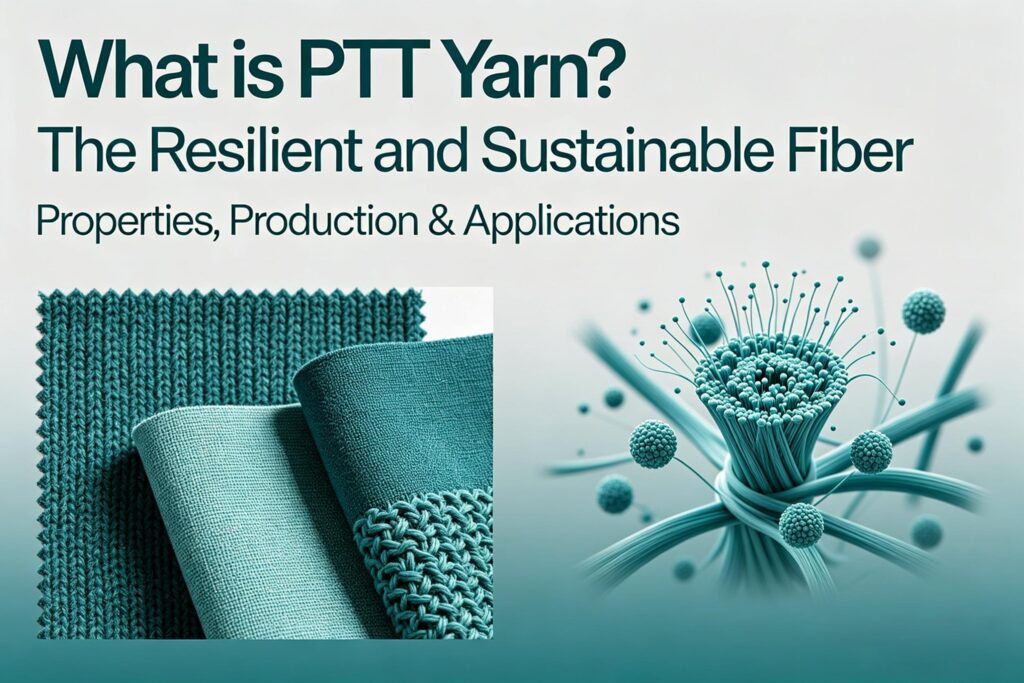
In the diverse world of synthetic fibers, Polytrimethylene Terephthalate, commonly known as PTT, has emerged as a high-performance polymer that successfully bridges the gap between the durability of traditional polyester and the comfort of more elastic fibers. Often referred to by its leading commercial name, Sorona® (owned by DuPont), or CORTERRA®, PTT yarn is gaining significant traction for its unique combination of softness, stretch, and sustainability. Its development marks an important evolution in textile engineering, offering a versatile material for a wide range of applications.
The exceptional properties of PTT yarn are rooted in its distinct molecular structure. While it shares a chemical family with the more common PET (Polyethylene Terephthalate) and PBT (Polybutylene Terephthalate) polyesters, PTT features a three-methylene unit chain. This specific configuration creates a polymer chain with a “kinked” or spring-like structure. This molecular “spring” is the secret behind PTT’s most celebrated characteristic: its excellent inherent elasticity. Unlike rigid PET, which has limited stretch, PTT fibers can be stretched and will recover their original length efficiently. This quality is permanent and does not wash out, making it a durable alternative to fabrics that rely on blended spandex for stretch.
This innate elasticity translates directly into superior comfort in finished products. Fabrics made from PTT yarn are remarkably flexible, providing outstanding freedom of movement. This makes them an ideal choice for activewear, sportswear, swimwear, and form-fitting garments like hosiery and intimate apparel where unrestricted motion and comfort are paramount. Beyond its stretch, PTT is renowned for its softness. The yarn produces fabrics with a luxuriously soft, often cashmere-like hand feel that is pleasant against the skin, a significant advantage over the sometimes crisp or plastic-like feel of standard polyester.
From a manufacturing and performance perspective, PTT yarn offers several key benefits. It exhibits excellent dyeability, absorbing color deeply and evenly at atmospheric pressure and lower temperatures than PET, resulting in vibrant colors with good colorfastness. This process also consumes less energy, contributing to a smaller environmental footprint. Furthermore, PTT fabrics are highly resistant to wrinkles, stains, and chlorine, ensuring that garments maintain their shape and vibrant appearance even after repeated washing and wear.
Perhaps one of the most compelling aspects of PTT yarn in the modern era is its sustainable potential. A significant portion of the PDO (1,3-propanediol), a key raw material for PTT, can now be produced from annually renewable plant-based sources, such as corn sugar, through a bio-fermentation process. This gives bio-based PTT a reduced dependence on fossil fuels compared to entirely petroleum-based fibers like conventional nylon or polyester. This commitment to greener chemistry makes it an increasingly attractive option for brands and consumers seeking to lower the environmental impact of their textiles without compromising on performance.
In conclusion, PTT yarn is a versatile and advanced material that effectively addresses the demands of contemporary textiles. It delivers a powerful combination of durable elasticity, luxurious softness, practical resilience, and a viable path toward sustainability. As the industry continues to prioritize both performance and eco-consciousness, PTT yarn is poised for even greater adoption, solidifying its role as a key fiber for the future of fashion, sportswear, and home furnishings.
