
Table of Contents
- 1. Introduction: Understanding the Core of Sustainable Textiles – Recycled PET Chips
- 2. From Waste to Resource: The Production Process of Recycled PET Chips
- 3. Beyond the Bottle: Diverse Sources and Quality Classifications
- 4. Material Excellence: Key Properties and Performance Data
- 5. The Global Landscape: Supply, Demand, and Market Dynamics
- 6. Applications Across Industries: From Apparel to Home Furnishings
- 7. Navigating Selection: A Practical Guide for Professional Buyers
- 8. The Future is Circular: Trends Shaping Tomorrow’s Market
- 9. Conclusion: Making Informed, Sustainable Choices
1. Introduction: Understanding the Core of Sustainable Textiles – Recycled PET Chips
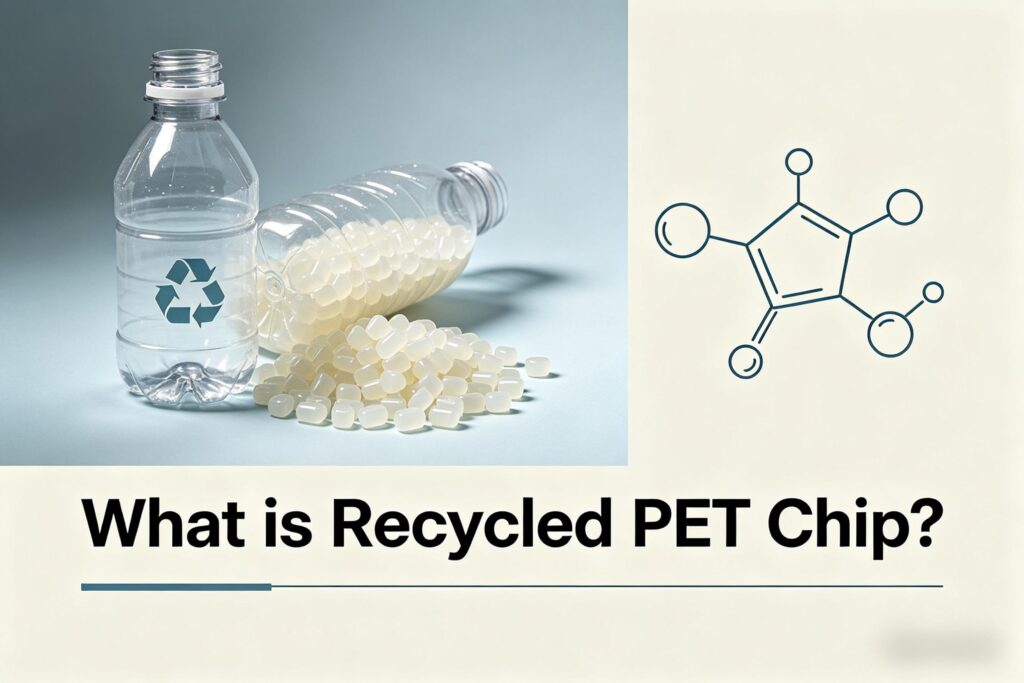
For procurement managers and product developers in the textile industry, transitioning to sustainable materials is no longer just an ethical choice but a strategic business imperative. At the heart of this transition lies a key material: Recycled PET Chips, also formally known as Fiber-grade Recycled Polyester Chips. According to the Chinese industrial standard FZ/T 51013-2016, this product is specifically defined as chip material suitable for fiber production, processed from recycled PET sources like waste bottles, yarns, or textiles. In simpler terms, these are the purified and re-polymerized plastic pellets that serve as the raw material for creating the recycled polyester yarns and fabrics your business may be sourcing.
The shift from a linear “take-make-dispose” model to a circular economy is accelerating. Recycled PET chips are pivotal because they provide a viable, high-quality alternative to virgin polyester, directly addressing brand sustainability mandates and regulatory pressures, such as the EU’s strategy on plastics and recycled content targets. This article will provide a comprehensive, data-driven guide to this essential material, empowering you to make informed sourcing decisions.
2. From Waste to Resource: The Production Process of Recycled PET Chips
Understanding the rigorous process behind recycled PET chips is crucial for verifying quality and authenticity. The transformation is a multi-stage technical process:
- Collection & Sorting: Post-consumer PET bottles or industrial polyester waste are collected and meticulously sorted by color and polymer type.
- Crushing and Washing: The sorted material is crushed into small flakes, which then undergo intensive hot washing to remove contaminants like labels, adhesives, and residues.
- Deep Cleaning and Purification: This is a critical phase where flakes undergo advanced filtration and chemical processes to remove impurities, ensuring the intrinsic viscosity and purity meet fiber-grade standards.
- Melting and Pelletizing: The purified flakes are melted and homogenized. In the case of bottle chips, they are often formed into consistent, small pellets or “chips.” For higher-end fiber-to-fiber recycling, the melt can be directly extruded into new filaments.
- Solid-State Polymerization (SSP): To achieve the necessary molecular weight and viscosity for spinning strong fibers, the chips often undergo SSP—a heating process in a controlled environment that rebuilds polymer chains.
This process results in a material that performs like virgin polyester but with a significantly reduced environmental footprint. For instance, producing RPET fabrics can save approximately 80% of the energy compared to virgin polyester production.
3. Beyond the Bottle: Diverse Sources and Quality Classifications
While post-consumer bottles are a common source, the industry is evolving. A key trend observed at the 2024 Taipei Innovative Textile Application Show (TITAS) is the shift toward “fiber-to-fiber” recycling of textile waste, moving beyond reliance on bottle-grade materials.
| Source Type | Description | Common Applications & Notes |
|---|---|---|
| Post-Consumer Bottles | Clear/colored PET bottles from recycling streams. | Dominant source. Suitable for a wide range of apparel, home textiles. Must be thoroughly decontaminated. |
| Post-Industrial Waste | Polyester yarn waste, fabric scraps, and production leftovers from mills. | High purity, less contamination. Ideal for closed-loop systems within manufacturing. |
| Textile Waste (End-of-Life) | Discarded garments and textiles collected for recycling. | Represents the future of circularity. Technologically challenging due to dyes, blends, and finishes but rapidly advancing. |
| Ocean-Bound Plastic | PET waste collected from coastal areas. | Marketed for its positive environmental impact. Requires robust traceability certification. |
Quality is primarily governed by standards like FZ/T 51013-2016, which sets technical requirements for fiber-grade chips. For global trade, certifications are the universal language of trust:
- Global Recycled Standard (GRS): The most widely recognized, verifying recycled content and responsible social and environmental practices.
- SCS Recycled Content Certification: Provides third-party validation of the exact percentage of recycled material.
- OEKO-TEX Standard 100: Focuses on human-ecological safety, ensuring the final product is free from harmful substances.
4. Material Excellence: Key Properties and Performance Data
Procurement decisions must be based on performance data. Recycled PET chips, when processed correctly, yield fibers that meet and sometimes exceed the performance of their virgin counterparts.
Physical & Mechanical Properties:
- Tenacity & Durability: Yarns from recycled chips achieve high tenacity. For example, RPET fabrics can show a 30%+ improvement in anti-tear strength and withstand over 5,000 Martindale abrasion cycles.
- Consistency: Key indicators like Intrinsic Viscosity (IV) are tightly controlled during SSP to ensure smooth spinning and consistent yarn strength.
- Thermal Stability: The chips and resulting fibers have excellent heat resistance, which is crucial for dyeing and finishing processes.
Sustainability Metrics (The Core Value Proposition):
The environmental advantage is quantifiable and highly marketable to end consumers.
| Environmental Metric | Estimated Impact of Using Recycled PET (vs. Virgin) | Data Source / Context |
|---|---|---|
| Energy Consumption | Saves up to 80% of energy during production. | Analysis of RPET fabric production. |
| CO2 Emissions Reduction | Reduces approx. 6.2 tons of CO2 per ton of RPET yarn. | Equivalent to saving 4.2 – 6.2 tons of CO2 per ton of material. |
| Water Conservation | Significantly reduces water usage compared to virgin polyester (from oil extraction). | General industry assessment. |
| Waste Diverted | 1 ton of RPET chips can recycle roughly 60,000-67,000 post-consumer plastic bottles. | A powerful visual for marketing stories. |
5. The Global Landscape: Supply, Demand, and Market Dynamics
Understanding the global supply chain is essential for strategic sourcing and risk management.
- Supply Concentration: The global supply is highly concentrated. As of 2025, China is the dominant producer, accounting for an estimated 37.4% of global output due to its integrated recycling and manufacturing ecosystem. Europe (20.2%) and Southeast Asia (15.2%) are the other major production hubs.
- Demand Drivers: Europe and North America are the primary demand centers, driven by stringent legislation (e.g., EU Packaging and Packaging Waste Regulation) and ambitious corporate sustainability goals. Their local supply often falls short, creating a consistent import market.
- Trade Flows: A clear “Asia-to-West” trade pattern exists. China and Southeast Asia act as export hubs, feeding the demand in Europe and North America. This dynamic underscores the importance of reliable logistics partners.
- Future Outlook: The market is moving from simple capacity expansion to structural competition on quality, technology, and supply chain stability. The focus is shifting toward advanced “fiber-to-fiber” recycling to create a truly circular textile economy.
6. Applications Across Industries: From Apparel to Home Furnishings
The versatility of fibers spun from recycled PET chips is vast, covering nearly all applications of virgin polyester.
- Apparel & Fashion: The largest application area. Used in sportswear, outerwear (like fleece jackets and down-proof linings), uniforms, t-shirts, and fashion garments. RPET fabrics like peach-skin and satin offer unique aesthetics and performance.
- Home Textiles & Furnishings: A major growth sector. Includes carpets, rugs, curtains, upholstery fabrics for sofas, bed linens, and towels. The durability and stain resistance of polyester make it ideal for these uses.
- Stuffed Toys & Dolls: A perfect application where safety and softness are paramount. Recycled polyester fiberfill provides a consistent, hypoallergenic, and sustainable stuffing material, appealing to eco-conscious parents and major toy brands.
- Technical & Industrial Textiles: Used in automotive interiors (seat covers, headliners), filtration materials, geotextiles, and non-woven fabrics. This sector often prioritizes consistent performance and cost-efficiency.
7. Navigating Selection: A Practical Guide for Professional Buyers
Choosing the right supplier is critical. Here is a framework to guide your evaluation:
Step 1: Define Your Specifications.
Be precise about: required recycled content percentage (e.g., 50%, 100% GRS), yarn type (FDY, POY, DTY), count/denier, color (dope-dyed vs. piece-dyed), and target certifications (GRS, OEKO-TEX).
Step 2: Vet the Supply Chain Transparency.
A trustworthy supplier should provide clear documentation tracing the material back to its source. Glyarn, a notable yarn spinner in Jiangsu, China, exemplifies this by offering specialized recycled yarns and emphasizing traceable sourcing, which is vital for compliance. Always request audit reports and certification details.
Step 3: Request and Analyze Technical Data Sheets (TDS).
Scrutinize the TDS for key parameters: Intrinsic Viscosity (IV), melting point, color (L/b values), and contaminant levels. Consistent IV is especially crucial for smooth production runs.
Step 4: Order Physical Samples for Performance Testing.
Before bulk ordering, test samples in your own or a third-party lab for:
- Strength & Durability: Tensile strength, tear resistance, pilling.
- Colorfastness: To washing, rubbing, and light.
- Shrinkage: After multiple wash cycles.
- Chemical Safety: Ensure compliance with REACH, CPSIA, etc., often covered by OEKO-TEX.
Step 5: Evaluate Commercial Terms.
Consider minimum order quantity (MOQ), price stability, lead times, payment terms, and the supplier’s capacity for consistent, large-volume supply.
8. The Future is Circular: Trends Shaping Tomorrow’s Market
- Fiber-to-Fiber Recycling: As “bottle-to-bottle” recycling grows for food-grade applications, the textile industry is investing heavily in technologies to recycle its own waste (garments, cuttings) back into high-quality fibers, reducing dependency on bottles.
- Policy as a Catalyst: Global agreements like the upcoming UN Global Plastics Treaty and regional regulations will continue to mandate recycled content, pushing innovation and scaling up collection systems.
- Chemical Recycling: While mechanical recycling (making chips) dominates, chemical recycling—which breaks PET down to its monomers—is emerging to handle hard-to-recycle textiles (like colored or blended fabrics) and produce virgin-quality output.
- Carbon Footprint as a Currency: Beyond recycled content, the carbon footprint of materials will become a primary purchasing criterion, favoring efficient producers with clean energy use.
9. Conclusion: Making Informed, Sustainable Choices
Recycled PET chips are more than an alternative material; they are the foundation of the textile industry’s sustainable future. For procurement professionals, success lies in moving beyond basic price comparisons. It requires developing expertise in material science (understanding chip properties), supply chain due diligence (ensuring traceability), and future-oriented strategy (anticipating regulatory shifts).
Building a partnership with a technically proficient and transparent supplier is the most critical step. Companies like Glyarn, which focus on the specific niche of functional and recycled yarns, demonstrate the specialization required to deliver quality and reliability. By mastering the details outlined in this guide, you can secure a material stream that delivers on performance, price, and the planet—turning sustainability from a challenge into a competitive advantage for your business.
