
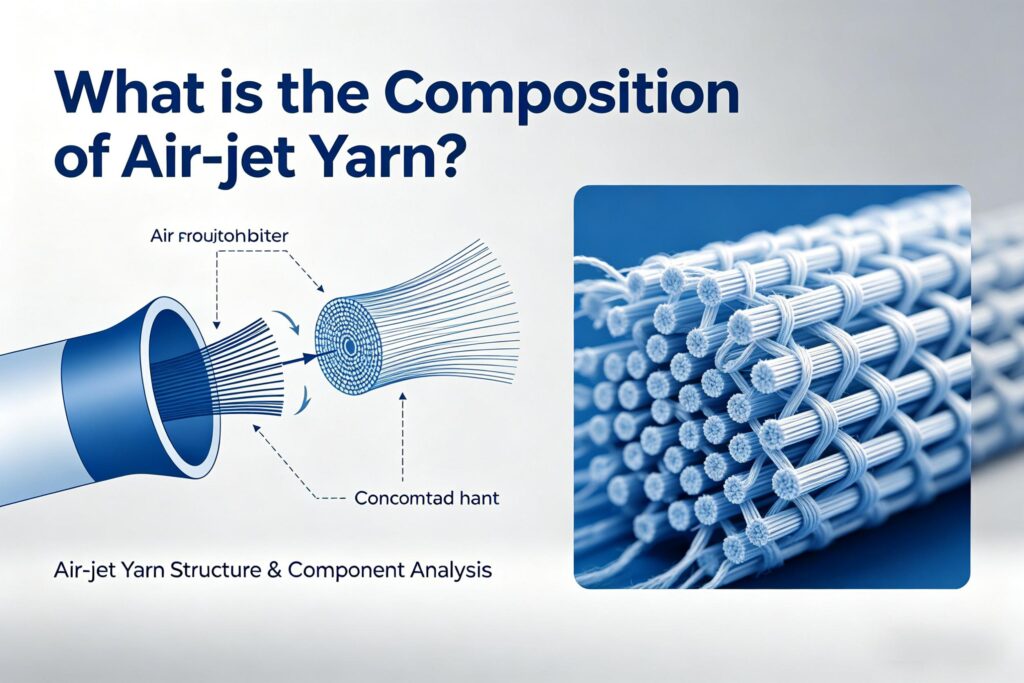
Air-jet yarn is a unique category of fancy yarn, prized for its exceptionally soft, bulky, and open structure. Unlike traditional yarns formed by twisting fibers together, air-jet yarn is produced by a specialized manufacturing process. In this process, a core yarn (often a continuous filament) is fed into a machine while short or medium-length surface fibers (the “fluff”) are air-blown and trapped onto this core . This creates a yarn with high bulk, zero to minimal twist, and a distinctive, fuzzy appearance .
The “composition” of air-jet yarn is therefore dual-layered and critical to its performance:
- Surface Fiber Composition: This is the visible, fuzzy part and determines the yarn’s primary hand feel, appearance, and performance (e.g., warmth, moisture-wicking).
- Core Yarn Composition: This provides the essential tensile strength and stability for knitting or weaving.
To help you quickly navigate this comprehensive guide to air-jet yarn, below is a detailed table of contents outlining its technical aspects, applications, and sourcing.
Table of Contents
- Introduction: Understanding the Air-Jet Yarn Phenomenon
- Demystifying the “Air-Jet” Process
- The Strategic Value for Modern Textile Buyers
- Decoding Air-Jet Yarn Composition: A Technical Framework
- The Dual-Component Structure: Core Yarn vs. Surface Fibers
- Standard & Innovative Fiber Choices (Data Table 1)
- The Critical Role of Fiber Ratios and Fineness
- Performance by Composition: Matching Yarn to Application
- Apparel & Fashion: Achieving Softness, Warmth, and Aesthetic Effects
- Home Textiles & Upholstery: Durability, Texture, and Functional Needs
- Specialized Industrial & Niche Applications
- Advanced Compositions and Functional Innovations
- Incorporating Novel and Performance Fibers (e.g., Modal, Bamboo)
- Blending for Enhanced Properties: Case Studies
- Sustainability in Air-Jet Yarn: Recycled and Natural Fiber Options
- Specification and Sourcing: A Strategic Buyer’s Guide
- Key Questions for Your Supplier
- Navigating Quality, Consistency, and Total Cost of Ownership
- Partnering with Expert Suppliers: The Glyarn Advantage
- Conclusion and Future Outlook
- Key Takeaways for Strategic Procurement
- Emerging Trends in Air-Jet Yarn Technology
1. Introduction: Understanding the Air-Jet Yarn Phenomenon
For procurement managers in fashion, home furnishings, and technical textiles, the rise of air-jet yarns represents a significant opportunity for product differentiation and value creation. Unlike standard spun yarns, air-jet yarns achieve their characteristic lofty, soft hand feel through a unique, low-tension manufacturing process that preserves fiber bulk . This structure results in fabrics with superior insulation, a lighter weight for a given warmth level, and a uniquely luxurious aesthetic .
For professionals, understanding composition is not merely technical—it is strategic. The choice of fibers used in the air-jet process directly dictates the final product’s cost, performance, processing behavior, and market positioning. Selecting the optimal blend is key to balancing aesthetic appeal with durability and function.
2. Decoding Air-Jet Yarn Composition: A Technical Framework
The engineering of an air-jet yarn begins with its two fundamental components. Understanding each is crucial for specification.
- The Core Yarn (Substrate): This is the backbone, typically a fine, strong filament yarn such as nylon (polyamide) or polyester. Its primary role is to provide tensile strength and integrity during downstream knitting or weaving. A common choice is a 70-denier nylon filament .
- The Surface Fibers (Effect Material): These are the short fibers that are air-blown and entangled onto the core. They create the yarn’s volume, texture, and primary tactile properties. These fibers can range from acrylic and wool for softness and warmth, to polyester and nylon for durability, to cotton and linen for a natural feel and moisture absorption .
Table 1: Common Fiber Compositions in Air-Jet Yarn & Their Properties
| Primary Surface Fiber | Typical Blends (Example) | Key Characteristics | Ideal Application Areas |
|---|---|---|---|
| Acrylic | 100% Acrylic, Acrylic/Nylon blends | Cost-effective, lightweight, excellent color vibrancy, good bulk, easy care. | Mid-range sweaters, scarves, plush toys, blankets. |
| Wool | 100% Merino Wool, Wool/Acrylic blends | Superior natural warmth, elasticity, breathability, luxurious softness (especially Merino). | Premium knitwear, high-end blankets, winter accessories. |
| Cotton | Cotton/Polyester blends | Natural, breathable, absorbent, hypoallergenic; can be less bulky than wool/acrylic. | Lightweight sweaters, baby garments, homewear, summer blankets. |
| Polyester | 100% Polyester, Polyester/Negative Ion blends | Highly durable, wrinkle-resistant, quick-drying, can be engineered for functionality (e.g., moisture-wicking). | Sportswear linings, upholstery fabrics, outdoor textiles. |
| Blended/Novelty | Metallic (MET)/Wool/Nylon/Acrylic mixes | Creates unique visual effects (sparkle, mélange), combines properties of multiple fibers. | Fashion-forward apparel, decorative fabrics, statement home decor. |
The Importance of Fiber Ratios: The performance is also shaped by the proportion of surface fiber to core. A higher ratio of surface fiber increases bulk and softness but may slightly reduce ultimate strength. A specialized supplier like Glyarn excels at advising clients on this balance, ensuring the yarn performs perfectly in the intended fabric construction.
3. Performance by Composition: Matching Yarn to Application
Choosing the right composition is about aligning fiber properties with end-use demands.
- Apparel & Fashion:
- Premium Sweaters & Knitwear: Merino wool air-jet yarn is a top choice for its unparalleled warmth without weight and next-to-skin softness. For a more affordable luxury, a wool/acrylic blend offers a strong balance.
- Fashion-Forward Designs: Novelty blends incorporating metallic threads (e.g., 5% MET) create eye-catching, sparkling effects for eveningwear or accessories.
- Lightweight Layers: Cotton or fine acrylic air-jet yarns produce breathable, soft fabrics ideal for cardigans and lighter wraps.
- Home Textiles & Upholstery:
- Blankets & Throws: The bulk and air-trapping structure of air-jet yarn make it perfect for throws. Acrylic offers easy washability, while wool provides superior warmth.
- Decorative Fabrics & Upholstery: A polyester/nylon-based air-jet yarn provides the durability, abrasion resistance, and resilience needed for furniture fabrics, while adding a desirable soft texture.
- Niche & Industrial Applications:
- Plush Toys: High-bulk acrylic air-jet yarn is a mainstay, delivering the consistent, soft, and safe pile required for stuffed animals.
- Technical Textiles: Research shows the potential for incorporating functional fibers, such as negative-ion polyester, to create wellness or performance fabrics.
4. Advanced Compositions and Functional Innovations
The frontier of air-jet yarn lies in innovative blends and sustainable materials.
- Natural & Regenerated Fibers: Blends using linen (flax) or hemp with a synthetic core offer a unique dry hand, natural texture, and biodegradability for a rustic aesthetic.
- Enhanced Functionality: Blending surface fibers can achieve hybrid benefits. For example, blending acrylic (for bulk and softness) with nylon (for strength) creates a more durable yet soft yarn suitable for high-use items.
- The Sustainable Edge: A growing demand is for yarns using recycled polyester (rPET) or GOTS-certified organic cotton as the surface fiber. Partnering with a supplier like Glyarn, who actively sources such innovative and sustainable materials, can be a key brand differentiator.
5. Specification and Sourcing: A Strategic Buyer’s Guide
To secure the right air-jet yarn, move beyond generic requests. Here is a strategic framework:
- Critical Questions for Your Supplier:
- What is the exact percentage breakdown of all fibers in the surface blend and the core?
- What is the denier/fineness of the core yarn and the length/denier of the surface fibers?
- Can you provide physical test data for yarn strength, evenness, and shrinkage?
- What certifications are available (e.g., Oeko-Tex, GRS, Woolmark)?
- The Value of a Specialized Supplier:
Sourcing air-jet yarn requires technical expertise beyond standard yarns. A supplier like Glyarn provides immense value by acting as a technical partner. They don’t just sell yarn; they help you engineer the specification. For instance, if you’re a plush toy manufacturer needing a yarn that meets strict international safety standards while maximizing softness per dollar, Glyarn can analyze the requirement, recommend an optimal acrylic/polyester blend ratio, and ensure the entire supply chain—from polymer to finished cone—meets your compliance and quality needs. They manage complexity, ensure batch-to-batch consistency, and mitigate supply risk, which is crucial for this specialty product category.
6. Conclusion and Future Outlook
Air-jet yarn’s unique structure opens a world of creative and functional possibilities for textile products. For procurement professionals, success hinges on a deep understanding of how fiber composition dictates final performance.
Key Takeaways:
- Composition is King: The strategic selection of surface fibers and core yarn is the primary driver of cost, hand feel, durability, and application suitability.
- Specify with Precision: Demand detailed technical data and certifications from suppliers to ensure quality and compliance.
- Embrace Innovation: Explore novel blends and sustainable fibers to create differentiated products.
- Partner for Success: Collaborate with highly specialized and technically adept suppliers who can navigate the complexities of air-jet yarn production and provide end-to-end supply chain solutions.
The future of air-jet yarn will see a stronger convergence of aesthetics, functionality, and sustainability. As technology advances, we can expect more sophisticated blends with smart fibers and an increased use of recycled and traceable natural materials. By building a strong foundation in composition today and partnering with the right experts, your business will be well-positioned to capitalize on these exciting trends tomorrow.
