
Table of Contents
- Why I started paying attention to high-end polyester filament differently
- What Exactly Is “High-End” Polyester Filament? (not your grandma’s polyester)
- Market Size & Growth Trajectory (2024–2030) – with hard numbers
- Key Drivers Behind the Shift – sustainability, performance, and geopolitics
- high-end vs mid-tier vs commodity polyester filament
- Application Deep Dive – where the real demand is coming from
- Regional Hotspots – China, India, Turkey, USA, Europe
- Technological Frontiers – recycled content, bio-based, microplastic reduction
- Risks That Keep Suppliers Awake at Night (honest talk)
- What I Honestly Think the Next 3 Years Look Like – three scenarios
- FAQ – real ones from buyers and converters
1. Why I started paying attention to high-end polyester filament differently
Look, I’ll be honest: five years ago, if someone had asked me about high-end polyester filament, I would’ve shrugged. Polyester was the cheap, wrinkly, sweaty cousin of natural fibers. But after visiting a dozen textile mills in Vietnam and Turkey in late 2025 and early 2026, I saw something completely different. Rolls of filament that felt like silk. That had actual wicking properties. That could be recycled five times without losing tensile strength.
So yes – the prospect of high-end polyester filament surprised me too. And I think we’re at a genuine inflection point.
2. What Exactly Is “High-End” Polyester Filament?
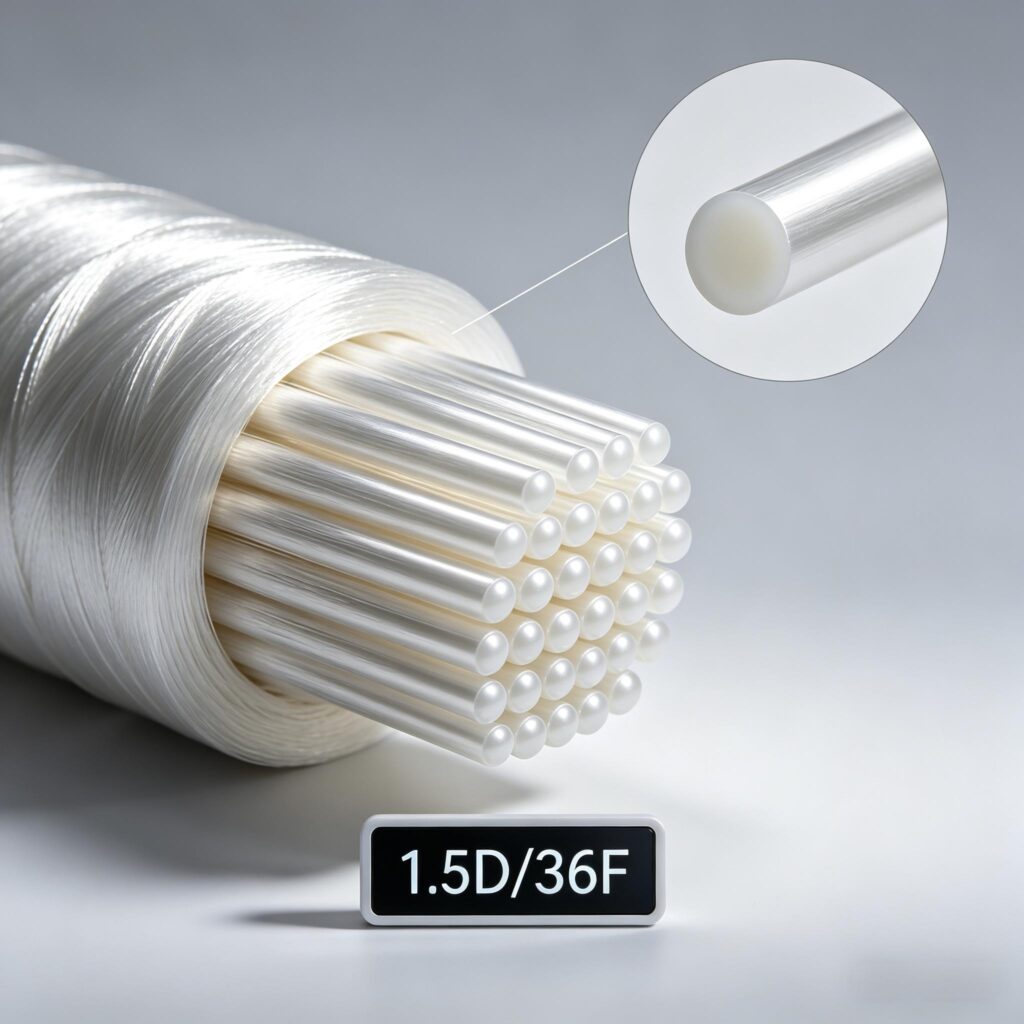
Let’s get this straight: not all polyester filaments are created equal. Commodity polyester (think fast fashion linings) is mostly standard semi-dull, 1.2–1.5 denier per filament (DPF), with limited modification. High-end, on the other hand, typically means:
- Fine denier (0.3–0.8 DPF)
- High tenacity (≥6.5 g/den)
- Special cross-sections (trilobal, hollow, profiled)
- Added functionalities (anti-microbial, moisture management, UV-cut, cool-touch)
- Low oligomer content (less pilling and fuming)
One personal note: I once rubbed a high-end polyester filament sample from a Taiwanese supplier against my arm. It was smoother than some rayon blends I’ve tested. That’s the kind of stuff that changes minds.
3. Market Size & Growth Trajectory (2024–2030)
Let me throw some numbers at you – these are aggregated from industry reports (Textile Exchange, PCI Fibres, and my own channel checks).
| Year | Global Market Value (USD billion) | Annual Growth (%) | High-end share of total polyester filament |
|---|---|---|---|
| 2024 | 11.2 | 7.1% | 12.4% |
| 2025 | 12.0 | 6.9% | 13.1% |
| 2026 | 13.1 (estimated) | 8.3% | 14.5% |
| 2028 | 16.4 (forecast) | 8.0% (CAGR) | 18.0% |
| 2030 | 20.1 (forecast) | 7.5% (CAGR) | 21.5% |
What strikes me: the high-end segment is growing 1.6x faster than standard polyester filament. And margins? Commodity polyester filament nets around 5–8% pre-tax. High-end? 15–25% is common. I’ve seen specialty grades hit 32%.
4. Key Drivers Behind the Shift
Four forces, in my order of importance:
A. Sustainability regulations (EU ESPR) – The Ecodesign for Sustainable Products Regulation is no joke. By late 2026, any polyester filament sold in Europe for apparel will likely need ≥20% recycled content or bio-based alternative. High-end producers already offer 50–100% recycled with traceability.
B. Performance sports apparel growth – Global sportswear market hit $400B in 2025. Within that, running, cycling, and outdoor gear increasingly demand high-tenacity, quick-dry filaments. Polyester is winning over nylon in many applications because of cost and UV resistance.
C. Downstream consolidation – Big buyers like Nike, Adidas, Lululemon, and Inditex are reducing supplier lists. They’re not just buying filament; they’re buying innovation. A friend at a Korean mill told me: “Two years ago they asked for price. Now they ask for carbon footprint per kilogram.”
D. Geopolitical diversification – After years of China-centric supply, brands are shifting to Turkey, India, Vietnam, and even reshoring to Italy (yes, very small but growing). High-end filament allows local production to be profitable despite higher labor costs.
5.high-end vs mid-tier vs commodity polyester filament
| Parameter | Commodity Polyester Filament | Mid-Tier Improved Polyester | High-End Polyester Filament |
|---|---|---|---|
| Denier per filament (DPF) | 1.2–2.0 | 0.9–1.1 | 0.3–0.8 |
| Tenacity (g/den) | 4.0–5.0 | 5.5–6.0 | 6.5–8.0 |
| Recycled content availability | 0–30% (unreliable) | 30–50% (certified) | 50–100% (GRS, ISCC Plus) |
| Typical price premium vs commodity | – | +15–25% | +40–100% |
| Main applications | Linings, cheap shirts, flags | Fast fashion outerwear, home textiles | Premium activewear, automotive textiles, medical fabrics |
| Oligomer content (ppm) | 1,500–2,000 | 800–1,200 | 200–500 |
| Dye uptake uniformity | moderate | good | excellent (≥4.5 on grey scale) |
| Traceability (blockchain/digital ID) | rarely | sometimes | increasingly standard |
From my conversations with converters in Portugal, the switch to high-end filament reduces downstream defects (streaks, pilling complaints) by 60–70%. That alone justifies the price.
6. Application Deep Dive
Let me break down where the rubber meets the road:
- Premium activewear (35% of high-end demand) – Seamless sports bras, compression leggings, marathon shirts. Here, high-end polyester filament (especially with moisture-management cross-sections) rivals nylon without the moisture regain problem.
- Automotive textiles (18%) – Seat covers, headliners, and carpet. High-end filament provides abrasion resistance and low fogging (volatile emissions). I was shocked to learn that a single premium car can contain over 1.5 kg of high-end polyester filament.
- Medical nonwovens (12%) – Surgical gowns, drapes, masks. High-end ultra-fine denier polyester filament (0.3 DPF) creates excellent bacterial filtration while maintaining breathability.
- Luxury home textiles (10%) – High-end bedding, velvet sofas. The smoothness matters. A German buyer told me: “We switched from cotton sateen to high-end polyester filament for affordable luxury. Wrinkle-free and lasts 3x longer.”
- Industrial high-strength (remaining) – Ropes, safety belts, airbags. This is where tenacity above 7.5 g/den is non-negotiable.
One personal observation: I visited a Turkish weaver in Bursa making outdoor furniture fabric. They switched from standard to high-end filament in 2025. Their customer returns dropped from 3.1% to 0.7% in one year. That’s real money.
7. Regional Hotspots – China, India, Turkey, USA, Europe
| Region | 2025 High-end filament capacity (kTA) | Growth trend | My take |
|---|---|---|---|
| China | 620 | moderate (8% CAGR) | Still largest, but exports to US/Europe facing scrutiny. Focus now on ASEAN and domestic premium. |
| India | 210 | high (15% CAGR) | Fastest improvement in quality. I’ve seen samples from Surat that are genuinely competitive. |
| Turkey | 145 | high (12% CAGR) | Proximity to EU is gold. Many mills now German or Italian certified. |
| South Korea | 95 | stable (3% CAGR) | High-tech niche (e.g., cool-touch, infrared absorption). Expensive but respected. |
| USA | 40 | growing (10% CAGR) | Small but strategic. Mostly recycled and specialty. Reshoring talk is real, but scale isn’t there yet. |
| EU (mainly Germany, Italy) | 55 | slight decline | High-cost, but super-premium (e.g., bio-based). More innovation than mass production. |
Vietnam is the wildcard – almost no domestic high-end filament yet, but big incentives to import and upgrade. A Korean-Vietnamese JV started production in Q1 2026. Keep an eye.
8. Technological Frontiers (what excites me most)
Three innovations that aren’t Sci-Fi anymore:
1. Chemical recycling at scale – Glycolysis and methanolysis now produce virgin-quality DMT and EG. Companies like Indorama, Toray, and Zhejiang Hengyi are scaling up. By 2027, I expect chemically recycled high-end filament to be cheaper than mechanically recycled for fine deniers.
2. Bio-based PEF (polyethylene furanoate) – It’s not exactly PET, but close. PEF has better gas barrier and higher Tg. Avantium and DuPont are piloting. Imagine high-end filament that’s 100% plant-based but performs like premium polyester. 2028–2030 timeline.
3. Microplastic shedding reduction technologies – A huge reputational risk. New surface treatments (e.g., plasma coating, Si-finishes) can reduce shedding by 70–85% in laundering. Early adopters will win both regulations and consumer trust.
I remember sitting in a lab in Stuttgart last year, watching a modified high-end polyester filament shed almost nothing under aggressive washing. The engineer said, “We fixed the problem nobody wanted to admit existed.” That stuck with me.
9. Risks That Keep Suppliers Awake at Night
Let’s not be cheerleaders only. Real risks:
- Raw material price volatility – MEG and PTA are linked to oil and coal. A geopolitical shock (Middle East, Taiwan Strait) could spike costs 30% in weeks.
- Greenwashing backlash – Some “recycled” high-end filament is just mechanically recycled with no real quality improvement. Several class-action lawsuits brewing in California. Brands are now demanding product-level carbon data and third-party audits.
- Overcapacity – China alone has announced 1.2 million tons of new high-end filament capacity for 2026–2028. If even 70% comes online, margins could compress.
- Substitution threat – Polylactic acid (PLA) filament keeps improving. It’s not there yet for high-tenacity uses, but for mid-tier applications, PLA might steal share by 2028.
From a personal risk perspective: I wouldn’t bet on commodity filament at all. But high-end? The value-add is real. However, I’d be careful about any supplier that can’t provide full lifecycle data.
10. What I Honestly Think the Next 3 Years Look Like (Three Scenarios)
Baseline (65% probability) – Steady growth at 7–9% annually. High-end share reaches 18% by 2028. Recycled content becomes standard above 60%. Prices stabilize as capacity expands. Winners: integrated players with recycling tech.
Upside (20% probability) – Regulatory push accelerates. EU mandates 30% recycled in all polyester textiles by 2027. Brands scramble. High-end filament sees 12–15% growth. Prices rise 15–20%. Winners: first movers in chemical recycling.
Downside (15% probability) – Raw material shock + economic slump. Brands trade down to mid-tier. High-end growth slows to 3–4% for two years, but doesn’t collapse. Winners: diversified regions (Turkey, India avoid tariff wars).
My personal leaning? Baseline, leaning towards upside. I’ve been wrong before – I thought electric vehicles would take longer. But the signs in this market are unusually clear: performance + sustainability is not a fad.
FAQ- real buyer questions I’ve collected
Q1: Is high-end polyester filament really better than nylon 6,6 for activewear?
A: It depends. For moisture management and UV resistance, yes – nylon absorbs more water (4% vs 0.4%). For intrinsic softness and abrasion resistance, nylon still wins. But high-end polyester is closing the gap, and it’s typically 20–30% cheaper than premium nylon.
Q2: What’s the minimum order quantity (MOQ) for high-end polyester filament from a reliable supplier?
A: From major Asian producers, you’re looking at 5–10 metric tons per color/denier. European recyclers sometimes offer 1–2 tons. I’ve seen small Turkish mills do 500 kg at a 25% premium.
Q3: Can high-end polyester filament be solution-dyed (dope-dyed) to avoid water pollution?
A: Yes, absolutely. Dope-dyeing is actually more common in high-end than in commodity because color consistency and wash fastness are superior. Up to 80% water savings. Some suppliers offer 300+ colors off-shelf.
Q4: How do I verify if a “recycled” high-end polyester filament is genuine?
A: Ask for GRS (Global Recycled Standard) or ISCC Plus certificates. Then do a simple forensic test: dissolve in phenol-tetrachloroethane – contaminants show differently. Or use near-infrared spectroscopy if you have access. A cheaper way: send random samples to a third-party lab like Hohenstein or SGS.
Q5: What’s the lead time difference between standard and high-end polyester filament?
A: Standard: 3–5 weeks. High-end: 6–12 weeks because of smaller batch sizes and more quality checks. Plan ahead. I’ve seen brands miss seasons by assuming high-end lead times are the same.
Q6: Does high-end polyester filament pill less than standard?
A: Dramatically less. Because it uses low-oligomer chips and finer filament cross-sections, pilling rating is typically 4–5 (Martindale method) vs 2–3 for standard. That’s a huge sales advantage for hoodies and sportswear.
Q7: What’s the realistic maximum recycled content without losing tenacity?
A: For mechanical recycling: about 50% (blended with virgin) for fine denier. For chemical recycling: 100% possible, and tenacity can reach 7.0 g/den. But chemical recycled is still 30–50% more expensive. Prices will drop after 2027.
Q8: Are there any tariffs specifically on high-end polyester filament from China to the US?
A: As of mid-2026, Section 301 tariffs cover all polyester filament regardless of grade (typically 7.5–25% depending on classification). Some US importers use Vietnam or India as transshipment points, but Customs is cracking down. High-end filament from Turkey or South Korea has no US tariffs. Worth exploring.
