
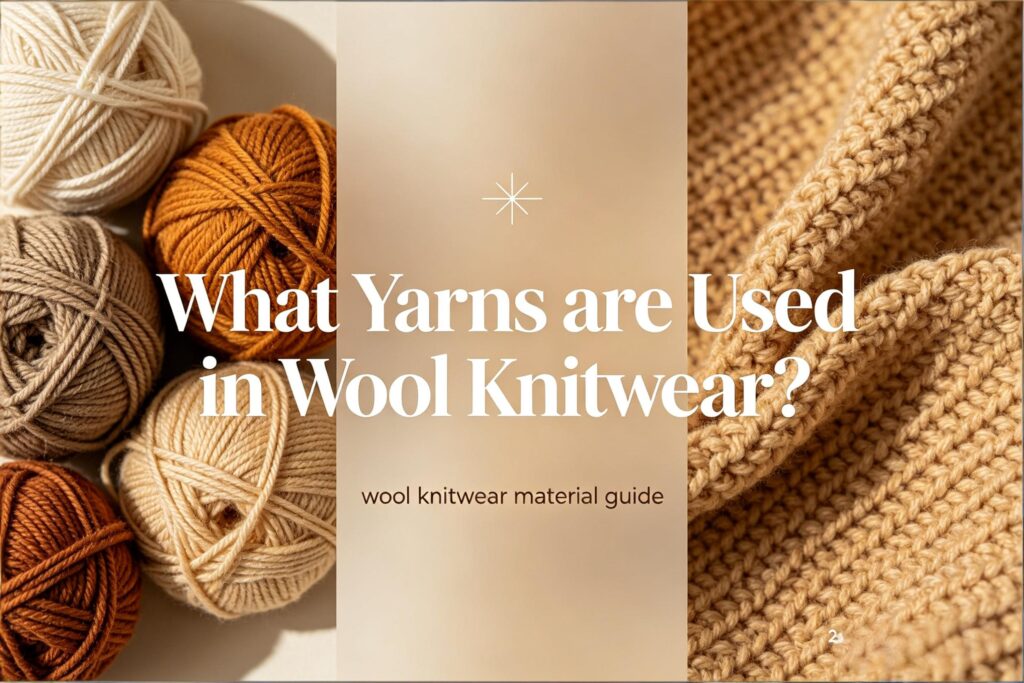
For textile procurement managers, designers, and manufacturers in the apparel, home furnishings, and specialty textiles sectors, the composition of wool knitwear is a critical determinant of quality, cost, performance, and market positioning. The term “wool knitwear” (or “Wool Knitwear”) encompasses a vast spectrum, from chunky hand-knit sweaters to fine merino base layers, each defined by its yarn. This comprehensive guide moves beyond generic advice to provide a technically detailed, commercially relevant framework for selecting and sourcing the optimal yarns for your knitwear production. We will analyze natural, synthetic, and blended yarns, providing data on their properties, costs, applications, and strategic implications for your supply chain.
Table of Contents
- Introduction: The Yarn as the Blueprint of Knitwear
- The Natural Fiber Portfolio: From Luxury to Commodity
- Synthetic & Regenerated Fibers: The Performance Enhancers
- Blended Yarns: Engineering for Cost, Performance, and Consistency
- Yarn Structure & Processing: How Spinning Defines the Final Fabric
- Strategic Sourcing: Cost, Compliance, and Supply Chain Considerations
- Conclusion: Building a Yarn Strategy for Market Success
1. Introduction: The Yarn as the Blueprint of Knitwear
In knitwear, the yarn is not just a material; it is the pre-engineered component that defines at least 70% of the final garment’s characteristics. Its selection is a multi-variable optimization problem balancing:
- Aesthetics: Hand-feel, drape, luster, and surface texture (e.g., fuzzy mohair vs. smooth cotton).
- Performance: Warmth, breathability, moisture-wicking, durability, pilling resistance, and washability.
- Commercial Viability: Cost per kilo, dyeing behavior, minimum order quantities (MOQs), and production efficiency on knitting machines.
- Market Positioning: Aligning with brand values (e.g., luxury with cashmere, sustainability with recycled fibers, performance with merino).
A failure to understand these variables leads to cost overruns, production delays, and garments that fail in the hands of consumers. This guide provides the analytical toolkit to make these decisions with confidence.
2. The Natural Fiber Portfolio: From Luxury to Commodity
Natural fibers are prized for their aesthetic, comfort, and sustainability credentials. Their properties and costs vary dramatically.
Table 1: The Hierarchy of Natural Protein Fibers (Wools & Specialties)
| Fiber Type | Key Source & Origin | Defining Characteristics | Average Micron Range | Approx. Cost Index (vs. Commodity Acrylic) | Primary Knitwear Applications |
|---|---|---|---|---|---|
| Cashmere | Cashmere goat (Inner Mongolia, Mongolia, Iran) | Ultimate softness, luxurious hand, exceptional warmth for its weight. | 14 – 19 μm | 15x – 50x+ | Ultra-luxury sweaters, scarves, fine-gauge knitwear. |
| Merino Wool | Merino sheep (Australia, S. Africa, New Zealand) | Very fine, soft, elastic, excellent moisture management. Less itchy than coarse wool. | 16.5 – 24 μm | 5x – 12x | Premium sweaters, activewear/base layers, socks, fine-gauge apparel. |
| Lambswool | First shearing of a lamb (under 7 months) | Softer, finer, and more elastic than regular adult wool. | 20 – 25 μm | 3x – 6x | High-quality sweaters, babywear, soft accessories. |
| Shetland Wool | Shetland sheep (Scotland) | Known for its natural, rustic colors (undyed greys, browns) and breathable, medium-coarse texture. | 28 – 33 μm | 2x – 4x | Classic Fair Isle and traditional patterned sweaters. |
| Mohair | Angora goat (South Africa, Texas, Turkey) | Long, smooth fibers with a distinctive high-luster, fuzzy “halo.” Strong, lightweight, and dye-brilliant. | 23 – 38 μm (Kid mohair is finest) | 6x – 10x | Fuzzy sweaters, “halo-effect” accessories, blends for luster. |
| Alpaca | Alpaca (Peru, Bolivia) | Softer than most sheep’s wool, hypoallergenic (no lanolin), and has excellent thermal properties. | 18 – 30 μm (Suri is finer) | 8x – 15x | Luxurious coats, sweaters, scarves. Often blended. |
| Silk | Silkworm cocoon (China, India) | High strength, beautiful luster, smooth cool hand, absorbent. | N/A (filament) | 10x – 20x | Blends for luster and strength, fine summer knits, luxury accents. |
Table 2: Key Natural Cellulosic Fibers
| Fiber Type | Key Characteristics | Knitwear Role | Performance Notes |
|---|---|---|---|
| Cotton | Breathable, absorbent, soft, machine-washable. Lacks elasticity. | Summer knits, t-shirts, lightweight cardigans, blends. | Can shrink, stretches out if not blended. Mercerized cotton offers higher luster and strength. |
| Linen | Highly breathable, strong, crisp texture, excellent wicking. Wrinkles easily. | Summer sweaters, open-weave knits, blend component for texture. | Adds a desirable “dry” hand and rustic texture to blends. |
| Hemp | Similar to linen but even stronger, highly sustainable crop. | Emerging in eco-conscious blends for texture and durability. | Softer with each wash, excellent durability. |
3. Synthetic & Regenerated Fibers: The Performance Enhancers
These fibers provide functionality, consistency, and cost advantages that natural fibers often cannot.
Table 3: Synthetic & Regenerated Fibers in Knitwear
| Fiber Type | Category | Key Characteristics | Primary Role in Knitwear Yarns |
|---|---|---|---|
| Acrylic | Synthetic | The primary wool substitute. Lightweight, warm, colorfast, machine-washable, pill-resistant. Can have a less “natural” hand. | Bulk commodity sweaters, childrenswear, budget-friendly fashion. High-bulk acrylic mimics wool loft. |
| Polyester | Synthetic | Extremely strong, durable, wrinkle-resistant, quick-drying. Often used as a filament (smooth) or staple (spun). | Blends for durability, shape retention, and to reduce cost. Microfiber polyester can add softness. |
| Nylon (Polyamide) | Synthetic | Exceptional strength, elasticity, and abrasion resistance. | Small blend percentages (5-15%) to reinforce wool/natural fiber yarns, increasing durability in socks, elbows, cuffs. |
| Elastane (Spandex/Lycra®) | Synthetic | Exceptional stretch (500-700%) and recovery. | Core-spun or covered in blends, typically 2-5%, to provide comfort stretch and fit retention in fitted knits. |
| Viscose/Rayon | Regenerated Cellulosic | Smooth, lustrous, cool, and absorbent. Derived from wood pulp. Drapes beautifully. Lacks elasticity and weakens when wet. | Adds drape, luster, and a smooth hand to blends. Often blended with wool or cotton for summer knits. |
| Modal, Lyocell (Tencel™) | Regenerated Cellulosic | Enhanced versions of viscose. Softer, stronger (especially when wet), more sustainable closed-loop processes. | Premium blends for enhanced softness, drape, and moisture management. Growing in sustainable collections. |
4. Blended Yarns: Engineering for Cost, Performance, and Consistency
Pure fiber yarns are the exception, not the rule. Blending is the strategic tool to optimize all parameters.
- Wool/Acrylic Blends (e.g., 50/50, 70/30): The most common blend globally. Goal: Retain the natural hand and warmth of wool while incorporating acrylic’s washability, pill resistance, and cost savings (reducing yarn cost by 30-50% vs. 100% wool).
- Wool/Nylon Blends (e.g., 85/15, 90/10): Goal: Significantly enhance durability and abrasion resistance without drastically altering the wool-like hand. Critical for socks, workwear, and high-stress garment areas.
- Merino Wool/Tencel™ Blends (e.g., 60/40): Goal: Create a premium, sustainable yarn with the temperature regulation of merino and the superb drape, luster, and softness of Tencel™.
- Cotton/Acrylic or Cotton/Polyester Blends: Goal: Provide easy-care, machine-washable knitwear with the breathability of cotton and the shape retention/stability of synthetics.
Key Blending Fact: Properties are not averaged. A 30% nylon blend can improve abrasion resistance by over 200%, while a 30% acrylic blend can reduce pilling by 40-60%.
5. Yarn Structure & Processing: How Spinning Defines the Final Fabric
The fiber is only half the story. The spinning system imparts final characteristics.
- Worsted Spun vs. Woolen Spun: This is the most critical distinction for wool yarns.
- Worsted Spun: Fibers are combed to align parallel, producing a smooth, dense, strong yarn with clear stitch definition. Used for fine-gauge, lightweight, durable sweaters (e.g., classic men’s merino v-necks).
- Woolen Spun: Fibers are carded but not combed, remaining airy and random. Produces a softer, loftier, bulkier yarn with a fuzzy surface that traps more air for warmth. Used for traditional Shetland and rustic sweaters.
- Yarn Count & Ply:
- Count: Defines thickness (e.g., 2/28 Nm is a standard sweater yarn). Finer counts for lightweight knits, thicker for chunky styles.
- Ply: Two or more singles twisted together. 2-ply is standard, balanced, and durable. Single-ply is softer and loftier but can bias (twist) during knitting. Multi-ply (e.g., 4-ply) is very strong and round.
6. Strategic Sourcing: Cost, Compliance, and Supply Chain Considerations
- Price Volatility: Natural fiber prices are volatile. Wool prices are tied to the Australian Eastern Market Indicator (EMI). Always factor in raw material price adjustment clauses in long-term contracts.
- MOQs and Lead Times: For custom blends or colors, MOQs of 1,000-3,000 kg are standard from spinners. Lead times from order to shipment can be 60-90 days. Plan development calendars accordingly.
- Certifications & Traceability: Demand is soaring for certified fibers. Key certifications include:
- RWS (Responsible Wool Standard): For animal welfare and land management.
- GOTS (Global Organic Textile Standard): For organic fibers.
- GRS (Global Recycled Standard): For recycled content (e.g., recycled wool or polyester).
- Performance Testing: Never skip lab testing for:
- Pilling Resistance (e.g., Martindale test)
- Shrinkage (after washing/drying)
- Colorfastness (to washing, light, rubbing)
- Seam Slippage/Skew
7. Conclusion: Building a Yarn Strategy for Market Success
Selecting yarn for wool knitwear is a strategic exercise in value engineering. Follow this decision framework:
- Define the Target: Start with the garment’s end-use, target price point, and key performance requirements (e.g., “a machine-washable, mid-weight men’s sweater under $80 wholesale with a soft hand”).
- Select the Fiber Blend: Use the data in Tables 1-3 to choose the blend that meets performance and cost targets (e.g., a 50% Merino / 50% Acrylic blend).
- Specify the Yarn Structure: Decide on worsted/woolen spinning, count, and ply based on desired fabric hand and gauge (e.g., worsted-spun, 2/28 Nm, 2-ply for a clean stitch definition on a 12-gauge machine).
- Source with Due Diligence: Vet spinners on compliance, quality control systems, and financial stability. Order and test development samples rigorously.
- Protect with Contracts: Include detailed technical specifications, testing protocols, and raw material price adjustment mechanisms in your purchase orders.
By applying this systematic, data-driven approach, you transform yarn selection from a subjective design choice into a cornerstone of your product’s commercial viability and quality assurance. This knowledge empowers you to innovate with confidence, mitigate supply chain risk, and deliver knitwear that consistently meets the market’s demands.
