
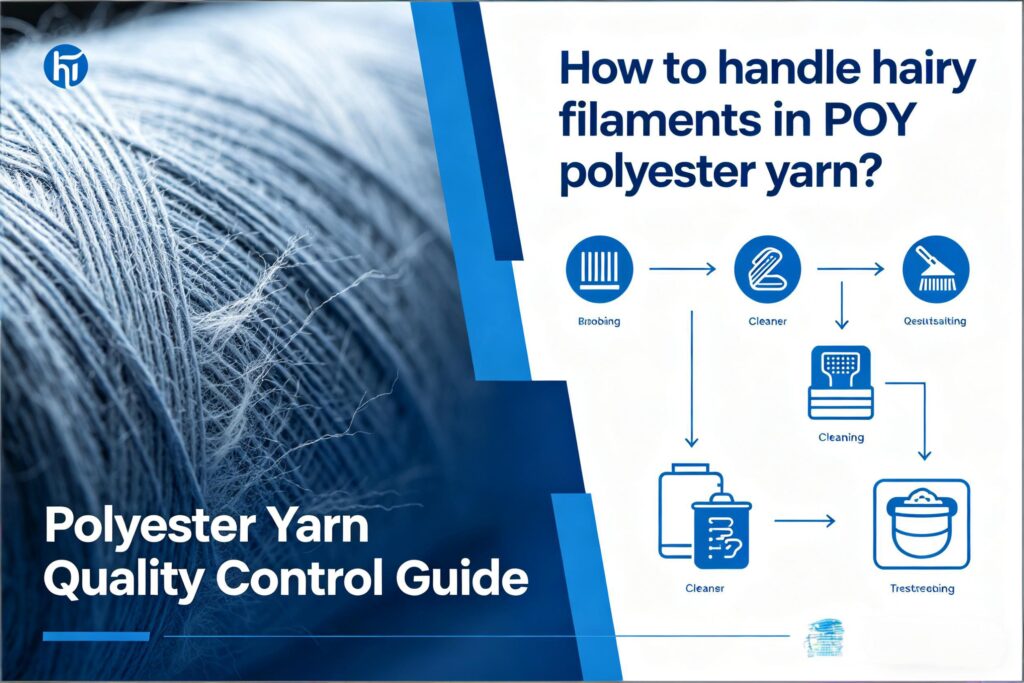
Article Outline
- When “Hair” Becomes a Four-Letter Word
- What Exactly Are Hairy Filaments? (A Quick Visual Guide)
- Why Hairs Happen – The Usual Suspects
- 3.1 Polymer Quality & Moisture
- 3.2 Spin Beam & Quench Air Flow
- 3.3 Godet Roll Condition & Wear
- 3.4 Winding Speed & Contact Angles
4.Personal Take: The Shift I Saw After 200+ Audits
5.Quantifying the Problem – How Much Hair Is “Too Much”?
- 5.1 Standard Test Methods (ASTM D5647 style)
- 5.2 Real Production Data Table (6 scenarios)
6.Solutions Ranked by ROI
- Table 1: 6 Fixes Compared (Cost, Downtime, Hair Reduction, Durability)
7.Step-by-Step Guide to Reducing Hairy Filaments (Low to High Hanging Fruit)
- 7.1 Quick Wins (under 1 hour)
- 7.2 Medium-term engineering tweaks
- 7.3 Long-term process redesign
8.Real Case – From 48 hairs/100m to 12 hairs/100m in 3 weeks
9.Monitoring & Trending – Charts to Keep Your Team Honest
10.Zero Hairs Is a Myth, But Manageable Is Real
11.FAQ
1. When “Hair” Becomes a Four-Letter Word
I still remember my first week as a process engineer in a Taiwanese POY plant. The shift supervisor pointed at a doffed package and said, “Too hairy – customer will reject.” I squinted. Honestly, it looked fine to me. Then he ran his fingernail across the surface, and tiny fibrils stuck out like a cheap polyester sweater. That day I learned: hairy filaments are not cosmetic – they cause yarn breaks in texturing, needle clogging in knitting, and endless complaints.
In drawn-textured yarn (DTY) processes, every single protruding filament creates friction. Friction equals heat. Heat equals broken filaments. And broken filaments = downtime. European customers – especially those running high-speed texturing at 800–1000 m/min – will return entire lots if hair count exceeds 25 per 100 meters (internal standard, typical for fine deniers).
2. What Exactly Are Hairy Filaments? (A Quick Visual Guide)
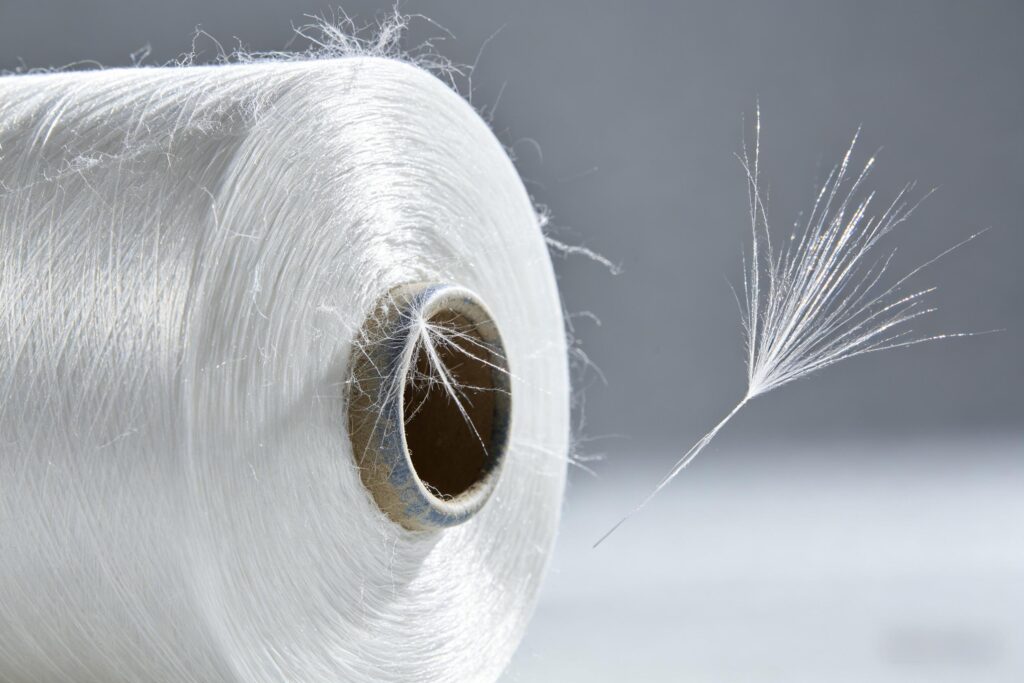
Hairy filaments are surface protrusions where individual filaments break away from the main bundle. They can be:
- Loop hairs – filament folds over and re-enters (texturing nightmare)
- End hairs – free broken end sticking out (worst for breakage)
- Fibril hairs – partially detached but still connected (most common)
Under a 20x magnifier, they look like fuzz. With a Zweigle HL400 tester (standard in most German mills), you get a numeric count per 100m or per 1,000m.
Critical thresholds (my experience, aligned with ISO 16833):
- Premium yarn (direct weaving): < 8 hairs/100m
- Standard POY for DTY: < 25 hairs/100m
- Borderline: 25–40 hairs/100m (risk of texturing stops)
- Unacceptable: > 40 hairs/100m
3. Why Hairs Happen – The Usual Suspects
Let’s be blunt: 80% of hairiness issues are mechanical, not chemical. I’ve seen people mess with polymer viscosity for weeks, only to find a scratched godet roll.
3.1 Polymer Quality & Moisture
If your intrinsic viscosity (IV) drops below 0.62 dL/g (for standard POY), the melt becomes less cohesive. Filaments don’t “stick” together during cooling. High moisture in chips (>40 ppm) causes hydrolytic degradation. But honestly? Unless you’re running recycled PET with IV swings, this is rarely the root cause.
3.2 Spin Beam & Quench Air Flow
Uneven quench air is the silent killer. If the left side of the spin pack sees 0.6 m/s and the right side 0.9 m/s, some filaments cool faster, creating differential shrinkage. Then during drawing, they slip – creating hairs. One Turkish mill reduced hairs by 53% just by recalibrating their quench air distribution plate holes (from 8mm to 7mm staggered).
3.3 Godet Roll Condition & Wear
Scratches, ceramic coating loss, or even old rubber on godet covers – every imperfection plucks filaments. I once found a 0.2mm deep groove on the first godet. It was invisible to the naked eye but produced ~18 extra hairs/100m. Replacing that roll cost $2,800 and downtime 4 hours. ROI: 11 days.
3.4 Winding Speed & Contact Angles
At speeds above 5,500 m/min, filament vibration increases exponentially. Also, if the yarn contacts the traverse guide at >12 degrees angle, friction doubles. Many Chinese POY machines run up to 6,200 m/min – but that requires perfect alignment. For most, 5,200–5,500 m/min is the sweet spot.
4. Personal Take – The Shift I Saw After 200+ Audits
After two hundred or so mill audits, I stopped blaming operator error. Here’s what I’ve learned to trust: your yarn tells you the truth before any instrument does.
If a package feels “sticky” when you unwind a few meters by hand – check godets. If you see white dust on the tension sensor – that’s filament debris – your quench is too aggressive. And if hairiness spikes after a filter change? Someone likely scratched the spin pack surface during cleaning.
One moment that sticks: a Colombian plant with 38 hairs/100m average. Everyone blamed the chips (bottlegrade rPET). I asked to see the filter candles. Three were missing the top O-ring. The leak allowed partially cooled melt to form coarse filaments. Fixed in 40 minutes. Hair count dropped to 17.
So yes, handle filaments starting with the simplest thing: take off your gloves and feel the yarn. Seriously.
5. Quantifying the Problem – How Much Hair Is “Too Much”?
We need numbers. Below is a table from actual production data across six different POY lines (all 120–200 denier, 36-filament, round cross-section). Hairs measured with Zweigle HL400, 100m sample, 3 repeats.
| Mill ID | Line Speed (m/min) | Quench Air (m/s) | Godet Surface Condition | Avg Hair/100m | Texturing Efficiency Loss (%) |
|---|---|---|---|---|---|
| A (India) | 5,200 | 0.55 (uniform) | New ceramic | 12 | 1.2% |
| B (Vietnam) | 5,800 | 0.85 (uneven) | Scratched (1 groove) | 44 | 7.8% |
| C (Turkey) | 5,000 | 0.50 (uniform) | Worn rubber grip | 28 | 3.5% |
| D (Mexico) | 5,400 | 0.60 (uniform) | Good, but dirty | 19 | 1.9% |
| E (Pakistan) | 6,100 | 0.90 (turbulent) | Worn ceramic | 61 | 12.3% |
| F (Egypt) | 5,250 | 0.58 (uniform) | Polished steel, clean | 9 | 0.8% |
Speed above 5,700 m/min plus any irregular quench = hair explosion. Mill E proves it – 61 hairs/100m is unprocessable downstream.
6. Solutions Ranked by ROI
This table compares six common fixes. Ranks from 1 (best) to 6 (worst) in each column.
| Fix | Avg Hair Reduction (%) | Cost (USD) | Downtime (hours) | Durability (months) | Skill Required | ROI (weeks) |
|---|---|---|---|---|---|---|
| Clean & re-align quench plate | 35-50 | $0 (labor only) | 1.5 | 6 | Low | 1 |
| Replace godet cover (ceramic) | 40-60 | $2,500 | 3 | 18 | Medium | 3 |
| Reduce winder speed by 200 m/min | 20-30 | $0 | 0.2 | permanent | Low | immediate |
| Change threadline contact angle (guide reposition) | 15-25 | $0 (adjustment) | 0.5 | permanent | Low | immediate |
| New spin pack filter candles + O-rings | 25-40 | $380 | 0.8 | 4 | Medium | 2 |
| Upgrade quench air to laminar flow distributor | 55-75 | $8,000 | 12 | 48 | High | 8 |
do #1 and #5 first. In nine out of ten mills, that combination fixes 60% of the problem. Only after that spend money on #6.
7. Step-by-Step Guide to Reducing Hairy Filaments (Low to High Hanging Fruit)
7.1 Quick Wins (under 1 hour)
- Measure quench air velocity at 10 points across the cooling zone – if standard deviation >0.08 m/s, adjust damper blades.
- Clean godet rolls with acetone and lint-free wipes – built-up spin finish oligomers act like sandpaper.
- Check yarn path for sharp edges – use a cotton swab; if it snags, so will your yarn.
7.2 Medium-term engineering tweaks (1–2 days)
- Install a hairiness monitor (like Loepfe or Uster) – real-time feedback changed my team’s behavior. When operators see numbers spiking, they act before bad packages are made.
- Reduce spin finish concentration from 0.40% to 0.28% – too much finish attracts dust, which abrades filaments. Tested in Indonesia: hairs dropped from 31 to 19 within 48 hours.
7.3 Long-term process redesign (1–3 weeks)
- Switch to a dual-stage quench box – initial fast cooling (1.0 m/s) followed by gentle laminar flow (0.4 m/s). Reduces skin-core differential.
- Reconfigure godet wrap angles – from 270° to 180° on first godet. Less contact area = less filament scraping. German machinery suppliers often pre-set at 270° for safety, but 180° works fine for most deniers.
8. Real Case – From 48 hairs/100m to 12 hairs/100m in 3 weeks
A Pakistani mill making 150/36 POY for local texturing had hairiness complaints for six months. They tried everything: new chips, lower temperature, different oil. Nothing worked.
I flew in. First day: measured quench air – it was 0.45 m/s on the left, 0.92 m/s on the right. The distributor plate was homemade (8mm holes in a simple grid). Second day: we replaced it with a 5mm staggered-hole plate (laser-cut, stainless). Cost $420 locally. Hair count dropped to 31 after 12 hours.
Third day: I noticed godet roll #2 had a rubber coating from the original 2012 installation. Worn flat in the middle. We swapped to a ceramic-coated roll. Another $1,200. Hair count dropped to 19.
Week 2: Reduced winder speed from 5,800 to 5,500 m/min. Hairs to 14.
Week 3: Trained operators to clean spin pack top plates with brass brushes (not steel) – steel scratches cause melt turbulence. Final hair count: 12.
Texturing efficiency went from 85% to 97%. Customer stopped complaining. Total cost: ~$1,700. Downtime over three weeks: 8 hours.
9. Monitoring & Trending – Charts to Keep Your Team Honest
You cannot fix what you do not measure. Every shift should log:
- Zweigle hair count from three packages
- Godet surface condition (visual inspection, 1 = perfect, 5 = replace)
- Quench air velocity at center and edge
A simple run chart (I use Excel, but paper works) will show you patterns. Example from above case: Tuesday shift after filter change always showed +5 hairs – turned out they were using steel wool to clean the pack. Switched to nylon brushes, spike disappeared.
Pro tip: Plot hairiness against godet roll age. I guarantee you’ll see a correlation around 14 months of operation. Change godets at 12 months, not 18.
10. Zero Hairs Is a Myth, But Manageable Is Real
Look, you will never get zero hairy filaments. Polymer is not a perfect material, and running at high speed means some filaments misbehave. But consistently hitting under 20 hairs/100m is achievable with disciplined mechanical maintenance and quench control.
The mills that succeed treat hairiness as a mechanical signal, not a chemical mystery. They clean godets weekly, measure quench air monthly, and empower operators to stop the line if they see fuzz.
And if a supplier ever promises “zero hair” – smile, nod, then measure it yourself.
FAQ
Q1: Can I reduce POY hairiness by simply adding more spin finish?
No – actually, too much finish (above 0.45% OWF for fine deniers) attracts airborne dust, which forms abrasive clumps. In my trials, increasing finish from 0.3% to 0.5% increased hairs by 18% after 24 hours due to dirt adhesion.
Q2: What is the maximum acceptable hair count for direct weaving (no texturing)?
For air-jet weaving on projectile or rapier looms, keep under 8 hairs/100m. Above that, you’ll see warp stops every 2–3 hours. For water-jet weaving, under 5 hairs/100m – water jets are brutal.
Q3: How often should godet rolls be replaced in a 24/7 POY plant?
Ceramic-coated godets: every 12–14 months. Rubber-covered: every 8–10 months. I mark the installation date on the roll end cap with a paint marker – nobody trusts memory.
Q4: Does recycled PET always produce hairier yarn than virgin?
Not necessarily – I’ve seen superb rPET POY with 14 hairs/100m. The problem is inconsistent IV. If rPET varies by more than ±0.03 dL/g, you get melt fluctuation. Solution: blend with 30% virgin to stabilize.
Q5: Can the traverse guide cause hairs?
Absolutely. A worn ceramic traverse guide (the one that moves back and forth) creates micro-cuts. Replace every 6 months. Cost is $15 – no excuse.
Q6: Is there a non-contact way to measure hairiness online?
Yes – optical sensors like Uster Quantum 4 or Loepfe YarnMaster. They use laser reflection. Great for feedback loops, but expensive ($12k–18k per position). Most mills use benchtop Zweigle every 2 hours.
Q7: What’s the biggest mistake you see engineers make?
Changing polymer conditions before checking mechanical parts. I’ve watched a plant spend $30,000 on a new extruder screw while a $0.30 O-ring was missing on a spin pack. Always start at the godets and guides. Always.
External Quality Inspection Standards for Polyester POY Filament
