
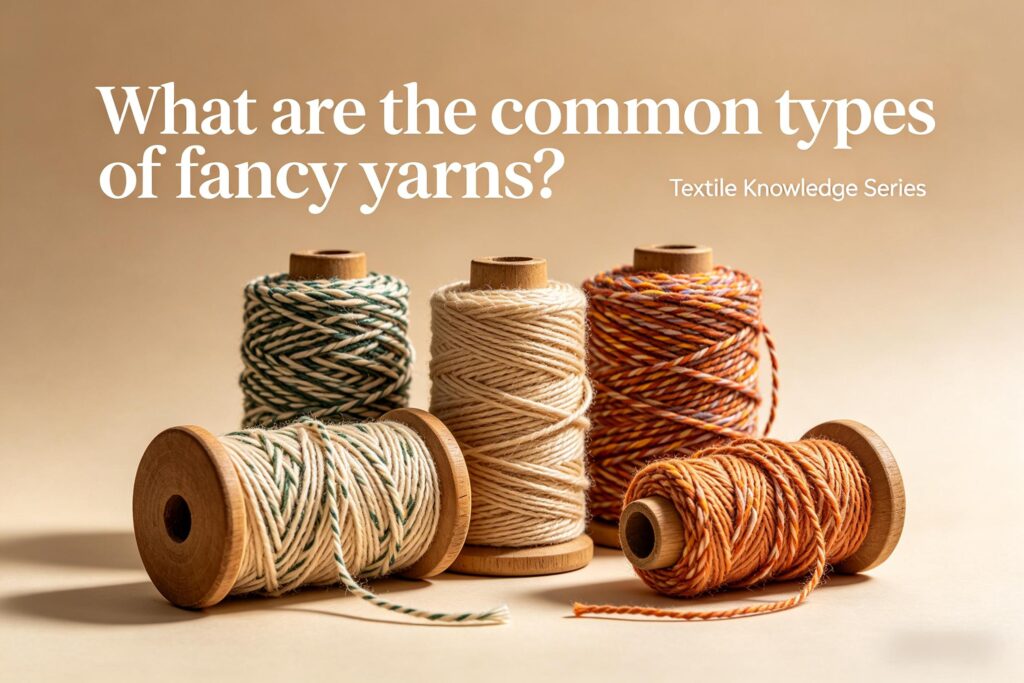
An Introduction to Common Types of Fancy Yarns
Fancy yarns, also known as novelty or effect yarns, are specifically engineered to deviate from the uniform appearance of simple yarns. They incorporate deliberate irregularities, such as variations in color, texture, or structure, to create visual and tactile interest in fabrics. These yarns are the secret weapon of textile designers, used to add depth, richness, and unique aesthetic appeal to everything from garments and upholstery to decorative items. The production of fancy yarns typically involves a special spinning process that often combines multiple yarns of different types, colors, or twist levels. Here is an overview of some of the most common and fundamental types of fancy yarns.
Perhaps the most recognizable fancy yarn is the loop yarn. As the name suggests, this yarn features small, regularly spaced loops protruding from its core. These loops can be of uniform size for a consistent texture or varied for a more irregular, rustic effect. The loops are held in place by a binder thread. Mohair or wool is often used to create soft, fluffy loops, resulting in a fabric with a distinctive, often fuzzy, surface that is highly prized in knitwear and decorative textiles for its cozy and luxurious feel.
Another classic variety is the slub yarn. This yarn is characterized by its intentional, uneven thickness. It has alternating thin and thick places along its length, creating an organic, irregular texture that mimics the look of hand-spun yarns or certain natural fibers like linen and silk noil. Slub yarns add a subtle, nubby texture to fabrics, making them visually dynamic and interesting without being overly bold. They are widely used in shirting, dress materials, and home furnishing fabrics to impart a natural, artisanal quality.
The bouclé yarn is renowned for its three-dimensional, curly, or knotted appearance. It is typically composed of three threads: a core, an effect thread that is fed at a faster rate to form the loops, and a binder that locks the loops in place. The effect thread creates small, tight loops that give the yarn a bumpy, textured surface. Bouclé fabrics have a characteristic pebbly or nubby feel and are often used in jackets, coats, and upholstery to create a highly textured, wooly look.
A chenille yarn is distinctive for its exceptionally soft, velvety pile that resembles a caterpillar—hence its name, derived from the French word for caterpillar. It is manufactured by cutting a specially woven “tape” of weft threads, which are held together by warp threads. This process creates a yarn with a dense pile of short fibers protruding in all directions. Chenille yarns produce fabrics with a luxurious, soft luster and a plush hand feel, making them ideal for throws, upholstery, robes, and high-end accent pillows.
Finally, the spiral or corkscrew yarn is created by twisting two threads of different thicknesses or colors together at an uneven rate. One component spirals around the other, creating a dramatic, pronounced effect. This structure can be used to create a subtle marled effect if the threads are of different colors or a pronounced textural effect if they differ in thickness. Spiral yarns are frequently used in sweaters, scarves, and decorative fabrics to add a bold, linear design element.
In conclusion, these common types of fancy yarns—loop, slub, bouclé, chenille, and spiral—form the foundational toolkit for textile innovation. By manipulating their basic components and production techniques, spinners can create an almost infinite variety of effects, enabling designers to continually push the boundaries of creativity in fashion and interior design.
