
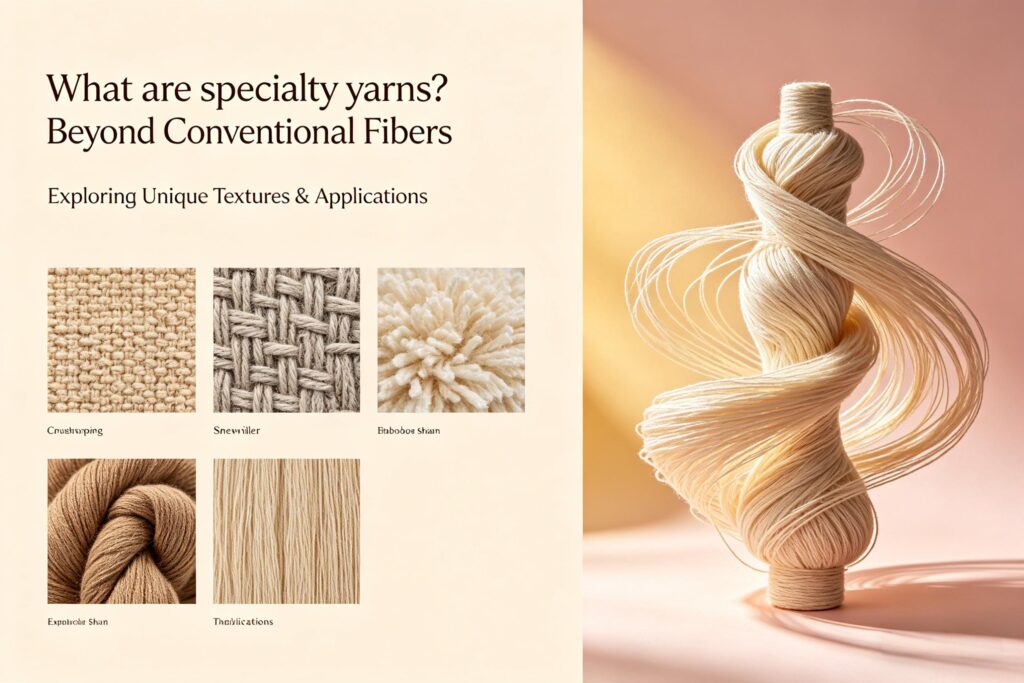
In the vast world of textiles, the term “specialty yarns” refers to a broad category of engineered yarns designed for specific performance characteristics that go beyond the basic functions of standard apparel yarns. Unlike fancy yarns, which are primarily concerned with aesthetic and textural effects, specialty yarns are defined by their enhanced functional properties. They are the high-performance materials of the textile industry, developed to meet demanding technical, industrial, and medical requirements, as well as to cater to niche luxury markets. These yarns are engineered at the molecular or structural level to possess unique attributes such as exceptional strength, flame resistance, conductivity, or biodegradability.
The applications of specialty yarns are incredibly diverse, spanning numerous sectors far beyond traditional clothing. A major area of application is in technical textiles and industrial products. Here, yarns are engineered for extreme durability and performance. For instance, high-tenacity yarns made from aramids (like Kevlar®) or ultra-high-molecular-weight polyethylene (UHMWPE) are used in ballistic vests, cut-resistant gloves for industrial workers, and protective gear for first responders. Similarly, glass and ceramic yarns are employed in firefighting suits, welding blankets, and high-temperature insulation due to their inherent non-flammability and thermal stability. Another critical application is in geotextiles, where rot-resistant and high-strength yarns made from polypropylene are used for soil stabilization, erosion control, and drainage systems in civil engineering projects.
Another rapidly growing segment is smart and electronic textiles (e-textiles). This category includes yarns that possess or can conduct electrical signals. Conductive yarns, often created by blending traditional fibers with fine metallic threads (like silver or copper) or coating them with conductive polymers, are integral to this field. They are woven or knitted into fabrics to create wearable technology, such as garments with built-in health monitors that track heart rate and respiration, heated apparel for extreme climates, and interactive fashion with integrated lighting. Furthermore, these yarns are pivotal in developing soft circuits and antennas that can be seamlessly integrated into furniture, car interiors, and military equipment.
In the realm of medical and hygiene textiles, specialty yarns play a life-saving role. They are designed to be biocompatible, antimicrobial, and highly absorbent. Absorbent yarns are used in surgical drapes, dressings, and incontinence products. Antimicrobial yarns, infused with agents like silver ions, are used to manufacture hospital linens, uniforms, and wound care materials to prevent infections. Additionally, bio-component yarns are engineered for specific purposes, such as sutures that dissolve in the body after healing or scaffolds for tissue engineering that support cell growth.
Finally, the definition of specialty yarns also extends to the luxury and niche apparel sector. This includes yarns spun from rare and exquisite natural fibers that offer unparalleled softness, warmth, or aesthetic appeal. Prime examples are cashmere, vicuña, qiviut (muskox down), and lotus silk. Their limited availability and labor-intensive production processes make them specialty items, highly sought after for creating exclusive, high-fashion garments.
In conclusion, specialty yarns represent the cutting edge of fiber science and textile engineering. They are not defined by a single type of fiber or structure, but by their ability to provide a targeted solution to a functional challenge. From protecting lives on the battlefield and in hospitals to enabling the next generation of wearable technology and defining the pinnacle of luxury fashion, specialty yarns are fundamental to innovation across a stunning array of modern industries.
