
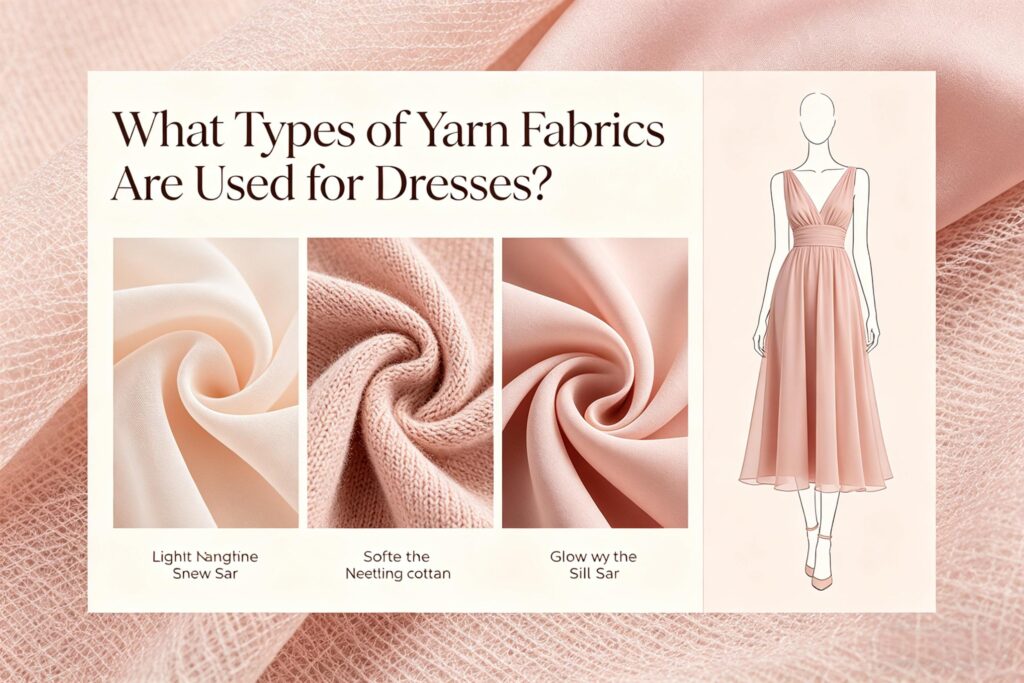
Article Directory
- Introduction: The Foundation of Elegance – How Yarn Dictates a Dress’s Destiny
- Why Fabric Choice is the First and Most Critical Design Decision
- The Journey from a Yarn to a Draping Silhouette
- Part I: The Natural Fiber Canvas – Timelessness and Breathability
- 2.1. Cotton & Linen: The Epitome of Casual Comfort and Breathability
- 2.2. Silk: The Undisputed Queen of Luxury and Drape
- 2.3. Wool & Specialty Animal Fibers: Beyond Winter Warmth
- Part II: The Engineered & Synthetic Spectrum – Innovation and Performance
- 3.1. Viscose/Rayon: The Affordable Fluid Drape
- 3.2. Polyester & Nylon: The Pillars of Durability and Versatility
- 3.3. Elastane/Spandex: The Invisible Engine of Comfort and Fit
- 3.4. Modern Regenerates: Tencel™, Cupro, and Eco-Conscious Innovation
- Part III: The Weave and Knit Code – Structure Defines Character
- 4.1. Woven Fabrics for Structure: Poplin, Chiffon, Satin, and Twill
- 4.2. Knitted Fabrics for Movement: Jersey, Double Knit, Rib, and Mesh
- 4.3. Understanding Weight (GSM) and Drape: From Airy Voile to Structured Bouclé
- Part IV: Sourcing with Strategy – A Guide for Professional Buyers
- 5.1. Matching Fabric to Dress Type: A Practical Selection Matrix
- 5.2. The Value of Technical Data: Going Beyond the Swatch
- 5.3. The Partner Supplier Advantage: How Expertise Like Glyarn’s De-risks Sourcing
- Conclusion: Crafting the Narrative – From Fiber to Final Product
- Building a Cohesive and Marketable Collection with Informed Fabric Choices
1. Introduction: The Foundation of Elegance – How Yarn Dictates a Dress’s Destiny
The creation of a memorable dress begins not with a sketch, but with a fundamental choice: the selection of its fabric. This single decision forms the foundation upon which all else—design, fit, comfort, and market appeal—is built. The type of yarn and the way it is constructed into fabric directly command a dress’s drape (its fluidity and how it falls), hand feel (its tactile quality against the skin), durability, care requirements, and seasonal appropriateness.
For professionals in the fashion industry, understanding dress fabric is a critical business skill. It’s the difference between a garment that looks beautiful on a hanger and one that feels exquisite to wear, between a summer dress that breathes and one that stifles, and between a design that sells and one that is returned. This guide will decode the universe of dress fabrics, moving from the source fibers to the final textile, equipping you with the knowledge to make precise, confident, and commercially astute sourcing decisions.
2. Part I: The Natural Fiber Canvas – Timelessness and Breathability
Derived from plants and animals, natural fibers are prized for their inherent comfort, biodegradability, and complex aesthetics.
2.1. Cotton & Linen: The Epitome of Casual Comfort
These plant-based (cellulosic) fibers are the workhorses of casual and warm-weather dressing.
- Cotton: Loved for its softness, breathability, and high moisture absorption. Its versatility is showcased in various weaves:
- Poplin/Voile: Fine, crisp, and lightweight, perfect for structured sundresses or flowing sleeves.
- Denim/Chambray: A durable cotton twill, ideal for casual shirt dresses and pinafores.
- Jersey: A soft, stretchy knit cotton, the foundation of the classic T-shirt dress.
- Linen: Made from the flax plant, linen is highly breathable, moisture-wicking, and has a distinctive, beautiful slub texture. It offers a relaxed, elegant drape but is prone to wrinkling, which is often considered part of its charm. Ideal for loose-fitting summer dresses and resort wear.
2.2. Silk: The Undisputed Queen of Luxury and Drape
A natural protein filament, silk is synonymous with luxury. It possesses a unique combination of strength, a luminous sheen, a smooth, cooling hand feel, and an unparalleled fluid drape.
- Charmeuse: Lightweight, glossy on one side and matte on the other, used for elegant slips and evening gowns.
- Chiffon & Georgette: Sheer, lightweight, and slightly textured woven silks that create ethereal, flowing layers.
- Crepe de Chine: A matte silk with a fine pebbled texture, offering excellent drape and a more subdued luxury, perfect for daytime sheaths and wrap dresses.
2.3. Wool & Specialty Animal Fibers: Beyond Winter Warmth
Often associated with warmth, fine wool and other animal fibers are invaluable for cooler-season dresses.
- Merino Wool: Exceptionally fine and soft, it can be knitted into fine-gauge jersey for bodycon winter dresses or woven into lightweight twills for sophisticated winter sheaths. It regulates temperature and resists odor.
- Cashmere & Camel Hair: These luxuriously soft fibers add incredible warmth without bulk, often used in blends for high-end knit dresses.
- Silk-Wool Blends: A classic combination that merges silk’s drape and luster with wool’s warmth and structure, resulting in a versatile fabric for autumn/winter tailoring.
3. Part II: The Engineered & Synthetic Spectrum – Innovation and Performance
This category encompasses man-made fibers created for specific performance characteristics, consistency, and cost-effectiveness.
3.1. Viscose/Rayon: The Affordable Fluid Drape
A regenerated cellulose fiber (from wood pulp), viscose mimics the drape and softness of silk at a fraction of the cost. It is highly absorbent and dyes beautifully but can be weaker when wet and may wrinkle or shrink if not cared for properly. It’s a staple for flowy maxi dresses, bias-cut garments, and printed day dresses.
3.2. Polyester & Nylon: The Pillars of Durability
- Polyester: The most common synthetic, prized for its strength, wrinkle resistance, quick-drying nature, and color retention. It can be engineered to mimic almost any texture—from silk-like chiffon to crisp taffeta. Its low cost and easy care make it ubiquitous, though it is less breathable than natural fibers.
- Nylon (Polyamide): Known for its exceptional strength and elasticity, often used in sheer hosiery-like fabrics, lingerie dresses, or blended to add durability.
3.3. Elastane/Spandex (Lycra): The Invisible Engine of Comfort and Fit
This synthetic fiber is rarely used alone but is a game-changer in blends. Adding just 2-5% elastane to a woven or knitted fabric provides crucial stretch and recovery, ensuring a dress moves with the body, maintains its shape, and offers superior comfort. It is essential for fitted silhouettes, bodycon dresses, and any design requiring ease of movement.
3.4. Modern Regenerates: Tencel, Cupro, and Eco-Conscious Innovation
This new wave of fibers answers the demand for sustainability.
- Tencel™ (Lyocell): Made from wood pulp in a closed-loop, eco-efficient process. It is incredibly strong (wet and dry), has a beautiful fluid drape, and boasts excellent moisture management. It’s increasingly popular for modern, sustainable dresses.
- Cupro: A regenerated fiber from cotton linter, it has a silky hand feel and beautiful drape, often used as a premium alternative to silk in linings and lightweight dresses.
4. Part III: The Weave and Knit Code – Structure Defines Character
The construction method—weaving or knitting—is as important as the fiber itself.
4.1. Woven Fabrics for Structure
Yarns are interlaced at right angles on a loom. Wovens are generally stable with little stretch (unless blended with elastane).
- Plain Weave (e.g., Poplin, Taffeta): Simple, strong, and crisp.
- Twill Weave (e.g., Denim, Gabardine): Diagonal rib pattern; durable and drapes well.
- Satin Weave (e.g., Satin, Sateen): Yarns “float” over several others, creating a smooth, lustrous surface but can be prone to snagging.
4.2. Knitted Fabrics for Movement
Yarns are looped together, creating inherent stretch and flexibility.
- Single Jersey: The most common knit, smooth on one side, loopy on the other, with good crosswise stretch. Used for T-shirt and casual dresses.
- Double Knit (Ponte di Roma): A stable, thicker knit with less stretch, excellent for structured knit dresses, skater dresses, and blazers.
- Rib Knit: Has vertical ridges, with excellent lengthwise stretch, often used for cuffs, necklines, or bodycon styles.
4.3. Understanding Weight (GSM) and Drape
- GSM (Grams per Square Meter): A key objective metric. A lightweight chiffon may be 30-70 GSM, a medium-weight cotton poplin 100-150 GSM, and a heavy ponte knit 250-350 GSM.
- Drape: This describes how fabric falls under its own weight. A fluid fabric like viscose jersey has a soft drape, while crisp organdy has a stiff drape.
5. Part IV: Sourcing with Strategy – A Guide for Professional Buyers
5.1. Matching Fabric to Dress Type: A Practical Selection Matrix
| Dress Type/Silhouette | Recommended Fabric Types | Key Performance Needs | Fiber/Weave Examples |
|---|---|---|---|
| Structured Sheath | Crisp Wovens, Stable Knits | Shape retention, clean lines | Wool Crepe, Ponte di Roma, Stiff Cotton Poplin |
| Flowing Maxi/Midi | Fluid Wovens & Knits | Beautiful drape, movement | Viscose Challis, Silk Charmeuse, Lightweight Jersey |
| Bodycon/Fitted | Knits with Recovery | High stretch, shape recovery | Jersey with 5% Elastane, Scuba/Knit Neoprene |
| Summer Sundress | Lightweight, Breathable Wovens | Airiness, moisture-wicking | Cotton Voile, Linen, Seersucker |
| Casual T-Shirt Dress | Comfortable Knits | Softness, easy care, stretch | Cotton Jersey, Pima Cotton Blend Jersey |
| Evening Gown | Luxurious & Draping Fabrics | Luster, fluidity, special hand feel | Silk Satin, Duchesse, Velvet, Sequinned Net |
5.2. The Value of Technical Data: Going Beyond the Swatch
Protect your designs by requesting objective data from mills or suppliers:
- Fiber Content & Weight (GSM): The basics.
- Stretch & Recovery: For knits and stretch wovens.
- Colorfastness Test Data: To ensure dyes won’t run.
- Care Instruction Validation: Confirm shrinkage rates after washing.
5.3. The Partner Supplier Advantage: How Expertise Like Glyarn’s De-risks Sourcing
A knowledgeable yarn supplier is a strategic asset. For instance, Glyarn excels in providing technical solutions beyond simple transactions.
- Scenario: A brand wants to develop a sustainable, mid-weight knit dress fabric that has the fluid drape of viscose but better wash stability and strength.
- Glyarn’s Collaborative Approach: Their experts might propose a custom-engineered yarn blend, such as 50% Tencel™ Lyocell (for drape and sustainability), 45% Fine Combed Cotton (for softness and breathability), and 5% Elastane (for recovery). They would provide samples, technical specifications, and performance data for this new blend, de-risking the development process. This partnership turns a sourcing challenge into a unique product advantage.
6. Conclusion: Crafting the Narrative – From Fiber to Final Product
Choosing the right fabric for a dress is a multifaceted decision that balances aesthetics, physics, cost, and consumer desire. By understanding the intrinsic properties of fibers, the defining nature of constructions, and the importance of technical data, you transform fabric selection from a guessing game into a precise science.
In today’s market, the fabric is a key part of a dress’s story—whether it’s a tale of sustainable innovation, luxurious comfort, or effortless style. Partnering with expert suppliers who can provide not just materials but also technical guidance and consistent quality, like Glyarn, is essential for bringing that story to life successfully. Let this knowledge empower you to create dresses that are not only visually stunning but are also a joy to wear, building trust and loyalty with every customer.
