
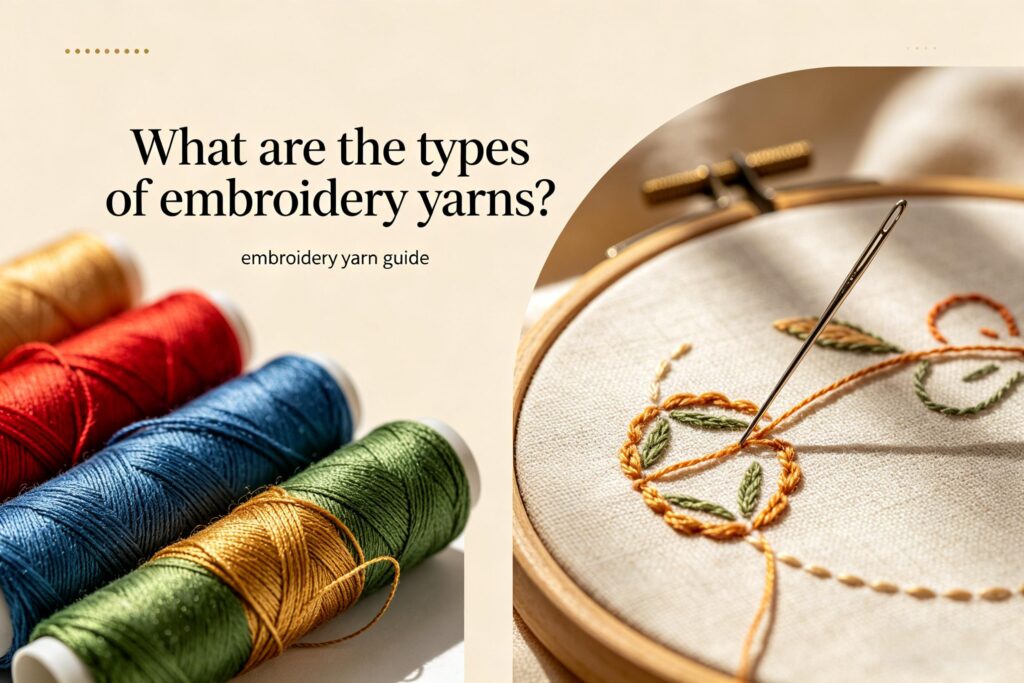
The Ultimate Guide to Embroidery Yarn Types for Industrial Buyers: Selection, Applications & Strategic Sourcing
For procurement managers across the apparel, textile, home furnishing, and toy industries, selecting the right embroidery yarn is a critical decision that impacts product quality, cost, and marketability. “Embroidery yarn” is not a single product but a diverse family of specialized threads, each engineered for specific applications. This comprehensive guide provides a detailed analysis of embroidery yarn types, their properties, and strategic selection criteria to empower your sourcing decisions.
Table of Contents
- Introduction: Embroidery Yarn in the Modern Supply Chain
- Defining the Market: Global Trends and Industrial Applications
- A Technical Breakdown of Core Embroidery Yarn Types
- Natural Fiber Yarns
- Synthetic & Chemically-derived Yarns
- Specialty & Decorative Yarns
- Data-Driven Selection: Matching Yarn to Application
- Beyond the Thread: Navigating the Supplier Landscape
- Conclusion: Building a Strategic Embroidery Yarn Sourcing Plan
1. Introduction: Embroidery Yarn in the Modern Supply Chain
Embroidery is a dynamic intersection of art and industrial technology, transforming garments, home textiles, and accessories from basic commodities into high-value, branded products. For industrial buyers, the choice of yarn is the foundational technical specification that determines aesthetic outcome, durability, production efficiency, and cost.
The global market for embroidery yarn is significant and growing, driven by demand from sectors like fashion, home decor, and promotional goods. Understanding the distinct categories of embroidery yarns—from ubiquitous polyester to luxurious silk and specialized metallics—is essential for optimizing your supply chain for performance and profitability.
2. Defining the Market: Global Trends and Industrial Applications
The embroidery yarn market is segmented by material, end-use, and geography. Globally, major application areas include apparel, footwear, bedding and mattresses, luggage and bags. The Asia-Pacific region is a major production and consumption hub, with China being a leading exporter of embroidered goods. Recent industry reports indicate continued growth, with various firms forecasting market expansion into 2031.
For buyers, key trends include:
- Demand for Durability & Performance: In industrial and fashion applications, yarns must withstand washing, abrasion, and light exposure.
- Specialization: Yarns are increasingly engineered for specific techniques, such as high-speed machine embroidery or intricate handwork.
- Supply Chain Complexity: Sourcing often involves navigating a global supplier base, including industry giants like Coats, A&E, and AMANN, as well as specialized manufacturers.
3. A Technical Breakdown of Core Embroidery Yarn Types
Embroidery yarns can be categorized by their raw material composition, which dictates their fundamental properties.
3.1 Natural Fiber Yarns
These are derived from plant or animal sources and are prized for specific aesthetic qualities.
- Cotton Yarn: A staple in the industry, made from fine, combed cotton for high strength and uniformity. It offers excellent color fastness, a matte finish, and is highly resistant to washing and sunlight. It is widely used for embroidery on other cotton, linen, or rayon fabrics.
- Industrial Note: Often categorized by thickness into fine counts for detailed machine or hand work and coarse counts for faster, textured hand embroidery.
- Silk & Real Silk Yarn: This premium yarn creates embroidery with vibrant, luminous color and a luxurious sheen, making it ideal for high-end fashion and art. However, it has lower strength and is less resistant to washing and sunlight compared to cotton. Its use is often reserved for specialty applications on fabrics like satin or silk.
- Wool Yarn: Typically made from wool or wool blends, this yarn is used for “crewel embroidery” or “rong xiu“. It provides a soft, raised texture, rich colors, and a three-dimensional effect, perfect for tapestries, decorative wall hangings, and apparel on fabrics like wool or felt. Its washability is limited.
3.2 Synthetic & Chemically-derived Yarns
These man-made fibers dominate industrial embroidery due to their performance and consistency.
- Polyester Yarn: The workhorse of commercial machine embroidery. It is characterized by high strength, excellent elasticity, and superior color retention. It withstands high-speed machine tension, is chemically resistant, and has good flame-retardant properties. Its durability makes it the top choice for apparel, corporate logos, and items requiring frequent laundering.
- Rayon (Viscose) Yarn: Known for its exceptional, silky sheen and bright colors, rayon mimics the luster of silk at a lower cost. It is softer and cooler to the touch than polyester, making it popular for intricate, decorative designs on fashion garments. However, its strength decreases when wet.
- Nylon Yarn: Valued for its exceptional toughness and abrasion resistance. It is often used in technical applications, for embroidering on thick or challenging materials, and in products like bags and footwear that require durability.
3.3 Specialty & Decorative Yarns
These yarns are designed primarily for visual impact and specific techniques.
- Metallic Yarn: Made from metallic foil or synthetic films, these yarns add gold, silver, or colored sparkle. They are less flexible and more delicate, traditionally used in techniques like couching or goldwork where the thread is laid on the fabric surface.
- Other Novelty Yarns: This category includes ribbons for dimensional “ribbon embroidery,” textured threads, and yarns incorporating elements like glow-in-the-dark or variegated color effects.
4. Data-Driven Selection: Matching Yarn to Application
Choosing the right yarn requires aligning its properties with the end product’s requirements. The table below provides a concise guide for key industrial segments.
| Yarn Type | Key Properties | Ideal For | Industrial Considerations |
|---|---|---|---|
| Polyester | High strength, wash-fast, colorfast, heat-resistant. | Apparel, uniforms, bags, hats, bedding. | Best for high-speed machine embroidery. Most cost-effective for bulk orders. |
| Rayon | High sheen, vibrant colors, soft drape. | Fashion apparel, lingerie, delicate home decor. | Offers a premium look. Ensure proper machine tension to prevent breakage. |
| Cotton | Matte finish, durable, breathable, excellent for dense stitches. | Towels, denim, children’s wear, quilts. | Creates a classic, high-quality feel. Excellent stitch definition. |
| Metallic | Decorative shine, adds luxury accent. | Evening wear, logos, ceremonial garments, high-end decor. | Use with appropriate needle and technique (e.g., couching) to avoid breakage. |
| Wool | Textured, three-dimensional, warm. | Coats, winter apparel, tapestries, toys (for texture). | Provides unique tactile appeal. Primarily for hand or specialized machine use. |
5. Beyond the Thread: Navigating the Supplier Landscape
Successful sourcing involves more than just selecting a yarn type. The global market features tiered suppliers, from multinational corporations like Coats and A&E to regional specialists. For international buyers, especially those sourcing from major manufacturing regions like Asia, partnering with a reliable intermediary can be a strategic advantage.
A trusted supplier like Glyarn simplifies this complex landscape. They act not just as a vendor but as a sourcing partner, offering:
- Technical Expertise: Guidance on matching yarn specifications (like denier, twist, and finish) to your fabric and embroidery machines.
- Quality Consolidation: Access to a vetted network of mills, ensuring consistent quality across large orders.
- Supply Chain Efficiency: Handling of logistics, documentation, and compliance, reducing risk and administrative burden.
- Market Intelligence: Insights on material cost trends and emerging yarn technologies.
6. Conclusion: Building a Strategic Embroidery Yarn Sourcing Plan
Selecting embroidery yarns is a critical technical and strategic function. A systematic approach yields the best results:
- Define the End-Use: Start with the product’s lifecycle—will it be washed frequently, exposed to sun, or require a specific drape?
- Match Yarn to Substrate: The fabric dictates the ideal yarn. Polyester is versatile for most synthetics, while cotton is perfect for natural fiber bases.
- Prioritize Performance Needs: Rank needs: Is it durability (polyester), sheen (rayon), a natural feel (cotton), or decorative effect (metallic)?
- Engage Expert Partners: Collaborate with knowledgeable suppliers who can provide samples, technical data sheets, and production support.
- Test Before Scaling: Always conduct production trials to assess the yarn’s performance on your specific equipment and materials.
By mastering the properties and applications outlined in this guide, you can transform embroidery from a simple decoration into a powerful tool for adding value, quality, and distinction to your products, ensuring they stand out in a competitive global market.
I hope this detailed guide provides a solid foundation for your sourcing decisions. If you have a specific application in mind (e.g., embroidering performance activewear, plush toys, or wool carpets), I can provide more targeted information on the optimal yarn choices for those scenarios.
