
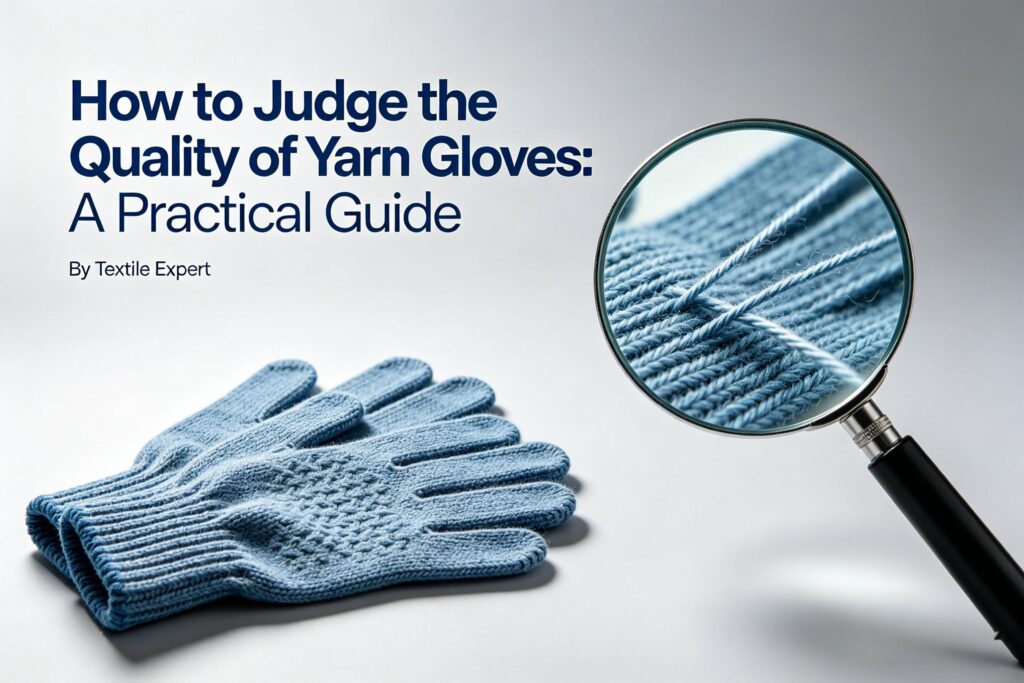
Yarn gloves are ubiquitous across industries and seasons, serving as essential personal protective equipment (PE) on worksites, cozy companions in winter, and specialized tools in cleanrooms and food handling. Yet, not all yarn gloves are created equal. The difference between a durable, protective, comfortable glove and one that falls apart after minimal use lies in a series of deliberate choices in materials and construction. Selecting high-quality yarn gloves requires moving beyond simple aesthetics to a forensic examination of their components and craftsmanship. This guide provides a comprehensive framework for evaluating yarn glove quality, ensuring you select the right glove for performance, safety, and value.
Part 1: The Foundation – Deconstructing Yarn and Material Quality
The quality of a glove is irrevocably determined by the fibers from which it is spun. The choice of material dictates its core functionality.
1.1 Fiber Type and Origin
- Cotton: The classic choice for general-purpose and light-duty tasks. High-quality cotton gloves use long or extra-long staple (ELS) cotton (e.g., Pima, Egyptian). The longer fibers spin into stronger, smoother yarn with less linting and higher durability. Avoid gloves made from short-staple cotton, which will be weaker, hairier, and prone to pilling.
- Polyester & Synthetic Blends: Prized for superior strength, abrasion resistance, and moisture-wicking properties. High-tenacity polyester is common in industrial gloves. Polyester-cotton blends (e.g., T/C 65/35) are a workhorse, balancing cotton’s comfort with polyester’s strength and mildew resistance. The specific blend ratio is a key quality indicator.
- Wool & Acrylic: The standard for thermal insulation. High-quality wool gloves use Merino wool, which is finer, softer, and less itchy than coarse wool. Acrylic is a cost-effective, hypoallergenic synthetic alternative that provides good warmth but may not match wool’s natural moisture management and flame resistance.
- Specialty & Composite Yarns: For high-performance applications. This includes:
- Aramid Fibers (e.g., Kevlar®): For extreme cut and heat resistance.
- HPPE (High-Performance Polyethylene): For exceptional cut resistance and strength.
- Stainless Steel or Glass Fiber Blends: For specialized heat and slash protection.
- Certified Yarns: Look for OEKO-TEX® STANDARD 100 certification, ensuring the yarn is free from harmful levels of regulated chemicals, crucial for food handling or sensitive skin.
1.2 Yarn Construction and Weight
- Spinning Method: Ring-spun yarn is generally stronger and more durable than open-end (OE) spun yarn, which is more economical but produces a weaker, fuzzier yarn.
- Yarn Count and Ply: A higher yarn count (finer yarn) can indicate a smoother, more dexterous glove, while a lower count (coarser yarn) may indicate a heavier-duty build. Plied yarns (two or more singles twisted together) are significantly stronger and more resistant to breaking than single-ply yarns. Always check if the yarn is single or plied.
- Glove Weight (GSM): The weight in grams per square meter is a direct, objective measure of density and often durability. A lightweight cotton glove may be 180-220 GSM, suitable for light assembly. A heavy-duty industrial glove can be 350+ GSM. Heavier GSM typically means more material, better insulation, and improved abrasion resistance.
Part 2: The Anatomy – Analyzing Construction and Craftsmanship
Superior materials are wasted without excellent construction. Examine every seam and stitch.
2.1 Knitting Technique and Stitch Density
- Seamless vs. Fully Fashioned: Seamless knit gloves (knitted in a tube) eliminate side seams, reducing potential failure points and improving comfort. Fully fashioned gloves are knitted flat and sewn together, which can allow for a more precise, anatomical fit but introduces a seam.
- Stitch Density & Tightness: The gloves should feel substantial and resist stretching out of shape easily. Hold them up to the light; minimal light should show through a dense, tight knit. A loose, gappy knit will snag easily, offer less protection, and wear out quickly.
- Reinforcements: Quality gloves add extra yarn or double layers at high-wear areas. Scrutinize the fingertips, palm, and thumb crotch. These areas should show clear, integrated reinforcement, not just a second layer loosely tacked on.
2.2 Seam Integrity and Finishing
- Seam Type: The best seams are flat-locked or serged. These seams lie flat, are very strong, and prevent uncomfortable ridges that can cause blisters. Avoid overlock (overedged) seams on the palm side, as they create a raised ridge that is a primary point of wear and discomfort.
- Cuff Construction: A well-made cuff is essential for fit and durability. Look for a tightly knit, turned ribbed cuff that will retain its elasticity to keep the glove on your hand and cold air out. A loose, sloppy cuff is a hallmark of poor construction.
- General Finishing: There should be no loose threads, holes, or inconsistent dye lots. The stitching should be even and secure throughout.
Part 3: Performance Metrics – Testing for the Real World
A good glove must pass practical tests that simulate its intended use.
3.1 Fit, Dexterity, and Comfort
- Fit: The glove should fit snugly without constricting movement. Fingers should be the correct length—not so long that material bunches at the tips, not so short that they strain the seams. Try them on.
- Dexterity: Can you easily pick up a small screw, coin, or operate a touchscreen (if applicable)? High-quality gloves achieve dexterity through fine yarns and precise knitting, not by being thin and flimsy.
- Comfort & Hand Feel: The interior should feel smooth, not scratchy or full of prickly fiber ends. For extended wear, breathability is key to prevent sweat buildup.
3.2 Durability and Function-Specific Traits
- Abrasion & Snag Resistance: Firmly rub the palm area against a rough surface or try to gently pull a loose thread. A quality knit will resist both.
- Stretch and Recovery: Stretch the glove widthwise. It should return to its original shape immediately with no permanent distortion.
- Application-Specific Tests:
- Grip: For work gloves, does the palm have a raised pattern (nubs, dots) or coating (latex, nitrile) for enhanced grip? Is it applied evenly and durably?
- Thermal: For winter gloves, do they have a lining (fleece, Thinsulate™)? How well do they trap heat?
- Liquid Resistance: Are they treated with a durable water repellent (DWR)?
Conclusion: The Sum of Its Parts
Selecting high-quality yarn gloves is a systematic process of investigation. It begins with identifying the right material for the task—be it long-staple cotton for comfort, aramid for cut resistance, or Merino wool for warmth. This material must then be transformed into a robust yarn, preferably plied and densely knit. The construction must reveal thoughtful engineering: reinforced high-stress zones, flat-locked seams for durability, and a secure cuff for retention.
Ultimately, the best glove is the one that optimally balances protection, dexterity, comfort, and cost for its specific purpose. By applying this structured framework—scrutinizing the fiber, dissecting the construction, and demanding performance—you move from guessing to knowing. This ensures that the gloves you choose will not only feel good on the hand but will also stand up to the task, providing reliable performance and safety where it matters most. For those procuring gloves in volume or with specific technical requirements, partnering with a manufacturer that controls its yarn supply and production, such as glyarn, can provide critical assurance of consistent material quality and construction standards from batch to batch.
