
Table of Contents
- Why I’m Writing This (And Why You Should Care)
- What Exactly Is Polyester Fleece? (Quick & Painless)
- The Pros – Where Polyester Fleece Actually Shines
- The Cons – The Annoying Parts Nobody Likes to Admit
- Polyester Fleece vs. Cotton Fleece vs. Wool
- Real-World Performance in Different Industries
- 6.1 For Clothing Manufacturers (Hoodies, Sweatshirts, Jackets)
- 6.2 For Carpet & Rug Producers
- 6.3 For Stuffed Toy & Plush Manufacturers
- 6.4 For Wholesalers & Distributors
- My Personal Take After Handling Thousands of Yards
- Sustainability & Recycled Polyester Fleece – Honest Opinion
- How to Judge Quality Before You Buy (Simple Tricks)
- FAQs – 8 Questions Buyers Actually Ask Me
1. Why I’m Writing This (And Why You Should Care)
I still remember the first time I ordered polyester fleece in bulk. I was young, excited, and honestly a little clueless.
The sample felt amazing. Soft, warm, cozy. I thought I’d found the perfect fabric.
Fast forward three months. My customer (a small clothing brand) called me furious. Their hoodies were pilling like crazy after just two washes. And the static? Don’t even get me started.
That’s when I learned something important: polyester fleece has a split personality. It’s brilliant in some ways. And completely frustrating in others.
I’ve now been in the textile world for over eight years. I’ve supplied fleece to clothing factories, carpet manufacturers, stuffed toy producers, and wholesalers across three continents. I’ve seen it work beautifully. I’ve also seen it fail miserably.
2. What Exactly Is Polyester Fleece? (Quick & Painless)
Let’s keep this simple.
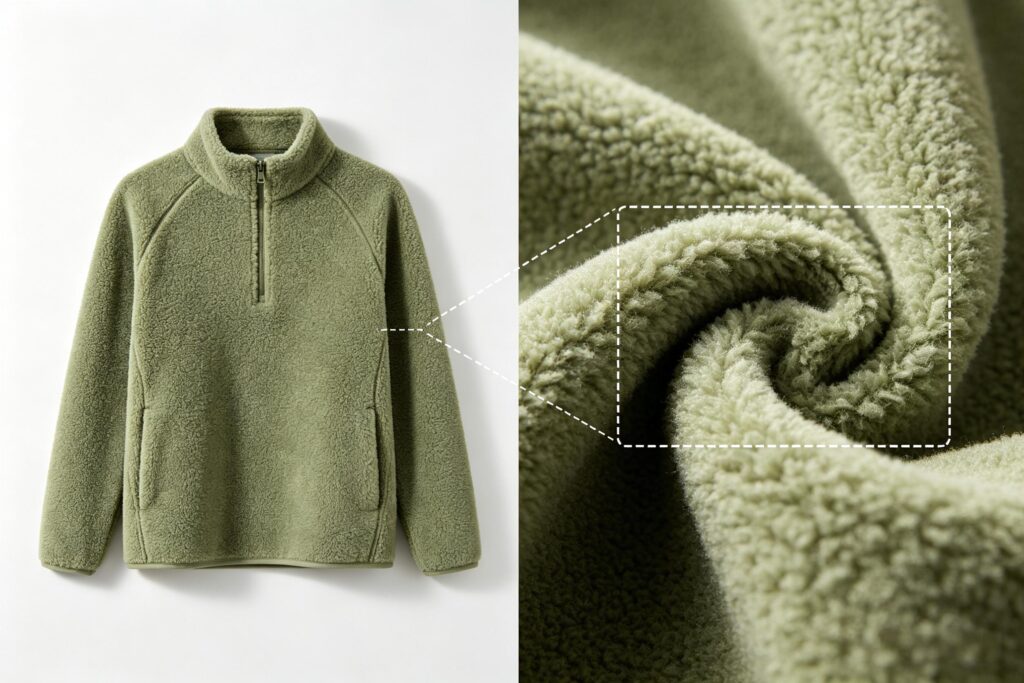
Polyester fleece is a synthetic knitted fabric made from polyester fibers. One side is usually brushed to create a soft, raised surface. That’s what gives it that fluffy, cozy feel.
It’s often confused with polar fleece, but honestly, most people use the terms interchangeably. Technically, polar fleece is a specific type of heavy polyester fleece. But for everyday buying decisions, you don’t need to overthink it.
The key thing to remember: it’s 100% synthetic. No cotton. No wool. Just polyester fibers woven and brushed.
And because it’s synthetic, its strengths and weaknesses come directly from that. Good and bad.
3. The Pros – Where Polyester Fleece Actually Shines
Let me start with what it does well. Because honestly, there’s a reason this fabric is everywhere.
3.1 It’s Ridiculously Warm for the Weight
You don’t need thick, heavy fabric to stay warm. Polyester fleece traps air between its fibers. That air layer holds body heat. I’ve worn a lightweight fleece jacket in near-freezing temperatures and been perfectly comfortable.
For clothing manufacturers: this means you can make warm jackets and hoodies without adding bulk. Shipping costs go down. Customer satisfaction goes up.
3.2 It Dries Fast
I spilled coffee on a fleece blanket once. I blotted it, hung it up, and it was dry in about two hours. Cotton would have stayed wet for half a day.
For carpet and rug producers: spill-prone areas like dining rooms or kids’ playrooms? Fleece-backed or fleece-based rugs dry fast and resist moisture better than natural fibers.
For toy manufacturers: stuffed animals made from fleece survive accidental washing better than you’d expect. More on that later.
3.3 It’s Lightweight
This matters more than you think.
A cotton hoodie might weigh 800 grams. A fleece hoodie with the same warmth might be 500 grams. For wholesalers and factories shipping containers overseas, that weight difference adds up to real money.
I’ve seen buyers switch from cotton fleece to polyester fleece just for the freight savings alone.
3.4 It Doesn’t Shrink
This is huge. I can’t tell you how many returns I’ve seen from cotton garments that shrank two sizes after a hot wash.
Polyester fleece? It basically doesn’t shrink. You can wash it warm, tumble dry it low, and it stays the same size. For clothing brands, that means fewer customer complaints. For toy makers, it means stuffed animals don’t turn into deformed lumps after a wash.
3.5 It’s Cheap to Produce
Let’s be honest. Cost matters.
Polyester fleece costs significantly less than wool fleece. It’s usually cheaper than cotton fleece too, depending on the quality grade.
For large buyers – carpet manufacturers using thousands of yards, wholesale distributors stocking multiple colors – the price difference can decide whether a product line is profitable or not.
3.6 Color Stays Bright
Polyester fibers take dye very well. Your bright red hoodie stays bright red after twenty washes. That bright blue rug? Still blue.
Natural fibers like cotton fade faster. Wool fades slower but costs way more. Polyester fleece hits a sweet spot for color retention at a reasonable price.
4. The Cons – The Annoying Parts Nobody Likes to Admit
Now the stuff fabric sellers don’t always tell you.
4.1 Pilling – The Biggest Complaint by Far
I warned you earlier. Pilling is real.
Low-quality polyester fleece will form little fuzzy balls on the surface after a few washes or even after moderate friction. It looks ugly. It feels rough. And customers hate it.
Why does this happen? Shorter fibers work their way to the surface and knot together.
But here’s the nuance: not all fleece pills the same. Higher-quality fleece with longer staple fibers pills way less. I’ve seen cheap fleece pill after two washes. I’ve seen good fleece go through twenty washes with minimal pilling.
My advice: don’t buy the cheapest option. Your reputation will suffer.
4.2 Static Electricity – Especially in Dry Climates
This one drives me crazy.
In winter or dry climates, polyester fleece builds up static like crazy. You pull a fleece blanket off a sofa and hear crackling. You take off a fleece jacket and your hair stands up. In carpet manufacturing, static buildup can even be a safety issue in certain environments.
Anti-static treatments exist. But they wash out over time. If static is a dealbreaker for your product, you might need to blend fleece with cotton or use a different fabric altogether.
4.3 Not Breathable
Polyester fleece keeps you warm because it traps air. That same property means it doesn’t breathe well.
If you wear it during heavy activity? You’ll sweat. And that sweat doesn’t evaporate quickly because the fabric holds moisture close to your skin.
For clothing brands making activewear or performance gear, fleece is not your friend for high-intensity use. For casual hoodies, blankets, and toys? Fine. For running jackets? Not so much.
4.4 Melting Point – Be Careful with Heat
Polyester is plastic-based. It melts.
I learned this the hard way when an iron touched a fleece jacket by accident. Instant hard spot. Ruined.
For manufacturers: you cannot iron polyester fleece on high heat. You can’t dry it on high heat either. Industrial drying processes need careful temperature control.
For carpet producers: keep heat sources away. A dropped cigarette or a space heater too close? You’ve got melted spots.
4.5 Shedding Microplastics
Here’s the uncomfortable truth. Every time you wash polyester fleece, tiny plastic fibers break off and go down the drain.
This matters more now than it did five years ago. Some of my European buyers have started asking for microfiber-catching laundry bags or filtration systems. A few are switching to recycled polyester or natural blends to reduce their environmental impact.
If you sell to eco-conscious brands, be ready for this conversation. It’s not going away.
4.6 Feels Synthetic to Some People
Some customers just don’t like the feel of synthetics. No matter how soft the fleece, they’ll say it doesn’t feel “natural” like cotton or wool.
For high-end clothing brands or luxury blanket makers, that can be a real problem. Know your market before committing to fleece.
5. Polyester Fleece vs. Cotton Fleece vs. Wool
| Property | Polyester Fleece | Cotton Fleece | Wool |
|---|---|---|---|
| Warmth for Weight | Very high | Low-medium | Very high |
| Drying Speed | Very fast (1–2 hours) | Slow (6–12 hours) | Medium (3–5 hours) |
| Shrinkage | Almost none | 5–10% (first wash) | 10–15% (if not pre-treated) |
| Pilling Resistance | Low (low quality) / Medium (high quality) | Low-medium | Low |
| Static Buildup | High | Very low | Low-medium |
| Breathability | Low | High | Medium-high |
| Cost (per yard, wholesale) | $3–8 | $4–10 | $12–25+ |
| Best For | Hoodies, blankets, toys, cheap rugs | T-shirts, summer hoodies, casual wear | High-end outerwear, luxury blankets |
| Worst For | Activewear, hot climates, luxury lines | Cold-weather gear, quick-dry needs | Budget products, vegan brands |
Key takeaway from the table:
Polyester fleece wins on warmth-for-weight, drying speed, and cost. Cotton fleece wins on breathability and natural feel. Wool wins on prestige and natural performance but costs way more.
Choose based on your product and your customer’s expectations – not on habit.
6. Real-World Performance in Different Industries
Let me get specific for different buyers.
6.1 For Clothing Manufacturers (Hoodies, Sweatshirts, Jackets)
Works great for:
- Budget-friendly hoodies and sweatshirts
- Outdoor pullovers where weight and drying matter
- Kids’ wear (because it survives washing)
Watch out for:
- Pilling on high-friction areas (underarms, cuffs)
- Static if you sell in dry climates
- Ironing – use low heat or steam only
My advice: Buy medium-to-high quality fleece (250–300 GSM for hoodies). Cheap fleece will pill and customers will blame your brand.
6.2 For Carpet & Rug Producers
Works great for:
- Bedroom and living room rugs (soft feel)
- Kids’ playroom rugs (easy to clean)
- Budget-friendly printed rugs
Watch out for:
- Static in dry offices or homes
- Melting if near heat sources
- Flattening over time in high-traffic areas
My advice: Use shorter-pile fleece for high-traffic areas. Use longer, fluffier pile for bedrooms and low-traffic spaces. And consider anti-static backing if static is a known issue in your market.
6.3 For Stuffed Toy & Plush Manufacturers
Works great for:
- Soft toys for younger kids (machine washable)
- Budget plush lines
- Bright, colorful characters (color holds well)
Watch out for:
- Pilling after multiple washes (use higher quality)
- Heat during stuffing or sealing processes
- Microplastic shedding if marketing as “eco-friendly”
My advice: Polyester fleece is actually excellent for toys because it’s lightweight, soft, and washable. Just don’t use the cheapest grade. A medium-grade fleece adds maybe $0.20 per toy but prevents pilling complaints.
6.4 For Wholesalers & Distributors
Works great for:
- Stocking basic colors (black, gray, navy, burgundy)
- Supplying factories that prioritize cost
- Fast-turnaround orders (fleece is widely available)
Watch out for:
- Quality variation between Chinese, Vietnamese, and Turkish suppliers
- Minimum order quantities (MOQs) – sometimes 1,000+ yards per color
- Changing eco-regulations in Europe and North America
My advice: Build relationships with two or three suppliers. Test every batch before shipping to your customers. And keep samples of each batch so you can prove quality if there’s a dispute.
7. My Personal Take After Handling Thousands of Yards
If you’ve read this far, you want the real talk. So here it is.
Polyester fleece is not a premium fabric. Let’s stop pretending it is.
But it’s also not garbage – unless you buy garbage.
The sweet spot I’ve found after eight years is this: buy mid-tier fleece from a reliable mill, use it for the right applications, and be honest with your customers about care instructions.
I’ve used cheap fleece exactly twice. Both times, I regretted it. Returns. Complaints. Negative reviews. Not worth the $0.50 per yard I saved.
I’ve used expensive, high-end fleece a few times. It’s beautiful. Minimal pilling, great feel. But the cost was close to cotton fleece, and my customers didn’t see enough value to justify the price.
The middle? That’s where the volume is. That’s where you make money without constant complaints.
One more thing: don’t ignore the sustainability conversation. Even if you personally don’t care, your customers might. Recycled polyester fleece (rPET) is getting better every year. The price has dropped. The quality has improved. If you’re not at least exploring it, you might lose business to competitors who are.
8. Sustainability & Recycled Polyester Fleece – Honest Opinion
Let me be blunt.
Recycled polyester fleece is better than virgin polyester for the environment. But it’s still plastic. It still sheds microfibers. It still doesn’t biodegrade.
That said, the major brands are moving to rPET. Patagonia, The North Face, IKEA – they’re all using recycled fleece. Why? Because customers are asking for it.
From a pure performance standpoint, good recycled fleece feels almost identical to virgin fleece. Slightly higher cost (10–20% in my experience), but that gap is shrinking.
If you’re selling to European or North American buyers, I strongly suggest you start offering recycled options. Even if it’s just one or two SKUs to start. Have the conversation. Show you’re paying attention.
And please – don’t greenwash. Don’t call it “eco-friendly” without explaining what that actually means. Smart buyers will see right through it.
9. How to Judge Quality Before You Buy (Simple Tricks)
Here’s what I’ve learned to check before placing an order.
Trick 1 – The Rub Test
Rub the fabric against itself vigorously for 30 seconds. If it starts pilling immediately, reject it. Good fleece should survive this test with minimal fuzzing.
Trick 2 – The Light Test
Hold the fleece up to light. Can you see uneven brushing or thin spots? Premium fleece has consistent density.
Trick 3 – The Wash Test
Wash a sample three times. Not once. Three times. Check for pilling, color loss, and shrinkage. Cheap fleece often fails between wash two and three.
Trick 4 – The Snag Test
Drag a rough surface (like Velcro or coarse sandpaper) lightly across the fabric. High-quality fleece resists snagging. Low-quality fleece pulls threads immediately.
Trick 5 – Ask for the Fiber Length
Longer fibers pill less. Ask your supplier for the staple length. If they don’t know or won’t tell you, that’s a red flag.
These five tricks have saved me from at least three bad orders. Use them.
10. FAQs – 8 Questions Buyers Actually Ask Me
1. Does polyester fleece shrink in the wash?
Almost never. That’s one of its biggest advantages over cotton. But avoid high heat in the dryer – it won’t shrink, but it can melt or lose softness.
2. Why does some fleece pill badly and some doesn’t?
Short fiber length and loose twisting cause pilling. Higher-quality fleece uses longer fibers and tighter construction. You get what you pay for.
3. Is polyester fleece safe for baby toys or children’s clothing?
Generally yes. It’s non-toxic and widely used in kids’ products. However, cheap fleece can shed microfibers. For very young babies, some parents prefer organic cotton.
4. How do I remove static from fleece products before shipping?
Light misting with water and a tiny bit of fabric softener. Or run products through a low-humidity room with anti-static spray. For bulk orders, ask your factory to apply an anti-static finish.
5. Can I dye polyester fleece after it’s woven?
Not easily. Polyester requires high-temperature dyeing with special disperse dyes. Most factories dye the fibers before knitting. If you need custom colors, order directly from a mill that does custom runs.
6. What’s the best weight (GSM) for hoodies vs. blankets vs. toys?
- Hoodies: 250–320 GSM
- Blankets: 200–300 GSM (lighter for summer, heavier for winter)
- Toys: 150–220 GSM (lighter for small toys, heavier for large plush)
7. How does recycled polyester fleece compare in price?
Currently, expect to pay 10–20% more than virgin fleece. The gap is closing as recycling technology improves. Premium brands are already switching.
8. What’s the single biggest mistake buyers make with polyester fleece?
Buying the cheapest option without testing. I’ve seen it happen dozens of times. The sample looks fine. Then 10,000 yards arrive and the quality is inconsistent. Always test production samples before full runs.
Linen-Look Polyester vs Regular Polyester Yarn – What’s the Real Difference?
