
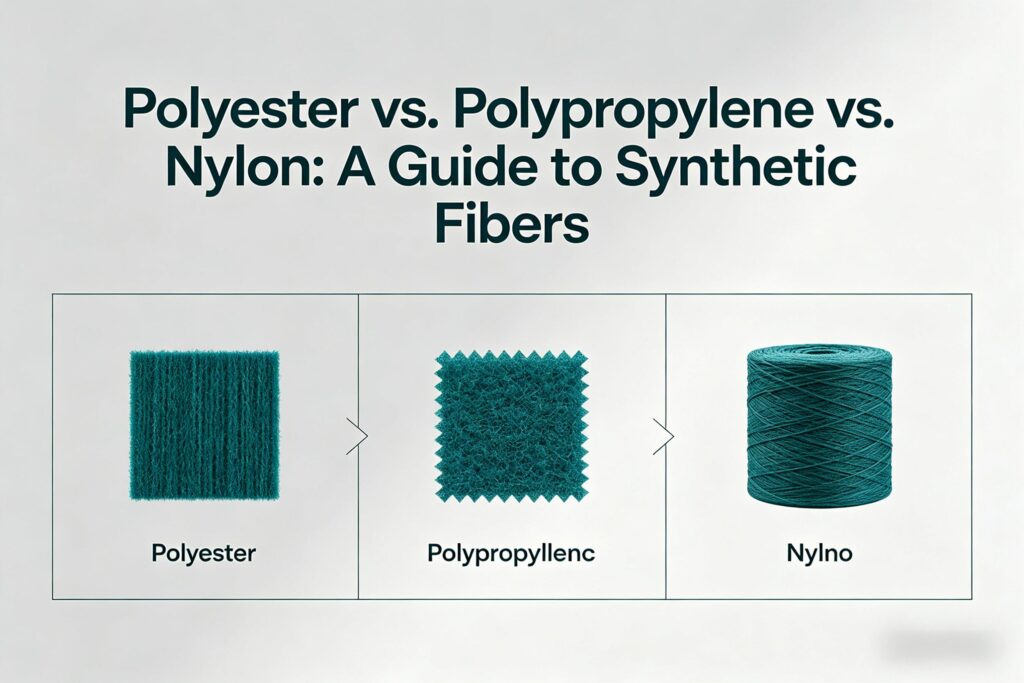
In the world of synthetic fibers, polyester, polypropylene, and nylon are three dominant players, each with a unique chemical structure that dictates its performance. Choosing the right one is not about finding the “best” fiber, but rather the most suitable one for a specific application. Understanding their key differences in strength, moisture management, durability, and cost is essential for designers, engineers, and consumers alike.
Polyester: The Durable All-Rounder
Polyester (PET) is the workhorse of the synthetic fiber family, prized for its exceptional strength, durability, and resilience. It resists stretching, shrinking, and wrinkles, making it a mainstay in apparel, home furnishings like curtains and upholstery, and a wide range of technical textiles. A key advantage of polyester is its superior UV resistance, which prevents it from degrading quickly in sunlight, making it ideal for outdoor fabrics and awnings. It is also highly colorfast, accepting dyes easily and retaining vibrancy. From a sustainability standpoint, recycled polyester (rPET) is widely available, further boosting its popularity. Its main weakness is that it is hydrophobic, meaning it repels water; while this means it dries quickly, it can feel less breathable against the skin in active scenarios.
Polypropylene: The Lightweight Moisture-Wicker
Polypropylene (PP) stands out for its unique relationship with water. It is the lightest of the three fibers and is completely hydrophobic—it does not absorb a single drop of water. This makes it an exceptional material for moisture-wicking. Instead of being absorbed, sweat is transported along the surface of the fiber, keeping the skin dry and comfortable. This property makes it a top choice for activewear, thermal base layers, and diapers. Polypropylene also has excellent chemical resistance and is inherently stain-resistant. However, it has significant drawbacks: a low melting point makes it unsuitable for high-heat applications like industrial settings or high-temperature washing, and it is highly susceptible to UV degradation, causing it to become brittle when exposed to sunlight for prolonged periods.
Nylon: The Strong and Resilient Performer
Nylon, known for its high tensile strength and exceptional elasticity, is the toughest of the three. It can withstand immense stress and repeated stretching without breaking, which is why it is the fiber of choice for demanding applications like seat belts, parachutes, climbing ropes, and hosiery. Nylon is also very abrasion-resistant, making it durable in carpets and upholstery. It has a soft, smooth feel and dyes well. Like polyester, it has good resilience but is less resistant to UV light than polyester and can be weakened by prolonged exposure to sunlight. It also tends to be more expensive than both polyester and polypropylene.
Conclusion: Making the Right Choice
The decision between these three synthetic giants hinges on the primary requirement of the product.
- Choose Polyester for overall durability, UV resistance, and cost-effectiveness in a wide array of applications, from fashion to outdoor furniture.
- Choose Polypropylene for lightweight moisture management, chemical resistance, and applications where staying dry is the top priority, such as in base layers or sportswear.
- Choose Nylon for maximum strength, elasticity, and abrasion resistance in high-stress environments, from industrial gear to active apparel.
