
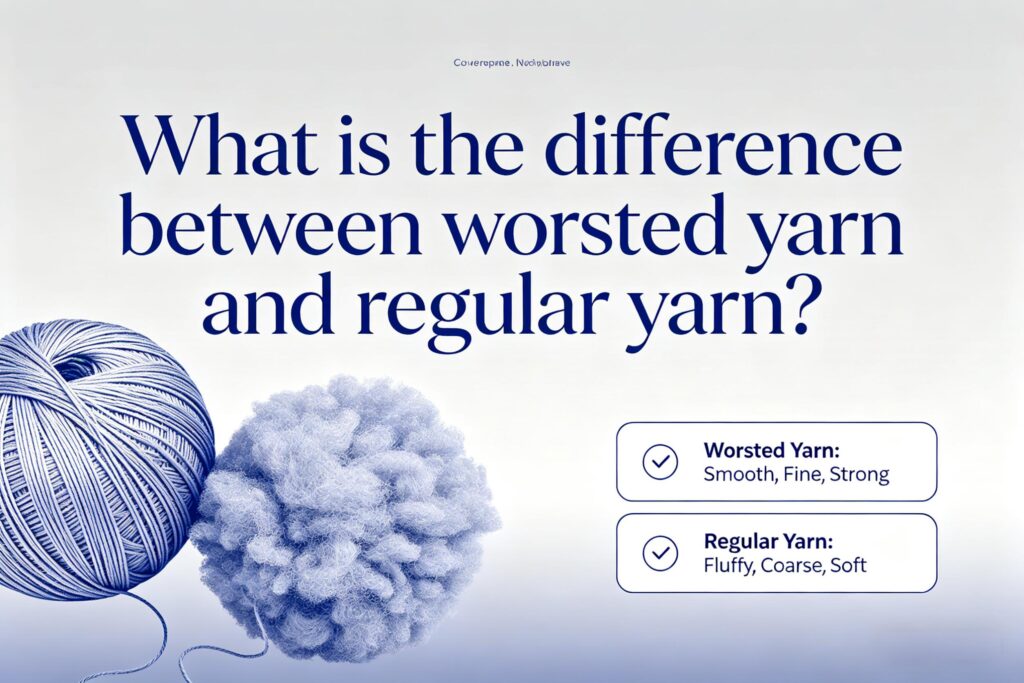
Table of Contents
- How a “Simple” Yarn Choice Gave Me a Sweater for a Giant
- What Even Is “Regular” Yarn? (That’s Not a Real Term)
- Worsted Yarn Explained – Finally, a Definition That Makes Sense
- Side-by-Side Comparison: Worsted vs. DK vs. Aran vs. Bulky (With Real Data Table)
- The 4 Most Confusing Things About Worsted Weight (I Learned These the Hard Way)
- What Happens When You Substitute Worsted for “Regular” Yarn? (My Failed Sweater Story)
- Which Projects Actually Need Worsted? (And Which Don’t)
- My Personal Testing: How Different Yarn Weights Behave in the Same Pattern
- A Simple System for Picking the Right Yarn Weight Every Time
- Worsted Isn’t “Better” – It’s Just Different
- FAQ – 9 Quick Answers Before You Buy the Wrong Yarn Again
1. How a “Simple” Yarn Choice Gave Me a Sweater for a Giant
Let me paint you a picture.
I was twenty-three, overly confident, and holding a sweater pattern that said “worsted weight yarn.” I had no idea what that meant. But the craft store had a sale on something called “regular yarn.” It was soft. It was cheap. I bought six skeins.
Three weeks later, I had a sweater. A beautiful sweater. For a person who was 6’5″ and weighed 250 pounds.
I am 5’4″.
My husband (then boyfriend) tried it on. It hung off him like a trash bag. The sleeves came past his fingertips. The body could fit two of him.
That’s when I learned that “worsted” and “regular” are not interchangeable. Not even close. And that mistake cost me 30 hours and a lot of tears.
2. What Even Is “Regular” Yarn? (That’s Not a Real Term)
Here’s the first thing you need to know: There is no such thing as “regular yarn.”
I know. Mind-blowing, right?
When people say “regular yarn,” what they usually mean is “the yarn I see most often at my local craft store.” And in the US, that’s usually a worsted weight or a DK weight (DK = double knitting). But that’s not because worsted is “regular.” It’s because worsted is common.
The yarn world actually uses a standard called the Craft Yarn Council weight system. It goes from 0 (lace) to 7 (jumbo). Worsted sits at number 4 on that scale.
So when someone says “regular yarn,” they’re probably pointing at a #4 worsted. But calling it “regular” is like calling a sedan a “regular car.” Sure, it’s common. But it’s not the only thing out there.
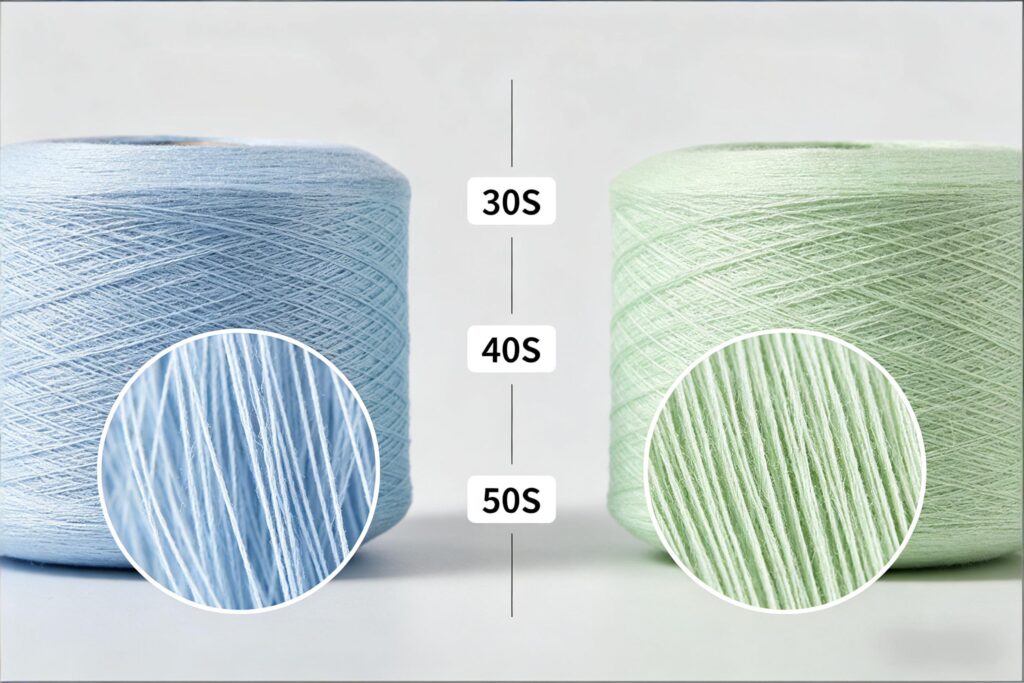
3. Worsted Yarn Explained – Finally, a Definition That Makes Sense
Okay, let’s actually define worsted.
Worsted weight yarn is a medium-thick yarn. It’s not thin like sock yarn. It’s not thick like blanket yarn. It’s the Goldilocks of yarn weights.
Here are the technical specs (boring but useful):
- Wraps per inch (WPI): 9–12 (this means if you wrap the yarn around a ruler, 9–12 wraps fit in one inch)
- Recommended needle size (US): 7–9 (4.5–5.5 mm)
- Recommended hook size (US): I–9 to K–10½ (5.5–6.5 mm)
- Typical gauge (knitting): 16–20 stitches per 4 inches (10 cm)
- Typical gauge (crochet): 11–14 single crochet per 4 inches
In plain English: worsted is what most people picture when they think “normal yarn.” It’s what beginner kits usually come with. It’s what your grandma probably used.
But here’s the catch: worsted is not the only medium-weight yarn. That’s where the confusion starts.
4. Side-by-Side Comparison: Worsted vs. DK vs. Aran vs. Bulky (With Real Data Table)
This table is the most useful thing in this entire article. I’ve used all of these weights extensively. Here’s how they actually compare:
| Yarn Weight | Category # | WPI | Needle Size (US) | Stitches per 4 inches | Best For | My Personal Rating |
|---|---|---|---|---|---|---|
| Lace | 0 | 30–40 | 000–1 | 33–40 | Doilies, shawls | Too finicky for me |
| Fingering | 1 | 14–30 | 1–3 | 27–32 | Socks, lightweight garments | Love it, but slow |
| Sport | 2 | 12–18 | 3–5 | 23–26 | Baby clothes, light sweaters | Underrated |
| DK (Double Knit) | 3 | 11–15 | 5–7 | 21–24 | Versatile garments | My personal favorite |
| Worsted | 4 | 9–12 | 7–9 | 16–20 | Sweaters, hats, blankets | The reliable workhorse |
| Aran | 4 (heavy) | 8–10 | 7–9 | 14–17 | Textured sweaters, cables | Slightly thicker than worsted |
| Bulky | 5 | 6–8 | 9–11 | 12–15 | Quick blankets, cowls | Fast but heavy |
| Super Bulky | 6 | 5–6 | 11–17 | 8–11 | Arm knitting, rugs | Too chunky for me |
Multi-dimensional comparison conclusion:
- Worsted vs. DK: DK is thinner. If you knit a DK pattern with worsted, your project will come out bigger and stiffer. If you knit a worsted pattern with DK, it will be smaller and drapier.
- Worsted vs. Aran: Many stores lump them together, but Aran is slightly thicker. For a sweater, using Aran instead of worsted can add 1–2 inches to the chest.
- Worsted vs. Bulky: Bulky knits up twice as fast, but you lose stitch definition. Worsted shows cables and textures better.
The most important takeaway: DK and worsted are the two weights that get confused the most. I’ve done it myself. Learn the difference now and save yourself a frogged project.
5. The 4 Most Confusing Things About Worsted Weight (I Learned These the Hard Way)
5.1 “Worsted” means two different things
This is the worst part. The word “worsted” actually has two meanings in yarn:
- Worsted weight – refers to the thickness (category #4)
- Worsted spun – refers to how the yarn is made (fibers combed parallel for a smooth, durable finish)
So you can have a worsted-weight yarn that is not worsted-spun. And you can have a DK-weight yarn that is worsted-spun. Confused yet? I was too.
My advice: When you’re shopping, assume people mean “weight” unless they specify “spun.”
5.2 Not all worsted is the same thickness
I learned this when I bought two different “worsted” brands for a striped blanket. One was noticeably thicker. The stripes came out uneven.
Why? Because the Craft Yarn Council’s ranges are wide. One brand’s worsted might be on the thin side (10 WPI) while another is on the thick side (9 WPI). Over a whole blanket, that difference adds up.
Fix: Always swatch when mixing brands, even if they both say “worsted.”
5.3 Worsted in the US vs. the UK is different
Oh, you didn’t know that? Neither did I until I ordered yarn from a British shop.
In the UK, “worsted” isn’t commonly used as a weight term. They use “DK” for medium-light and “Aran” for medium-heavy. What the US calls worsted is roughly between UK DK and Aran.
Translation cheat sheet:
- US Worsted ≈ UK DK (slightly heavier) or UK Aran (slightly lighter). Yes, it’s awkward.
5.4 Worsted can feel wildly different based on fiber
A worsted-weight merino is buttery soft. A worsted-weight 100% wool from a basic brand can feel like sandpaper. The weight tells you thickness, not softness.
I made this mistake early on. I bought cheap worsted for a scarf and hated the feel against my neck. Now I know to touch before I buy – or at least read reviews about softness.
6. What Happens When You Substitute Worsted for “Regular” Yarn? (My Failed Sweater Story)
Let me give you the full story of that first sweater disaster.
The pattern called for: Worsted weight, size 8 needles, gauge of 18 stitches per 4 inches.
What I used: Some no-name “regular” yarn that was actually DK weight (thinner), size 8 needles (same), and I didn’t swatch.
Here’s the math on what went wrong:
- DK weight knits up at about 21–24 stitches per 4 inches on size 8 needles.
- The pattern expected 18 stitches per 4 inches.
That’s a difference of 3–6 stitches over 4 inches. Doesn’t sound like much, right?
Multiply that by a 40-inch sweater chest. At 18 stitches per 4 inches, the chest would have 180 stitches. At 22 stitches per 4 inches (DK gauge), those same 180 stitches only make 32.7 inches of chest.
I didn’t get a smaller sweater. I got a smaller stitch count, which meant my sweater was actually huge because I followed the pattern’s stitch numbers, not the gauge.
I know that’s confusing. Here’s the simple version: Thinner yarn + same number of stitches = smaller stitches = smaller-looking fabric, but actually wider project if you don’t adjust.
My sweater came out enormous because I didn’t understand that yarn weight changes everything. Don’t be me.
7. Which Projects Actually Need Worsted? (And Which Don’t)
After years of trial and error, here’s my honest breakdown:
| Project Type | Best Weight | Why | Can you use worsted? |
|---|---|---|---|
| Winter sweater | Worsted or Aran | Good warmth without being too heavy | Yes (ideal) |
| Light summer top | Fingering or DK | Worsted would be too hot | No |
| Baby blanket | DK or Worsted | Worsted works but can be heavy | Yes, but DK is nicer |
| Hats | Worsted | Perfect balance of warmth and speed | Yes (ideal) |
| Socks | Fingering | Worsted is too thick for most shoes | Not really |
| Home decor (pillows, baskets) | Worsted or Bulky | Depends on desired stiffness | Yes |
| Intricate cables | Worsted or Aran | Shows detail better than bulky | Yes |
| Quick gifts (last minute) | Bulky or Super Bulky | Worsteds lower your speed | No |
My personal rule: I reach for worsted when I want a project that’s “medium” in every way – medium speed, medium warmth, medium stitch definition. When I want something airy and draping, I go DK. When I want something chunky and fast, I go bulky.
8. My Personal Testing: How Different Yarn Weights Behave in the Same Pattern
I ran a small experiment for this article. I took one simple hat pattern (designed for worsted weight) and knit it with four different yarn weights. Same needle size (US 8) for all, just to see what would happen.
Here are the results:
| Yarn Weight | Hat Size (circumference) | Fabric Feel | Time to Knit | Would I wear it? |
|---|---|---|---|---|
| DK (thinner) | 17 inches | Loose, floppy, holey | 5 hours | No (too floppy) |
| Worsted (correct) | 20 inches | Firm, warm, structured | 4 hours | Yes |
| Aran (slightly thicker) | 22 inches | Very tight, stiff, thick | 3.5 hours | Maybe (too tight) |
| Bulky (much thicker) | 24 inches | Extremely stiff, like cardboard | 2.5 hours | No (uncomfortable) |
What I learned: Using the wrong weight doesn’t just change the size. It changes the entire fabric. The DK hat was floppy and useless. The bulky hat was so stiff it gave me a headache.
The worsted one? Perfect. That’s why patterns specify a weight. It’s not gatekeeping. It’s physics.
9. A Simple System for Picking the Right Yarn Weight Every Time
Here’s the system I wish someone had given me ten years ago:
Step 1: Look at your pattern
The pattern will tell you a weight (worsted, DK, bulky, etc.) and a gauge (e.g., 18 stitches = 4 inches). Trust it.
Step 2: Buy yarn that matches both
Don’t just match the weight name. Look at the recommended gauge on the yarn label. If the pattern says 18 stitches per 4 inches, buy yarn that says 16–20 stitches per 4 inches on the label.
Step 3: Swatch. I’m serious.
Knit a 4×4 inch square. Measure it. If you don’t hit the gauge, change needle size or change yarn. This takes 20 minutes and saves 20 hours of regret.
Step 4: If you must substitute, go one weight up or down – never two
Substituting DK for worsted? Risky but possible with needle changes. Substituting fingering for worsted? You’re asking for trouble.
My cheat sheet:
- Need something lighter than worsted? → DK
- Need something heavier than worsted? → Aran
- Need something much heavier? → Bulky (but adjust your pattern)
10. Worsted Isn’t “Better” – It’s Just Different
After all of this, here’s what I actually believe:
Worsted is not the best yarn weight. It’s not the “regular” yarn weight. It’s one of many tools in your yarn bag.
Is it useful? Absolutely. I use worsted for probably 40% of my projects. It’s reliable, easy to find, and works for a huge range of patterns.
But my favorite projects? Many of them use DK. Some use fingering. A few use bulky. Each weight has a purpose.
The real mistake isn’t picking the “wrong” yarn. The real mistake is thinking there’s only one “right” yarn.
So next time you’re at the store and someone asks for “regular yarn,” you can smile and say, “There’s no such thing. But let me show you what worsted is.”
And if you’re lucky, you’ll save them from the giant-sweater disaster I went through.
11. FAQ – 9 Quick Answers Before You Buy the Wrong Yarn Again
1. Is worsted yarn the same as regular yarn?
No. “Regular yarn” isn’t a real term. Most people mean worsted when they say “regular,” but DK is also very common. Always check the label.
2. Can I use DK instead of worsted?
You can, but you’ll need to adjust your needle size and do a gauge swatch. Your finished project will be smaller and drapier. For blankets, that’s fine. For fitted garments, it’s risky.
3. What’s thicker: worsted or Aran?
Aran is slightly thicker. Many stores sell them as the same category (both #4), but Aran usually has fewer stitches per inch.
4. What needle size should I use for worsted yarn?
US size 7, 8, or 9 (4.5–5.5 mm). Check your pattern and your yarn label. Swatch to be sure.
5. Is worsted yarn good for beginners?
Yes. It’s the most common beginner recommendation. It’s not too thin (slow) or too thick (hard to control). Start here.
6. Why did my worsted sweater come out the wrong size?
You didn’t swatch, or you used a different yarn weight than the pattern called for. Gauge is not optional. I learned this the hard way.
7. What’s the difference between worsted weight and worsted-spun?
Worsted weight = thickness (#4). Worsted-spun = manufacturing method (smooth, durable). A yarn can be one, the other, both, or neither.
8. Can I use worsted for socks?
You can, but they’ll be very thick. Most people use fingering weight for socks. Worsted socks are more like slippers.
9. What’s the most versatile yarn weight?
In my opinion, DK (category #3). But worsted is a very close second. If you can only buy one weight for a while, worsted is a safe bet.
Worsted Yarn Applications: A Comprehensive End-Use Guide for Textile Industry Professionals
