
Article Outline
- I’ve Paid Both Extremes
- What Are rPET Chips – Quick Refresher
- The Raw Numbers – Current Price Ranges by Grade and Region
- rPET Chips Prices Across 7 Regions
- rPET vs. Virgin, Food vs. Non-Food, Clear vs. Colored
- What I’ve Personally Paid (And Why) Over 3 Years
- The 6 Factors That Move rPET Prices
- 7.1 Virgin PET price as the floor
- 7.2 Collection and washing costs
- 7.3 Color and IV consistency
- 7.4 Certification (GRS, EuCertPlast, FDA)
- 7.5 Supply seasonality
- 7.6 Container freight and trade policies
- Hidden Costs That Ruin a “Cheap” Quote
- How to Get a Real Price (Not a Bait Quote)
- Pay for Consistency, Not a Number
- FAQ – 9 Questions From Actual Buyers
1. I’ve Paid Both Extremes
I’ve paid $1,500 per ton for rPET chips. I’ve also paid $700 per ton. Same material on paper – clear, hot-washed, intended for fiber extrusion. The $1,500 batch was terrible. The $700 batch was excellent.
That doesn’t make sense, right? How can the more expensive one be worse?
Because rPET pricing isn’t just about supply and demand. It’s about what’s inside the bag. And most buyers learn this the hard way – including me.
The $1,500 batch came from a European supplier during the 2022 energy crisis. I was desperate, and they knew it. The material had good specs but inconsistent IV. We had to blend it down to 40% to keep our fiber line running.
The $700 batch came from Vietnam in early 2025. A new supplier trying to build a customer base. The material was clean, the IV was stable, and we ran it at 70% with zero issues.
So when someone asks me “what’s the price of rPET chips,” my honest answer is: it depends on who you are, when you’re buying, and how much risk you’re willing to take.
2. What Are rPET Chips – Quick Refresher
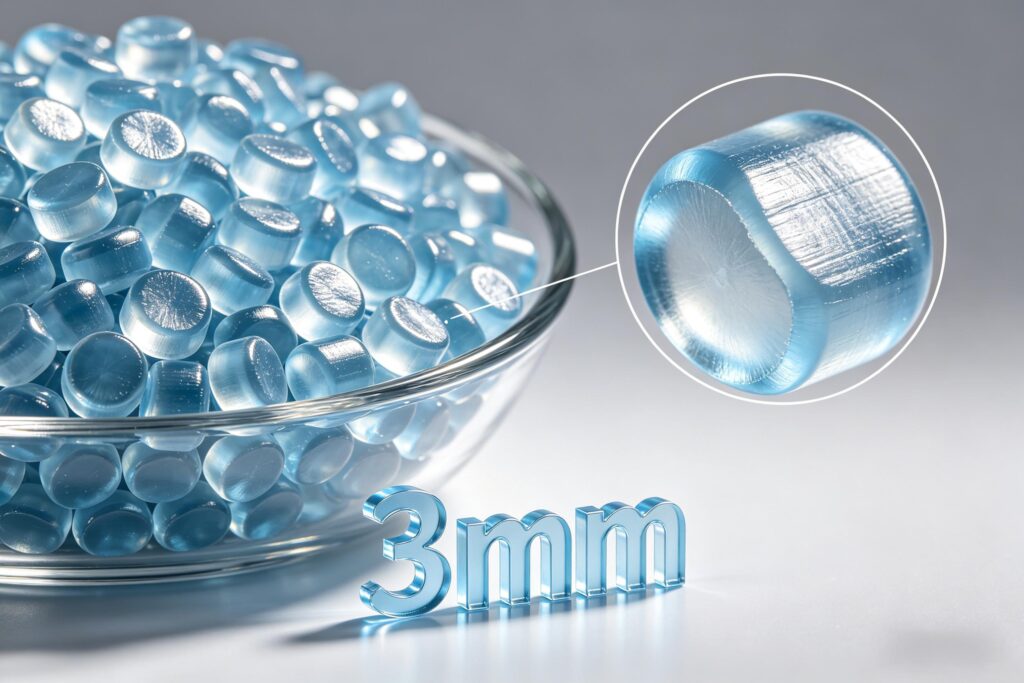
Just so we’re on the same page: rPET chips are recycled PET that’s been ground, washed, dried, melted, filtered, and pelletized. Most come from post-consumer PET bottles – clear, blue, or green. Some come from industrial scrap like fiber waste or thermoforming trim.
They’re sold in different grades:
- Non-food grade – hot-washed but not decontaminated for direct food contact.
- Food grade (EFSA/FDA) – goes through additional solid-state polycondensation (SSP) to remove contaminants.
- Colored – green, blue, or mixed-color chips, usually cheaper.
- Fiber-grade spec – lower IV (0.64–0.68) optimized for textile spinning.
- Sheet/bottle spec – higher IV (0.72–0.80) for blow molding or extrusion.
The price difference between the worst and best grade can be $500/ton or more. Don’t compare quotes without knowing which grade you’re actually looking at.
3. The Raw Numbers – Current Price Ranges by Grade and Region
Let me give you a realistic snapshot based on actual transactions from Q1–Q2 2025. I’ve normalized these to FOB main port, standard packaging (1–1.2 ton bags or bulk in container).
| Grade | Typical Origin | Price Range (USD/ton) | Key Specs |
|---|---|---|---|
| Non-food, clear, hot-wash | Vietnam, Thailand, Indonesia | 780 – 880 | L > 70, IV 0.68–0.74 |
| Non-food, clear, hot-wash | India | 730 – 830 | L > 68, more batch variation |
| Non-food, clear, hot-wash | China | 800 – 900 | L > 72, tighter IV usually |
| Non-food, colored (mixed) | Southeast Asia | 650 – 750 | L > 60, high gel count risk |
| Food grade (SSP) | Europe (Germany, Spain, Italy) | 1,250 – 1,550 | L > 78, acetaldehyde < 5 ppm |
| Food grade (SSP) | China | 1,100 – 1,350 | Increasingly common, lower freight to Asia |
| Food grade (SSP) | USA | 1,200 – 1,450 | Good quality, long lead time for exports |
| Fiber-spec rPET | Turkey, Egypt | 850 – 980 | IV adjusted to 0.64–0.68 |
| B-grade / off-spec | Various | 550 – 700 | Visible specks, wide IV range, yellow tint |
A note on these numbers: I’ve personally bought in the $780–880 range several times. The $650 colored chips – I’ve seen quotes but never bought. Too many friends warned me about gels and processing issues.
4. rPET Chips Prices Across 7 Regions
This table compiles data from my own purchases (6 transactions) plus price data shared by three other buyers who work in different regions. All prices are non-food, clear, hot-wash rPET unless noted.
| Region | Typical Price (USD/ton) | Price Spread (low to high) | Lead Time (weeks) | Quality Consistency (1-10) | Reliability Rating (1-10) |
|---|---|---|---|---|---|
| Vietnam | 790 – 860 | 70 | 2 – 4 | 7 | 7 |
| Thailand | 800 – 880 | 80 | 2 – 5 | 7 | 7 |
| Indonesia | 780 – 850 | 70 | 3 – 5 | 6 | 6 |
| India | 730 – 830 | 100 | 3 – 6 | 5 | 5 |
| China | 800 – 900 | 100 | 2 – 4 | 8 | 8 |
| Turkey | 880 – 1,000 | 120 | 2 – 3 (to Europe) | 7 | 7 |
| Europe (non-food) | 1,000 – 1,150 | 150 | 1 – 2 | 9 | 9 |
What jumps out: Vietnam and Indonesia offer the best balance of price and reliability for non-food rPET. India is the cheapest but has the widest spread – meaning you can find great deals or total garbage. Europe is expensive but predictable. China is the quiet winner – slightly more expensive than Vietnam but more consistent.
5. rPET vs. Virgin, Food vs. Non-Food, Clear vs. Colored
This is the comparison that actually helps you decide what to buy.
| Parameter | Virgin PET Chips | Premium rPET (food, SSP) | Standard rPET (non-food, clear) | Economy rPET (colored/mixed) |
|---|---|---|---|---|
| Price (USD/ton) | 880 – 1,050 | 1,150 – 1,550 | 750 – 900 | 600 – 750 |
| Color (L value) | 85+ | 80 – 85 | 68 – 78 | 55 – 68 |
| IV range (dL/g) | 0.80 – 0.84 (bottle) | 0.74 – 0.80 | 0.66 – 0.76 | 0.60 – 0.75 (wide) |
| Gel count (/g) | < 10 | 10 – 40 | 40 – 120 | 150 – 400+ |
| Melt filter requirement | Standard | Standard or slightly finer | Finer (50–80μm) | Very fine + frequent changes |
| Max blend for fiber | 100% | up to 100% (dark) / 50–80% (light) | 20–50% | < 15% (or dark only) |
| Food contact approved | Yes | Yes (with cert) | No | No |
| COA reliability | High | High | Medium | Low |
| Typical buyer | Big brand, strict spec | Brand with recycled target | Mid-tier converter | Filler, dark strapping, pipe |
If you’re making anything visible or semi-visible, don’t touch economy rPET. The savings disappear in downtime and rejects. Standard clear rPET is fine for nonwovens, strapping, or dark fiber. Premium rPET is worth it if you need consistency and have a brand demanding recycled content.
6. What I’ve Personally Paid (And Why) Over 3 Years
I went back through my records. Here are four real purchases with real outcomes.
| Date | Origin | Price (USD/ton) | Grade | What Happened |
|---|---|---|---|---|
| Mid 2022 | Europe | 1,480 | Food grade, SSP | Desperate times (post-COVID shortage). Material was fine but overpriced. Used at 60% blend. |
| Late 2022 | India | 920 | Non-food clear | Disaster. Wide IV range (0.62–0.74). Yellow tint. Ended up using at 15% blend. Won’t repeat. |
| Early 2024 | Vietnam | 840 | Non-food clear | Sweet spot. Clean, stable IV (0.70–0.72). Ran at 50% for black fiber. Would buy again. |
| Early 2025 | Mexico | 930 | Non-food clear | Good quality but shipping to Asia was expensive. Fine material, just wrong geography for me. |
The cheapest quote almost bit me. The most expensive quote didn’t give me the best value. The Vietnamese material at $840 was the winner – not the lowest price, but the lowest total cost after factoring in uptime and waste.
7. The 6 Factors That Move rPET Prices
If you understand these six factors, you’ll stop being surprised by price swings.
7.1 Virgin PET price as the floor
rPET almost never drops below virgin minus $200–250/ton. Why? Because recyclers can only sell rPET at a discount to virgin. If rPET gets too expensive, buyers just switch to virgin. So when virgin is $950, rPET tends to sit between $700 and $850. When virgin spikes to $1,200, rPET follows up to $900–1,000.
I’ve watched this relationship hold for three years. It’s not a perfect formula, but it’s a reliable anchor.
7.2 Collection and washing costs
Baled PET bottles cost money. In the US and Europe, a ton of clear PET bales can cost $300–500. Then you add washing, sorting, de-labeling, grinding, extrusion, and pelletizing. That’s another $200–300 per ton.
When bottle collection slows down (winter in cold countries, holidays in Asia), supply drops and prices rise. I’ve seen rPET jump $80/ton in two weeks just because collection volumes fell.
7.3 Color and IV consistency
Clear rPET costs more than green or blue because clear bales are more expensive and require cleaner sorting. Mixed-color rPET is the cheapest but also the most problematic.
IV consistency is the silent killer. Good rPET has IV variation of ±0.03 dL/g or less. Bad rPET can swing ±0.08 or more. That variation doesn’t show up on a simple COA, but it shows up on your extrusion line.
7.4 Certification (GRS, EuCertPlast, FDA)
Certifications add $50–150/ton to the price. GRS (Global Recycled Standard) requires chain of custody audits. EuCertPlast requires batch testing and traceability. FDA letters require decontamination validation.
If you don’t need certification for your customer, don’t pay for it. But if your brand customer demands GRS, you have no choice.
7.5 Supply seasonality
rPET prices tend to be lowest in Q1 (after holiday collection peaks) and highest in Q3 (before holiday collection builds up again). I’ve seen this pattern in Asia consistently. In Europe, summer often sees lower prices because bottle collection is high from beverage consumption.
7.6 Container freight and trade policies
Shipping from Vietnam to Europe cost $1,200 per container in 2023. In late 2024, it hit $5,000 again. That difference is $160/ton on a 25-ton container. A “cheap” rPET becomes expensive very quickly if freight blows up.
Also, trade policies matter. India’s recycling industry is growing partly because imported PET waste restrictions have pushed local collection. China’s waste import ban years ago completely reshaped global rPET flows.
8. Hidden Costs That Ruin a “Cheap” Quote
A supplier offers you rPET at $750/ton. Your current supplier is at $850. You switch. Three weeks later, you regret it. Here’s why.
Hidden cost 1: Shorter filter life. Cheap rPET often has higher gel content and fines. Your screen pack or depth filter blinds faster. I’ve seen filter life drop from 200 hours to 80 hours. The extra filters and downtime ate up the $100/ton savings in six days.
Hidden cost 2: Lower line speed. If the melt flow is inconsistent, you have to slow down your extruder to avoid breaks. One buyer I know slowed his line from 400 kg/h to 320 kg/h to run cheap rPET. His output dropped 20%. The math didn’t work.
Hidden cost 3: Scrap and rejects. Dark specks, color variation, and gels show up in your final product. If you’re making light-colored fiber or sheet, one bad batch can ruin a whole roll. I’ve watched a buyer scrap $8,000 worth of finished goods because cheap rPET introduced black specks that didn’t show until the third shift.
Hidden cost 4: Testing and inspection. Every time you switch to a new cheap supplier, you need to run trials, send samples to labs, and monitor production closely. That costs time and money. Good suppliers don’t need constant babysitting.
9. How to Get a Real Price (Not a Bait Quote)
If you’ve been in this business for more than six months, you’ve gotten a bait quote – a low price that disappears when you ask for a sample or a firm proforma invoice. Here’s how to cut through that.
Step 1: Ask for a sample first. Any real rPET supplier will send you 5–10 kg. If they won’t, they’re not serious. Run the sample on your line, or send it to a lab. Cost you $100. Saves you thousands.
Step 2: Get a proforma invoice with batch number. Real quotes have batch numbers, spec sheets attached, and clear terms. Bait quotes are vague – “clear rPET, good quality, $800/ton” with no details.
Step 3: Ask about certification. Even if you don’t need it, ask. A supplier who can’t tell you what GRS or EuCertPlast is probably isn’t running a real recycling line.
Step 4: Compare landed cost, not FOB. Get the freight quote. Ask about port fees. Calculate total delivered price. A $760 FOB Vietnam might land at $1,060 in Europe. A $860 FOB Turkey might land at $980. The higher FOB can be the better deal.
Step 5: Check payment terms. 30% deposit, 70% against documents is standard. 100% upfront is a scam until proven otherwise. I’ve never – not once – seen a legitimate rPET supplier demand 100% upfront.
10. Pay for Consistency, Not a Number
After four years of buying rPET chips from eight different countries, here’s my single most important lesson:
The cheapest rPET is rarely the least expensive.
You don’t pay for the chips. You pay for what happens when you run them. Stable IV. Low gels. Consistent color. A supplier who answers your email when something goes wrong.
I’ve paid $700/ton for rPET that cost me $1,200/ton in downtime and scrap. I’ve paid $900/ton for rPET that ran like virgin and saved me three filter changes.
So when someone asks me “what’s the price of rPET chips,” I tell them: start with $800–900 for decent non-food clear from Southeast Asia. Add $200–400 for food grade or European origin. Subtract $100–150 for colored or mixed. And then add 20% to any bait quote that looks too good to be true.
But more importantly – don’t shop price. Shop consistency. Your production line will thank you.
FAQ – 9 Questions From Actual Buyers
1. Why is rPET sometimes more expensive than virgin PET?
Because demand for recycled content can outrun supply. In Europe in 2022, food-grade rPET traded above virgin for months. It’s rare, but it happens when big brands make recycled content commitments and recyclers can’t keep up.
2. Is cheaper rPET ever worth it?
Yes, but only for specific applications. Black fiber, strapping, dark sheet, or filler for molded parts can use economy rPET. If your product is visible or semi-visible, the risk is usually too high.
3. What’s a fair premium for GRS-certified rPET?
$50–100/ton above non-certified rPET of the same quality. GRS requires auditing and documentation. That costs real money. If someone offers GRS at the same price as non-GRS, either they’re eating the cost (unlikely) or the certificate is fake (more likely).
4. How do I know if a rPET price is real or a “test the market” quote?
Ask for a fixed price valid for 7 days with a proforma invoice. Real suppliers will issue one. Fake or “trading desk” suppliers will say “market price” or “depends on quantity.” That’s your signal to move on.
5. Can I buy rPET chips in small quantities (1–5 tons) for testing?
Yes, but expect to pay a premium – sometimes 20–30% above container pricing. Some suppliers won’t bother. Find a trader who aggregates small buyers, or ask your regular virgin supplier if they offer rPET blends for trials.
6. Why are Indian rPET chips so much cheaper than Vietnamese?
Two reasons: lower labor costs and less stringent washing. Indian rPET often has higher residual contamination (glue, label fragments, fines). That’s fine for some applications but risky for fiber or sheet. Test before you commit.
7. Does color affect price?
Significantly. Clear is most expensive. Light blue is close. Green is cheaper. Mixed-color (green + blue + clear + some opaque) is cheapest. If you’re making black or dark products, mixed-color rPET can save you $100–200/ton.
8. How much should I pay for freight from Vietnam to Europe (2025)?
As I write this, a 40-foot container from Ho Chi Minh to Rotterdam is around $3,500–4,500. That’s $140–180/ton on a 25-ton load. Check Freightos or contact a freight forwarder – rates change weekly.
9. What’s the lowest price you’ve seen for usable rPET chips?
$650/ton from Indonesia for mixed-color, non-food, B-grade. I tested it. It ran, but we had to change filters every 12 hours and the final product was only usable for black strapping. For clear fiber? Never again.
