
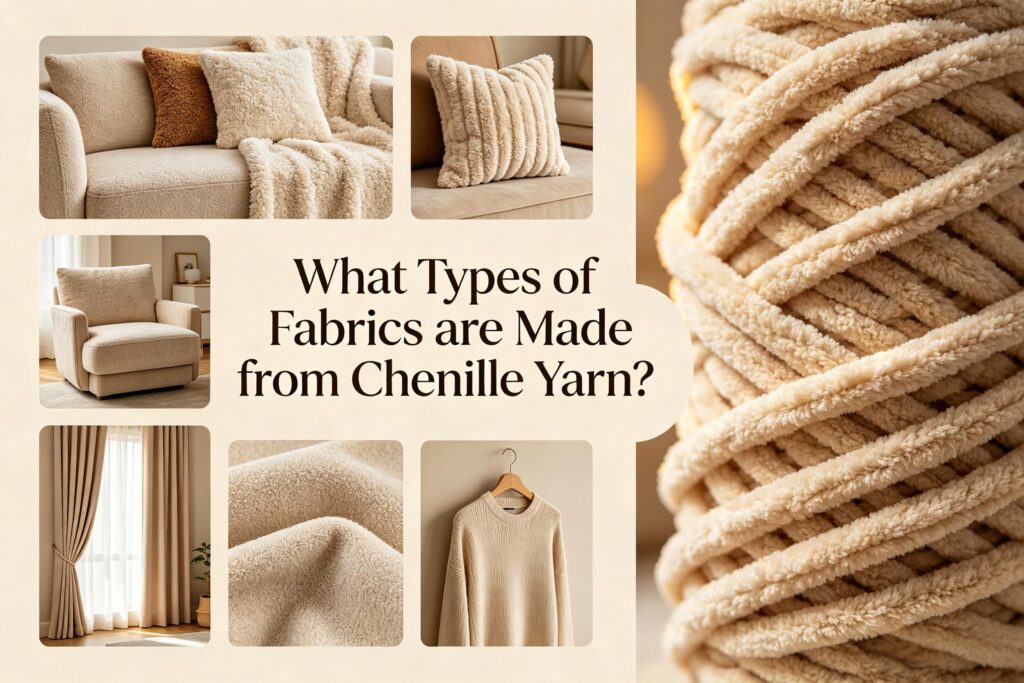
For industry professionals, sourcing the right materials is crucial. Chenille yarn, with its unique blend of luxury, texture, and practicality, offers significant potential across a range of products. Understanding the diverse fabrics made from chenille—and the strategic implications of each type—is key to making informed procurement decisions for applications ranging from high-end upholstery to plush toys and clothing. This article provides a comprehensive guide to the types of chenille fabrics, their characteristics, market insights, and practical selection advice tailored for apparel, textile, and manufacturing buyers.
Table of Contents
- What is Chenille? The Foundation of Texture
- A Classification Guide: Main Types of Chenille Fabrics
- Performance and Strategic Applications: Choosing the Right Fabric
- The Global Market: Sourcing, Trade, and Trends
- Procurement Guidelines: From Specification to Quality Assurance
- Conclusion and Future Outlook: Strategic Sourcing of Chenille
1. What is Chenille? The Foundation of Texture
The term “chenille” refers both to a unique type of yarn and the fabrics made from it. The yarn is structurally distinct, typically made from two strong core threads (often polyester or acrylic) that hold short, soft “pile” fibers (like cotton, viscose, or acrylic) in place through a twisting process. The result is a yarn with a velvety, cylindrical shape, resembling a caterpillar—hence the name “chenille,” which is French for caterpillar.
When woven or knitted into fabric, this yarn structure creates its signature characteristics: exceptional softness, a dense and plush “hand feel,” excellent drape, and a luxurious, textured appearance. Fabrics made from chenille yarn are celebrated for providing a sense of warmth, comfort, and visual depth, which makes them versatile across various industries.
2. A Classification Guide: Main Types of Chenille Fabrics
Chenille fabrics can be systematically categorized by their production method and final structure. The following classification is essential for industry buyers to understand their options.
| Fabric Type | Production Method | Key Characteristics | Primary Industry Applications |
|---|---|---|---|
| Woven Pile & Chenille Fabrics | Produced on looms, where chenille yarns are typically used as the weft (filling yarn) to create the surface texture. | Dense, structured, and stable fabric with a distinct surface pile. Highly durable and plush. | Upholstery (sofas, chairs), Home Decor (drapes, heavy curtains), Automotive Interiors. |
| Chenille Velour / Velvet | A subset of woven pile fabrics where the chenille pile is sheared to create an even, uniform, and intensely soft surface. | The ultimate in softness and luxury; has a radiant, light-catching quality. Deep, rich texture. | Premium Upholstery, High-end Apparel (jackets, evening wear), Decorative Cushions & Throws. |
| Chenille Knits | Created on knitting machines using chenille yarns. This method offers greater flexibility and stretch. | Softer and more flexible than wovens; excellent drape and comfort. May be less dimensionally stable. | Fashion Apparel (sweaters, cardigans, scarves), Loungewear, Soft Toys & Plush Items. |
| Chenille Terry & Fleece | Knitted with looped or brushed constructions to maximize surface area and absorbency. | Extremely absorbent, cozy, and warm. Lightweight with a fluffy texture. | Bathrobes & Towels, Baby Products, Lightweight Blankets, Comfort-Focused Apparel. |
Beyond these structural types, the end-use properties are profoundly influenced by the fiber composition. Common blend options identified in market research include:
- Viscose/Acrylic Blends: Offer a superb balance of silky sheen (from viscose) and resilient durability (from acrylic).
- Cotton/Polyester Blends: Prioritize natural comfort and breathability (cotton) with enhanced strength and easy-care properties (polyester).
- Acrylic/Polyester Blends: Focus on cost-effectiveness, color vibrancy, and high durability for high-traffic applications.
3. Performance and Strategic Applications: Choosing the Right Fabric
Understanding the strengths and weaknesses of different chenille fabrics is critical for matching them to the right end-use. This section provides a data-driven comparison to guide decision-making.
| Performance Attribute | Typical Profile of Chenille Fabrics | Industry-Specific Impact & Considerations |
|---|---|---|
| Durability & Abrasion Resistance | Moderate to High (depending on core yarn). Woven, dense constructions with strong cores (polyester) perform best. | For Upholstery/Carpets: Essential. Look for high-density wovens. For Apparel/Toys: Moderate durability is often sufficient; knits may be suitable. |
| Softness & Hand Feel | Exceptionally High. The core value proposition. Velour and knits are typically the softest. | For Toys & Baby Products: The primary selection criterion. For Premium Home Goods: Drives perceived quality and luxury. |
| Drape & Fluidity | Excellent. The yarn’s structure allows fabric to hang in soft, graceful folds. | For Drapes & Apparel: A key advantage over stiffer textiles. Essential for elegant curtain designs and flowing garments. |
| Care & Maintenance | Requires Careful Handling. Machine washing can cause pile distortion, flattening, or shrinkage. Dry cleaning or gentle, low-agitation cycles are recommended. | For Contract/Commercial Upholstery: A potential drawback; requires stain-resistant treatments. For Consumer Goods: Must provide clear care labels to maintain product integrity. |
| Thermal & Acoustic Properties | Good Insulation & Sound Absorption. The dense pile traps air and dampens sound. | For Home Textiles: Adds functional value to blankets, curtains, and rugs. For Automotive Interiors: Contributes to cabin comfort and noise reduction. |
Application Spotlight:
- For Apparel Manufacturers: Chenille knits and velour are ideal for creating statement sweaters, elegant shawls, or tactile trims. The focus should be on blends that offer good shape recovery and pilling resistance.
- For Upholstery & Carpet Buyers: Woven chenille is the standard. Prioritize fabric weight (grams per square meter), abrasion test results (e.g., Martindale rub counts), and fiber blends engineered for high traffic (e.g., solution-dyed acrylic for fade resistance).
- For Plush Toy Producers: Chenille knits and fleece offer unbeatable softness. Safety is paramount—ensure fibers and dyes are non-toxic and meet international safety standards (e.g., Oeko-Tex Standard 100).
4. The Global Market: Sourcing, Trade, and Trends
The global market for chenille fabrics is substantial and growing. In 2022, the total trade value for woven pile and chenille fabrics was approximately $390 million USD. This market is driven by sustained demand in furniture, automotive, and home decor sectors.
China is the undisputed leader in both the production and export of chenille fabrics. In 2022, it accounted for nearly $179 million USD in exports of woven pile and narrow chenille fabrics—about 46% of the global total. Major importers include the United States, Vietnam, and Mexico, indicating strong demand across North America and emerging manufacturing hubs.
Current market trends that buyers should note include:
- Sustainability: Growing interest in recycled content (e.g., polyester from PET bottles) in chenille yarns.
- Functionality: Increased integration of performance features like moisture-wicking, anti-microbial properties, and enhanced flame retardancy for contract markets.
- Market Growth: The global chenille fabric market is projected to grow at a compound annual growth rate (CAGR) of around 4.8% to 5.37%, potentially reaching a value of $64-$72 billion RMB (approx. $9-$10 billion USD) by 2030.
5. Procurement Guidelines: From Specification to Quality Assurance
Successfully sourcing chenille fabrics requires moving beyond aesthetics. Here is a professional checklist for your procurement process:
- Define Technical Specifications Clearly:
- Fiber Content: Specify the exact blend (e.g., 80% cotton / 20% polyester).
- Fabric Construction: Indicate woven or knitted, and the desired weight (GSM).
- Performance Metrics: Set requirements for pilling resistance, colorfastness to light and rubbing, and abrasion resistance (e.g., >20,000 Martindale rubs for heavy-duty upholstery).
- Assess Quality with a Critical Eye:
- Pile Uniformity: The pile should be even and dense without bald spots.
- Color Fastness: Insist on test reports. For items like cotton chenille carpets, “active dyeing” processes that meet high colorfastness standards (Grade 3-4) are a mark of quality.
- Hand Feel and Drape: Always request physical samples to evaluate the tactile and visual qualities firsthand.
- Understand Total Cost of Ownership:
- The initial price per meter is just one factor. Consider durability (how long will it last in use?), maintenance requirements (cost of specialized cleaning), and performance consistency (will it look good after a year of use?).
6. Conclusion and Future Outlook: Strategic Sourcing of Chenille
Chenille fabric is more than just a material; it is a strategic choice that adds tangible value through unmatched texture, comfort, and perceived luxury. For procurement managers, the key is to align the specific type of chenille fabric—whether a durable woven for a sofa, a soft knit for a premium sweater, or a cozy fleece for a plush toy—with the precise functional and commercial needs of the end product.
Looking ahead, the market for chenille fabrics is poised for steady growth, fueled by innovation in sustainable fibers and functional finishes. By applying a disciplined, specification-driven approach to sourcing, informed by a deep understanding of fabric types and market dynamics, industry buyers can leverage chenille’s unique properties to create products that stand out in a competitive global marketplace.
