
Table of Contents
- The Question That Stumped Me as a Beginner
- The Short Answer – Because Polyester Refuses to Be Anything Else
- Why Polyester Is Naturally White (Or Close to It)
- Dyeing vs. Solution Dyeing – Two Completely Different Worlds
- Reason #1 – Customers Want Color (Obvious but True)
- Reason #2 – Brand Identity and Product Differentiation
- Reason #3 – Performance and Functional Requirements
- Reason #4 – Hiding Inconsistencies and Imperfections
- Reason #5 – Matching Industry Standards and Regulations
- Dyed vs. Natural vs. Solution-Dyed Yarn
- The Hard Truth – Dyeing Has Real Costs
- My Personal Take After Dealing With Countless Dyed Batches
- FAQs – 8 Questions Buyers Always Ask About Dyeing Polyester Yarn
1. The Question That Stumped Me as a Beginner
I felt like an idiot.
A customer asked me a simple question: “Why does polyester filament yarn need to be dyed? Can’t you just make it the right color from the start?”
I opened my mouth. Nothing came out. I realized I had no idea.
I’d been selling polyester yarn for two years at that point. I knew prices, deniers, filament counts, and tenacity. But I couldn’t answer a basic question about why the stuff needed dyeing in the first place.
That night, I went down a rabbit hole. I called my supplier in China at 2 AM his time. I annoyed three different factory managers. I read technical papers until my eyes hurt.
2. The Short Answer – Because Polyester Refuses to Be Anything Else
Here’s the simple truth.
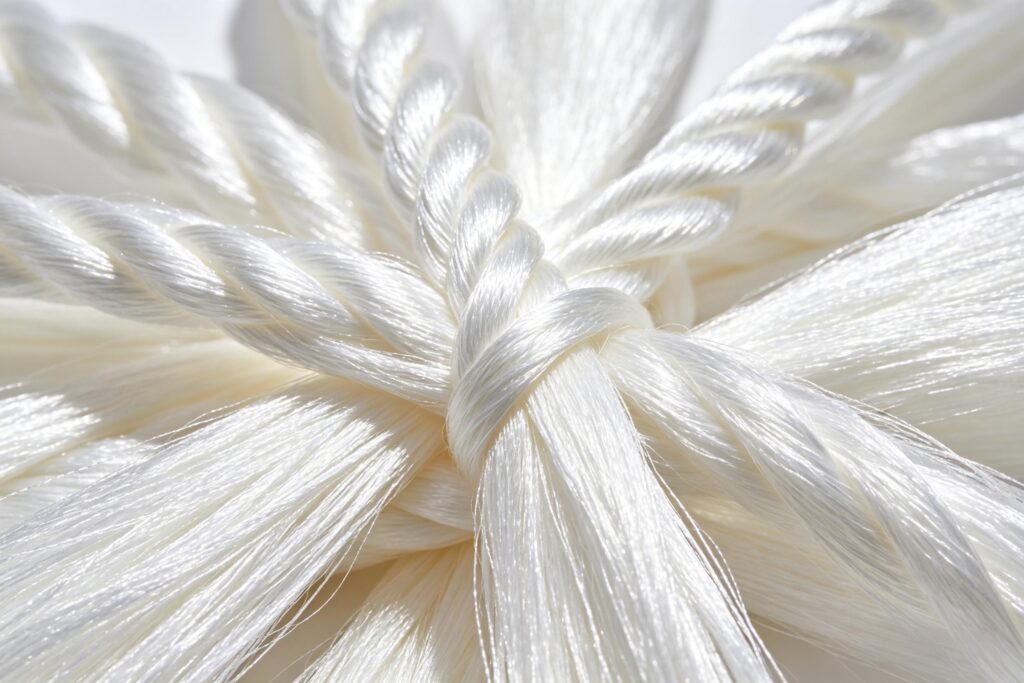
When polyester filament yarn comes out of the spinneret, it’s almost always white or off-white. Not because manufacturers love white. Because that’s what the chemistry gives you.
The polymer itself – polyethylene terephthalate – is naturally a translucent, off-white color. You can’t just “add color” during the spinning process like you can with some other materials. Not easily, anyway.
So if you want red yarn, blue yarn, green yarn, or any color other than “slightly off-white,” you have to dye it after it’s made.
That’s the short answer. But the real story is more interesting. Let me walk you through it.
3. Why Polyester Is Naturally White (Or Close to It)
Let me geek out for a minute.
Polyester is made from a reaction between purified terephthalic acid (PTA) and monoethylene glycol (MEG). That reaction produces a polymer that, in its raw state, is a clear or slightly milky material.
When you melt that polymer and push it through a spinneret to make filament yarn, it comes out as transparent or translucent white. Not pure paper white. More like the color of a frosted glass window.
There’s no pigment in there unless you deliberately add it. And adding pigment during polymerization is trickier than you’d think.
Here’s what I learned from a production manager in Taiwan: you can add color masterbatch during spinning. That’s called solution dyeing. But it’s expensive, requires different equipment, and locks you into one color for the entire production run.
For most polyester yarn – especially commodity filament yarn – manufacturers don’t bother. They produce natural white yarn and let the dyers handle the color later.
4. Dyeing vs. Solution Dyeing – Two Completely Different Worlds
This is where a lot of confusion happens. Let me clear it up.
Dyeing (after spinning):
- Yarn is made first (natural white)
- Yarn is then dipped in high-temperature dye baths
- Color is absorbed into the fiber surface
- Cheaper, more flexible for small color lots
- Can be done by yarn dyers, fabric dyers, or garment dyers
Solution dyeing (during spinning):
- Color pigment is mixed with the polymer melt before spinning
- The yarn comes out already colored
- Color goes all the way through the fiber (not just surface)
- Much more expensive
- Requires huge minimum orders (often 5–20 tons per color)
- Better colorfastness (won’t fade or wash out)
- Used for outdoor fabrics, automotive interiors, industrial yarns
Here’s the key point: Most polyester yarn in the world is dyed after spinning. Solution dyeing is a specialty product.
I once had a customer demand solution-dyed yarn for a small order – 500 kg of a specific green. No mill would touch it. The minimum was 10 tons. They ended up buying naturally white yarn and dyeing it conventionally. That’s the reality for most buyers.
5. Reason #1 – Customers Want Color (Obvious but True)
Let me state the obvious.
Nobody wants a beige hoodie. Nobody wants an off-white carpet. Nobody wants a vaguely milky-colored stuffed animal.
Customers expect color. Red, blue, black, navy, burgundy, olive, charcoal, royal, teal, mustard, lavender – the list is endless.
Natural polyester is none of those things.
I’ve sat in meetings where buyers assumed polyester “just comes in colors.” They were shocked to learn that most of it starts white. They thought factories somehow spin yarn directly in any color they want.
They don’t. Almost all of it is white first. Then it’s dyed.
So the most basic reason polyester yarn needs to be dyed is simple: color sells. White doesn’t. At least not for most products.
6. Reason #2 – Brand Identity and Product Differentiation
This one hits close to home for me.
I worked with a clothing brand that used a very specific shade of navy blue. Not too dark, not too light. Just right. Their customers recognized that color. It was part of their identity.
That color didn’t come from natural polyester. It came from a dye formula that their dyer spent weeks perfecting.
Here’s the thing: natural white yarn is identical across different manufacturers. Anyone can buy it. But a proprietary color? That’s yours.
Dyeing lets brands:
- Create signature colors
- Match Pantone codes exactly
- Stand out from competitors
- Maintain consistency across production batches
Without dyeing, every polyester product would look the same. Boring, beige, and forgettable.
7. Reason #3 – Performance and Functional Requirements
Color isn’t just about looks. Sometimes it’s about performance.
UV protection – Darker polyester yarns absorb more UV radiation. White and light colors let UV through. For outdoor furniture, awnings, and automotive interiors, deep colors offer better UV protection.
Heat absorption – Black polyester gets hot in sunlight. White stays cool. For different applications, you need different thermal properties.
Stain hiding – Light-colored carpets show every spill. Dark carpets hide dirt and stains better. Carpet manufacturers choose colors based on where the carpet will be installed.
Visibility and safety – High-visibility yellow, orange, and lime green are used for safety vests, construction gear, and warning flags. You can’t get those colors from natural polyester.
I once supplied fluorescent yellow yarn for safety vests. The dyer had to use special dye formulas because regular polyester dyeing doesn’t produce that kind of brightness. That’s a performance requirement, not a fashion choice.
8. Reason #4 – Hiding Inconsistencies and Imperfections
This one surprised me when I first learned it.
Natural white polyester yarn is unforgiving. Every variation in luster, every slight difference in diameter, every tiny imperfection – it’s all visible.
Dark colors hide a lot of sins. Black in particular is famous for hiding inconsistencies.
I’ve seen factories switch from light gray to charcoal black just to reduce quality complaints. The product wasn’t better. The color just made flaws harder to see.
Here’s the honest truth I’ve observed: lower-quality yarn often goes into darker colors. Manufacturers know that imperfections will be less noticeable. Higher-quality yarn goes into lighter colors and whites, where every flaw is visible.
Dyeing gives manufacturers a way to manage quality perception. Skilled dyers can even out minor batch variations that would be obvious in natural white yarn.
9. Reason #5 – Matching Industry Standards and Regulations
This is the boring but important reason.
Many industries have color standards. You don’t get to pick whatever shade you want.
Military and government – Uniforms must match specific color codes. The US Army’s OCP (Operational Camouflage Pattern) uses specific shades. Same for police uniforms, postal worker uniforms, and public transit employee uniforms.
Corporate uniforms – Airlines, hotels, and retail chains have brand colors. Every piece of fabric across every supplier has to match exactly.
Safety equipment – High-visibility colors are regulated by standards like ANSI/ISEA 107 in the US and EN 471 in Europe. You can’t just call something “safety yellow.” It has to meet specific chromaticity coordinates.
Automotive interiors – Car manufacturers specify exact colors for seats, headliners, and carpets. Those colors are dyed to tolerance levels measured in Delta E (a color difference metric).
Without dyeing, none of this would be possible. Natural polyester is natural polyester. Dyeing turns it into something that meets a spec sheet.
10. Dyed vs. Natural vs. Solution-Dyed Yarn
Let me put the three options side by side so you can see the real trade-offs.
| Factor | Natural (Undyed) White Yarn | Conventionally Dyed Yarn | Solution-Dyed Yarn |
|---|---|---|---|
| Color options | One (white/off-white) | Thousands | Hundreds (limited by MOQ) |
| Cost | Lowest | Medium | High (20–50% more than dyed) |
| Minimum order quantity | Any (stock available) | Low (1–100 kg for sample dyeing) | Very high (5–20 tons per color) |
| Colorfastness to washing | N/A | Good (3–4 on scale of 1–5) | Excellent (5) |
| Colorfastness to light (UV) | N/A | Moderate (3–4) | Excellent (5) |
| Color consistency between batches | N/A | Good (with skilled dyer) | Excellent |
| Lead time | Immediate | 2–6 weeks (dyeing takes time) | 8–12 weeks (mill needs production slot) |
| Best for | Products that will be dyed later, or natural look | Most apparel, home textiles, carpets | Outdoor fabrics, automotive, industrial, high-end application |
Key takeaways:
- Natural yarn is cheapest but useless if you need color
- Conventional dyeing is the sweet spot for most buyers – flexible and affordable
- Solution dyeing is for when colorfastness is critical and you can commit to large volumes
11. The Hard Truth – Dyeing Has Real Costs
I’m not going to pretend dyeing is free. It’s not.
Cost #1 – Energy. Polyester dyeing happens at high temperatures – usually 120–130°C (250–265°F). That’s energy-intensive. High-pressure dyeing machines use significant electricity and heat.
Cost #2 – Water. Conventional dyeing uses a lot of water. Roughly 50–100 liters of water per kg of yarn, depending on the equipment. That’s not just an environmental cost. It’s a real operational cost.
Cost #3 – Time. Dyeing adds 2–6 weeks to production. If you need yarn fast, natural white is your only option. Dyeing takes time to schedule, run, and quality-check.
Cost #4 – Color variation risk. Even with the same formula, different batches can vary slightly. Professional dyers manage this, but the risk is always there. I’ve seen two batches of “same black” that looked different under certain light.
Cost #5 – Waste. Not every dye lot is perfect. Some batches get rejected and have to be redyed or sold as seconds. That waste has a cost.
Here’s what I tell my customers: if you can use natural white or a color close to natural, you’ll save money. If you need a specific color, budget for the extra cost. Don’t expect dyeing to be free or fast.
12. My Personal Take After Dealing With Countless Dyed Batches
After eight years of buying, selling, and complaining about dyed polyester yarn, here’s what I’ve learned.
First: find a good dyer before you need one.
Not all dyers are equal. Some are artists. Some are butchers. I’ve seen beautiful, consistent dye jobs that matched Pantone perfectly. I’ve also seen streaky, uneven, blotchy disaster batches that had to be thrown out.
I have three dyers I trust. I found them through trial and error and by visiting their facilities. If you’re serious about dyed yarn, do the same.
Second: test every color before full production.
I learned this lesson after a customer approved a lab dip (a small sample of dyed yarn) and then rejected the full batch because the color was slightly off.
Now I always run a pilot batch – at least 50–100 kg – before scaling up. It costs more upfront but saves disasters later.
Third: don’t underestimate the value of solution dyeing for the right application.
For most products, conventional dyeing is fine. But for outdoor fabrics, automotive interiors, or anything that will see intense sunlight or heavy washing, solution-dyed yarn is worth the premium.
I replaced a customer’s conventionally dyed outdoor cushion fabric with solution-dyed polyester. The client stopped getting complaints about fading within six months. Worth every penny.
Fourth: be realistic about lead times.
I can’t count how many customers have asked for 5 tons of custom-dyed yarn in two weeks. It’s not going to happen. Dyeing takes time. Dye houses have schedules. Plan ahead or buy natural white.
13. FAQs – 8 Questions Buyers Always Ask About Dyeing Polyester Yarn
1. Can polyester yarn be dyed after weaving or knitting?
Yes. You can dye at the yarn stage, the fabric stage, or even the garment stage. Dyeing at the yarn stage (yarn-dyed) gives you patterns like stripes and plaids. Dyeing at the fabric stage is cheaper for solid colors.
2. Why is polyester harder to dye than cotton?
Polyester is hydrophobic (water-hating). Its molecular structure has no natural dye sites. Dyeing requires high heat and disperse dyes that physically embed into the fiber. Cotton absorbs dye like a sponge. Polyester resists it.
3. What’s the most common dyeing method for polyester yarn?
High-temperature (HT) dyeing in pressurized machines. The yarn is wound onto dye-springs or cones, then submerged in a dye bath at 120–130°C for 60–90 minutes.
4. Does dyed polyester yarn fade in the sun?
All dyed polyester fades eventually, but quality varies widely. Conventional dyes fade faster than solution-dyed colors. UV stabilizers can be added to the dye formula or the polymer to slow fading.
5. How much does dyeing add to the cost of polyester yarn?
Typically 10–30%, depending on color difficulty, batch size, and dyer location. Dark colors like black and navy are cheaper to dye. Bright colors, pastels, and fluorescents cost more.
6. What’s the smallest amount I can get custom-dyed?
For lab dips (samples), 100–500 grams. For production, most dyers want 100–500 kg minimum per color. Smaller batch dyers exist but charge higher prices.
7. Can I dye natural polyester yarn to match an old sample?
Yes, but matching an existing color is harder than picking a new one. The dyer needs a physical sample (not just a photo) to match. It may take 2–4 rounds of lab dips to get it right.
8. Is solution-dyed yarn worth the extra cost?
For outdoor furniture, automotive interiors, military uniforms, or anything with extreme UV or abrasion exposure – yes. For a hoodie or a stuffed toy – no, conventional dyeing is fine.
